The three seasons of the year
The regional water plan published by CONAGUA, Mexico's national water commission, describes the peninsula's climate as warm and sub-humid with summer rains, and divides the year into three seasons:
- Rainy season, in summer and early fall, which brings 60% to 70% of the year's rainfall. Within the summer there's a canícula, a drier spell.
- Nortes, with little rain and cold fronts that bring temperatures down.
- Dry season, with occasional, scattered showers.
The average annual temperature across much of Yucatán is between 26 and 27.6 °C, and the hottest months run from May to August, with days that often top 30 °C.
Which day trip suits each season
| Season | Great for | Keep in mind |
|---|---|---|
| Nortes (winter) | Ruins, towns, walking | The odd cloudy or windy day on the coast |
| Dry (spring) | Almost everything; clear skies for Las Coloradas | Rising heat; Holy Week is very busy |
| Hot (May–August) | Cenotes, beaches, early boat rides | Ruins only early in the day; drink plenty of water |
| Rainy (summer–fall) | Cenotes, green landscapes | Afternoon storms; hurricane season |
The northwest coast gets less rain
According to the same CONAGUA report, the peninsula's northwest coast has longer stretches with less rain than the interior and the south, and relative humidity in the north is lower than in the south (between 60% and 80%). In practice, Mérida and its coast usually see fewer rainy days than southern Quintana Roo.
Practical tip
Whatever your dates, check the actual forecast close to your trip with Mexico's National Weather Service (SMN). If you travel in the rainy or hurricane season, keep a spare day in case a trip has to move; at Mary Tours you can try to change a tour date if the weather gets in the way.
Fun facts
- Summer brings the canícula, a drier spell in the middle of the rainy season.
- The peninsula's northwest coast has longer dry spells than the south.
- The peninsula's average annual temperature is around 26 °C.
Related tours
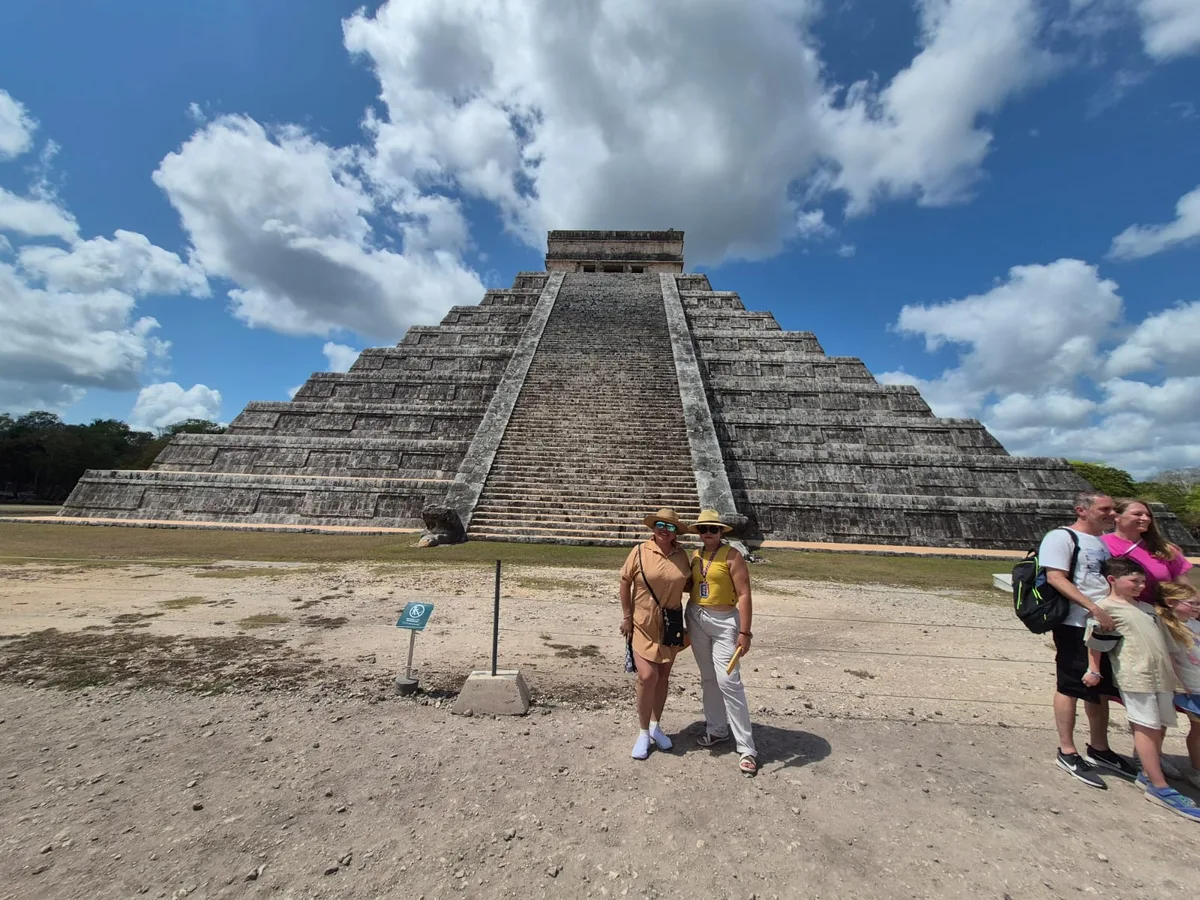
Archaeology · 11 h
Chichén Itzá, Izamal and Valladolid
Four stops in one day, and none of them rushed
from $1,200 MXN per person
See itinerary
8:00 AM – 8:00 PM · daily
- 8:00 AM Departure from the office — An hour on the road to Izamal. The guide uses the drive to set up what comes next.
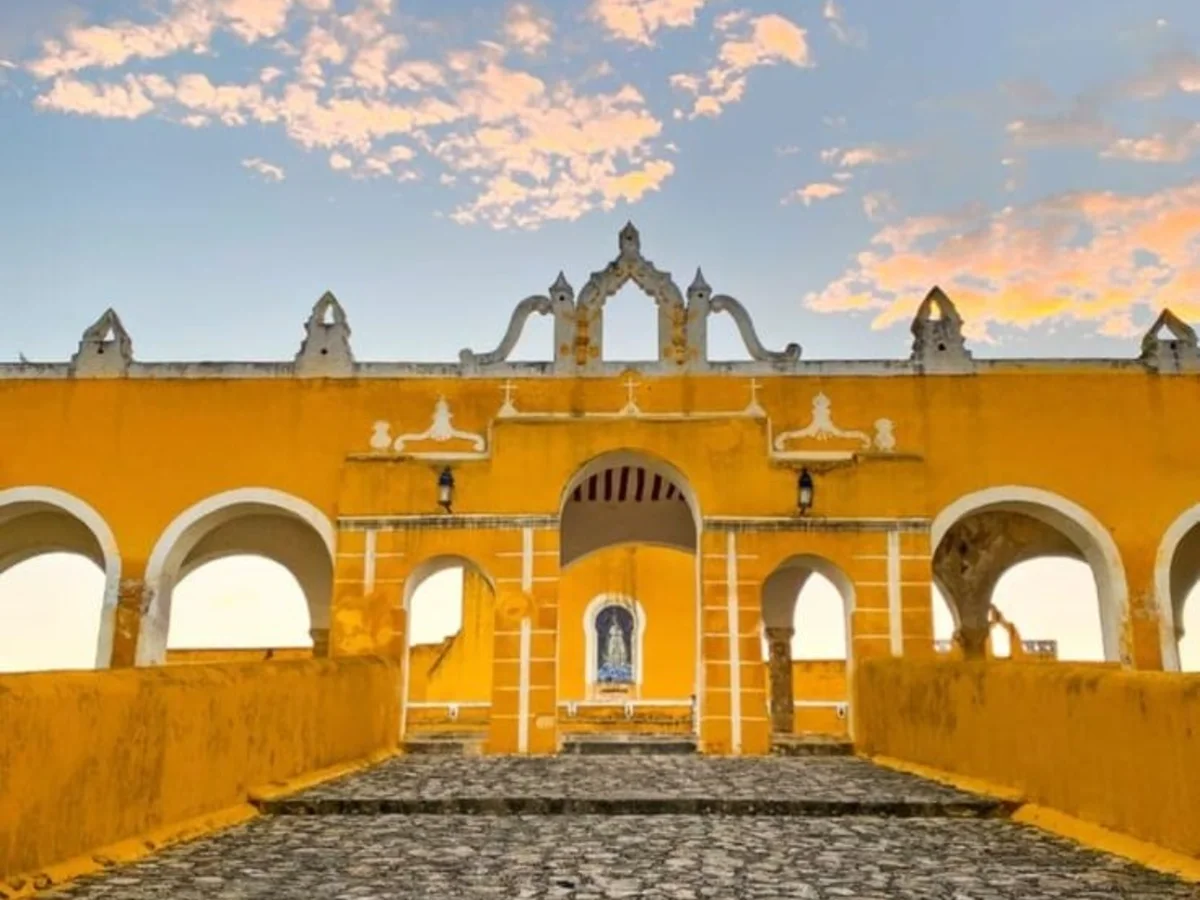
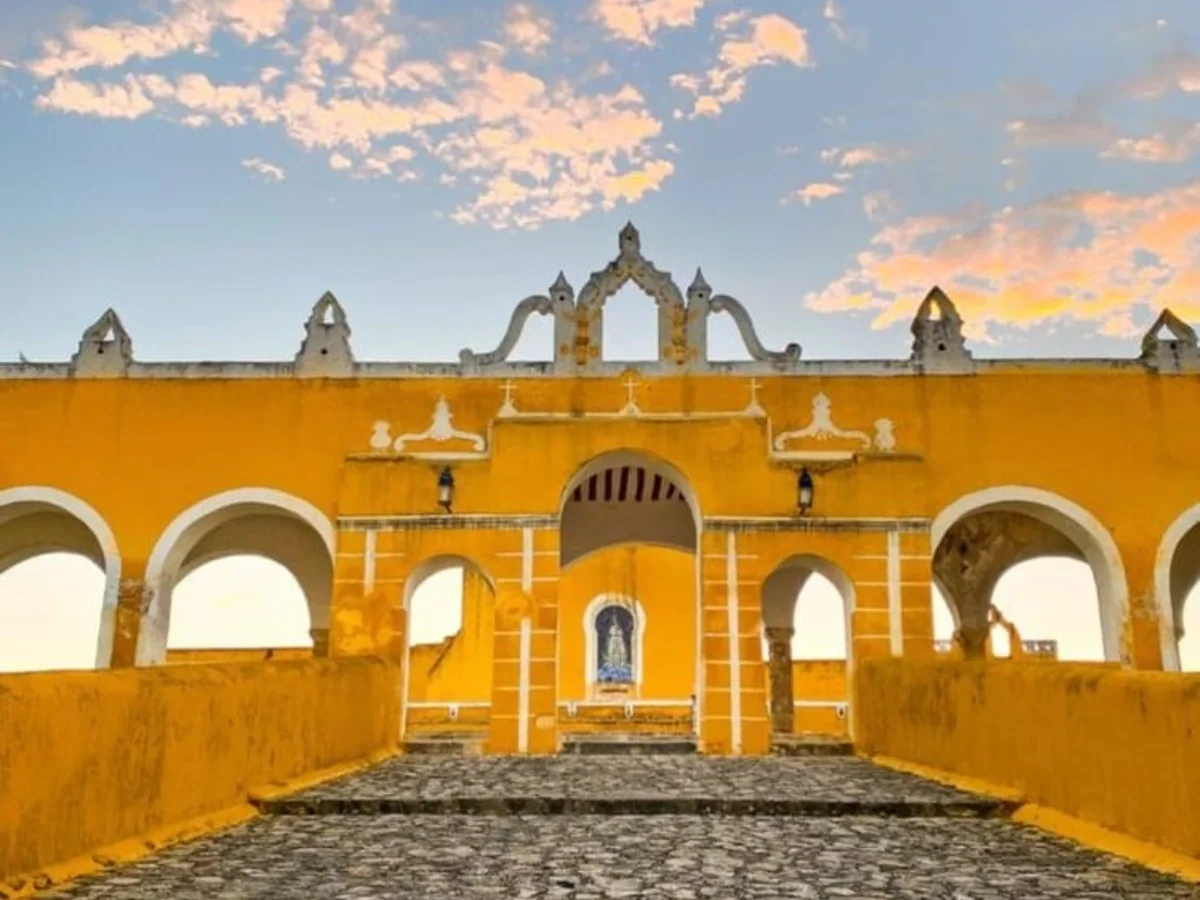
- 9:00 AM San Antonio de Padua Convent — The story of the 16th-century Franciscan convent told in its atrium, then free time to walk the yellow town.
- 11:15 AM Chichén Itzá — Guided walk through the Temple of Kukulkán, the Sacred Cenote, the Ball Court, the Tzompantli and the Jaguars and Eagles platform.
- 1:45 PM Regional lunch in Kaua — Buffet of Yucatecan dishes: cochinita, relleno negro, lime soup and meat-free options.
- 3:00 PM Selva Maya cenote — The swim lands exactly when the sun is at its worst. Changing rooms and showers on site.
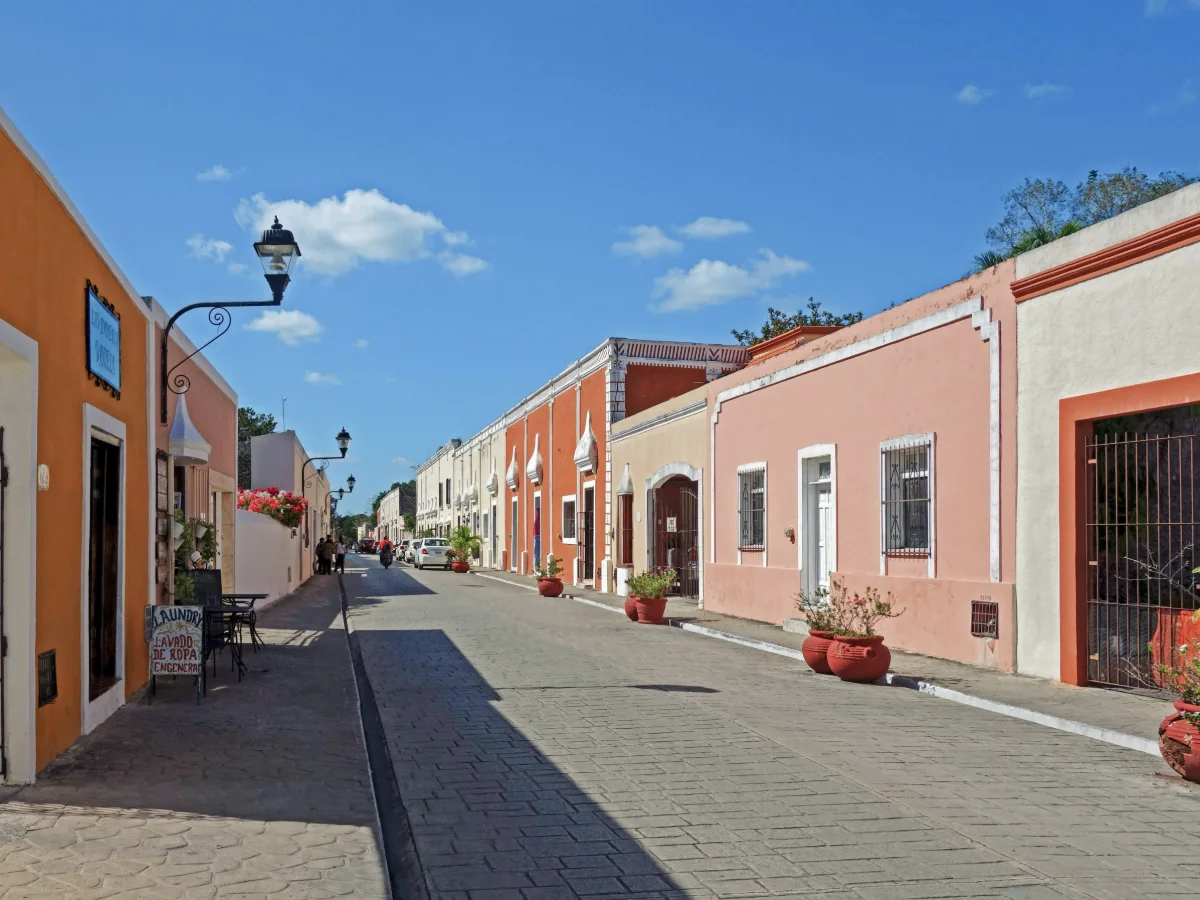
- 4:20 PM Valladolid — Francisco Cantón Rosado park with its original railings, the church of San Servacio and the murals in the town hall.
- 8:00 PM Back in Mérida — We drop you off where the day started.
Included: Air-conditioned transport, General culture guide, Regional buffet lunch
Not included: Chichén Itzá entrance, Cenote entrance, Drinks
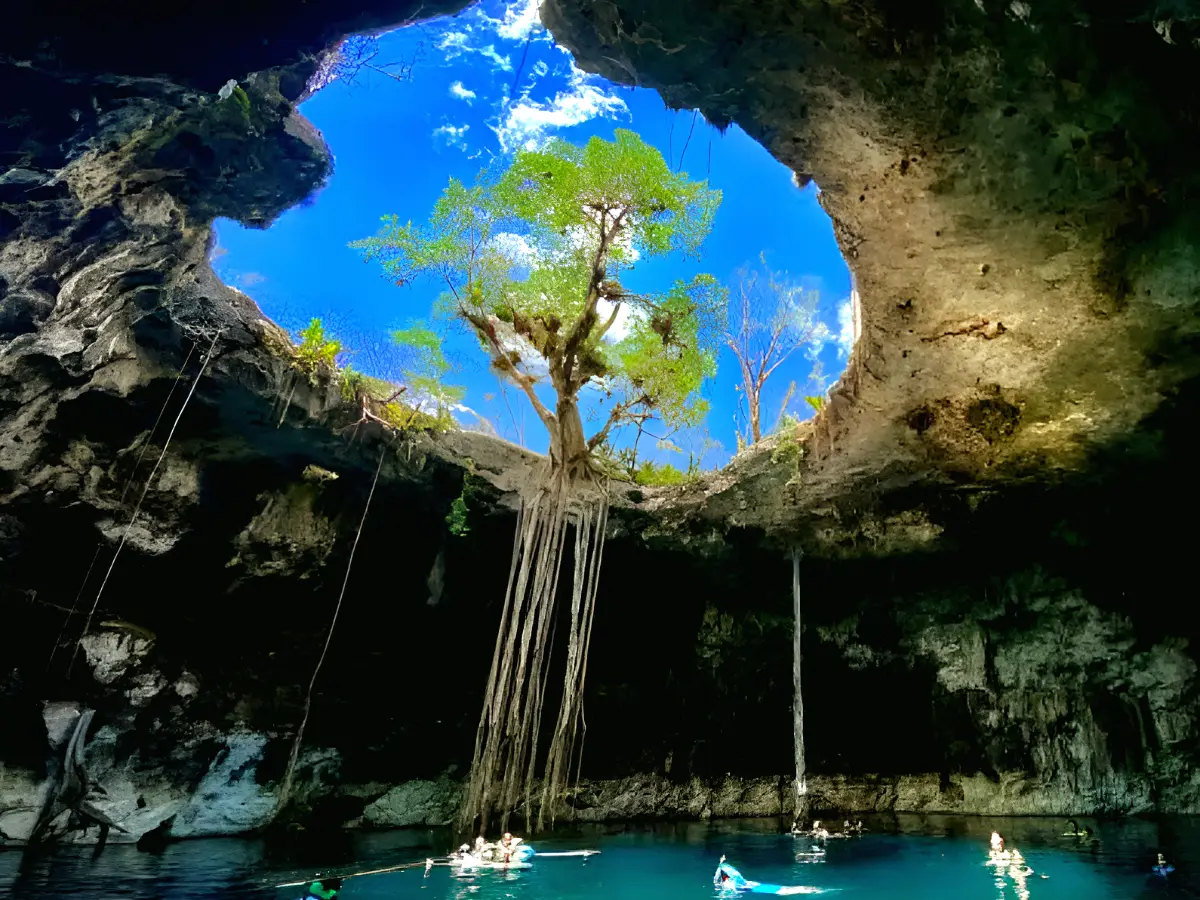
Cenotes · 7 h
The four cenotes of Santa Bárbara
Four different cenotes and a lunch made by hand
from $1,450 MXN per person
See itinerary
10:00 AM – 5:00 PM · daily
- 10:00 AM Departure from the office — An hour on the road to Homún, through the ring of cenotes.
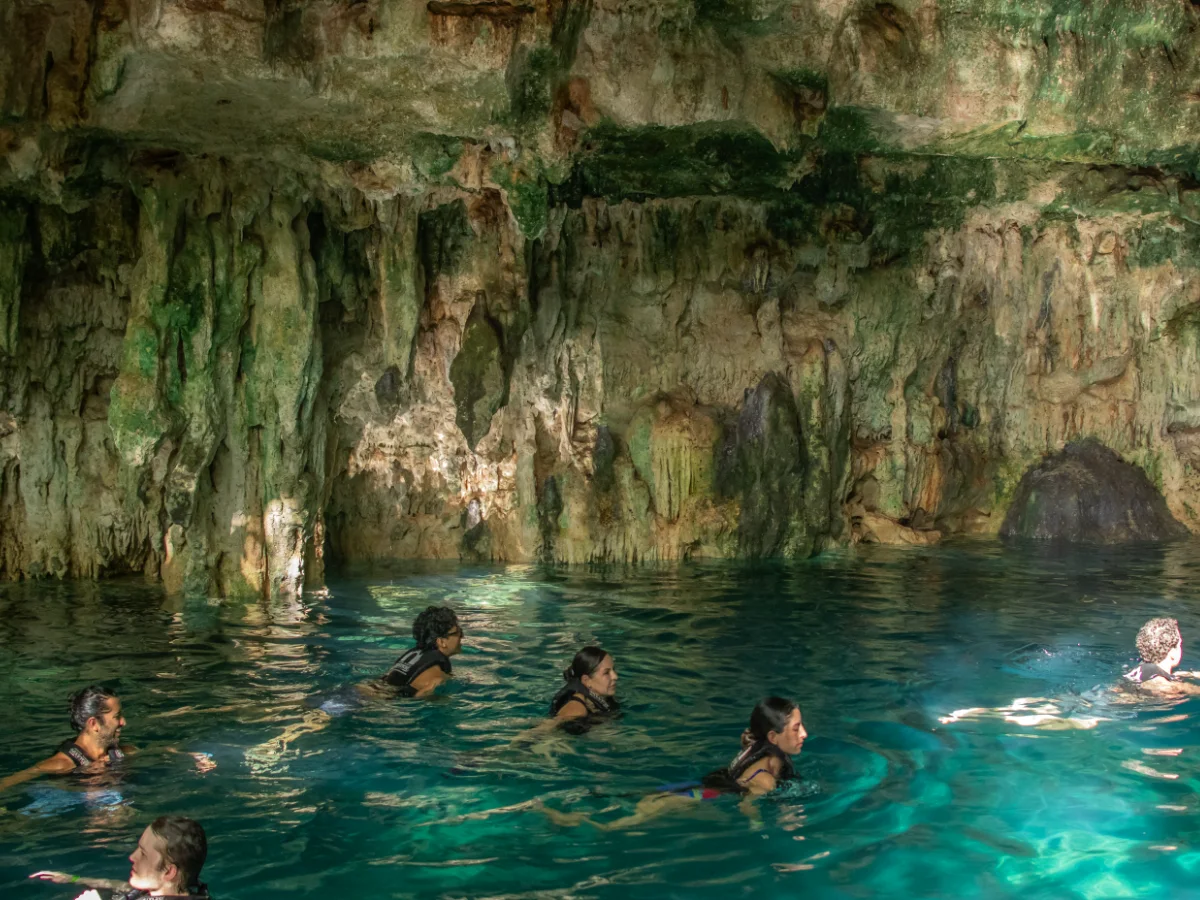
- 11:00 AM Cascabel cenote — Closed, cave type. You descend inside and the water sits in half-light: the most striking of the four.
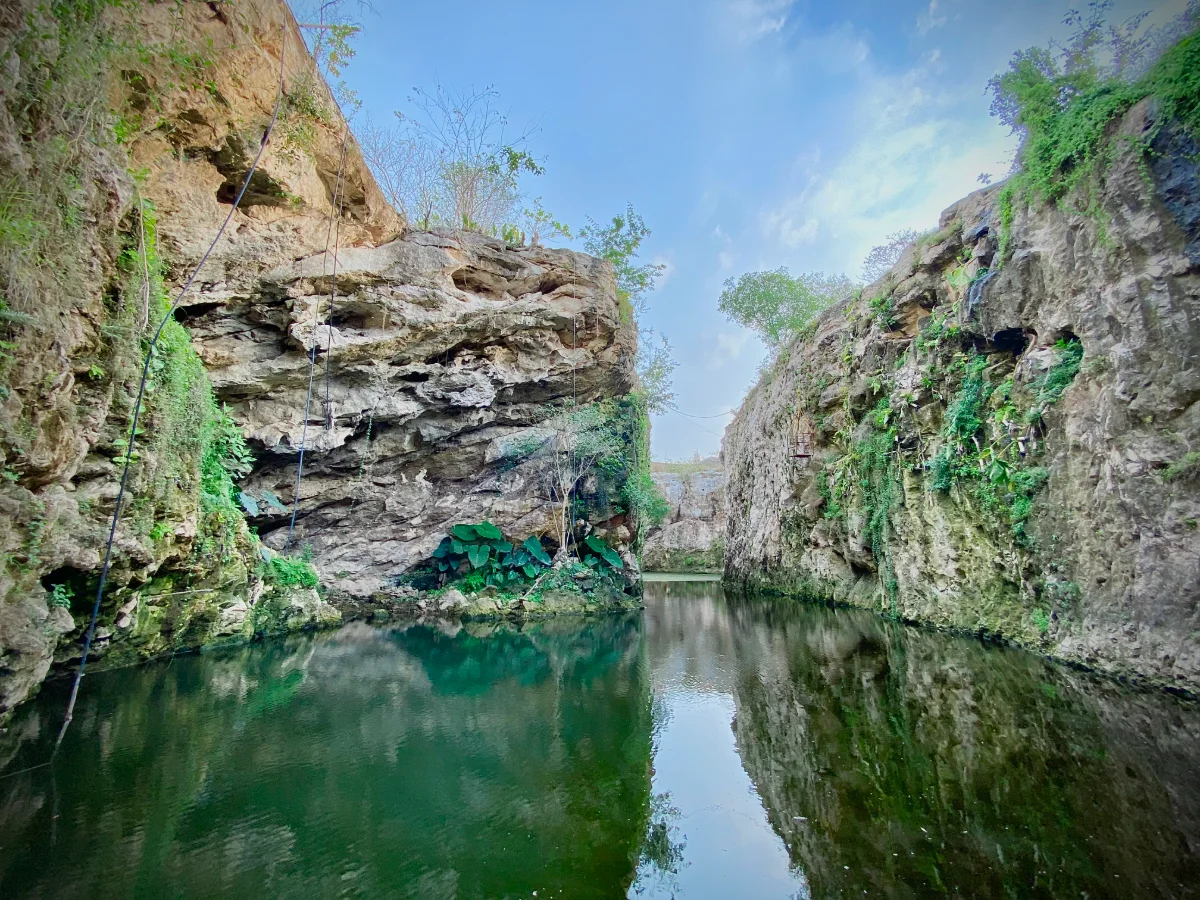
- 11:30 AM Chaksikín cenote — Semi-open. You go down between limestone walls painted with Maya-themed murals.
- 12:00 PM Xooch cenote — Semi-open, with a shaft of light that falls straight onto the water mid-morning.
- 12:30 PM Pool Cocom cenote — Open and surrounded by vegetation. You swim along a channel out to the wide part.
- 1:30 PM Regional lunch — Home cooking with hand-made tortillas. Plenty of time to eat without rushing.
- 4:00 PM Back to Mérida — An hour back, arriving around five.
Included: Transport, Certified guide, Entry to all four cenotes, Regional lunch
Not included: Drinks with lunch
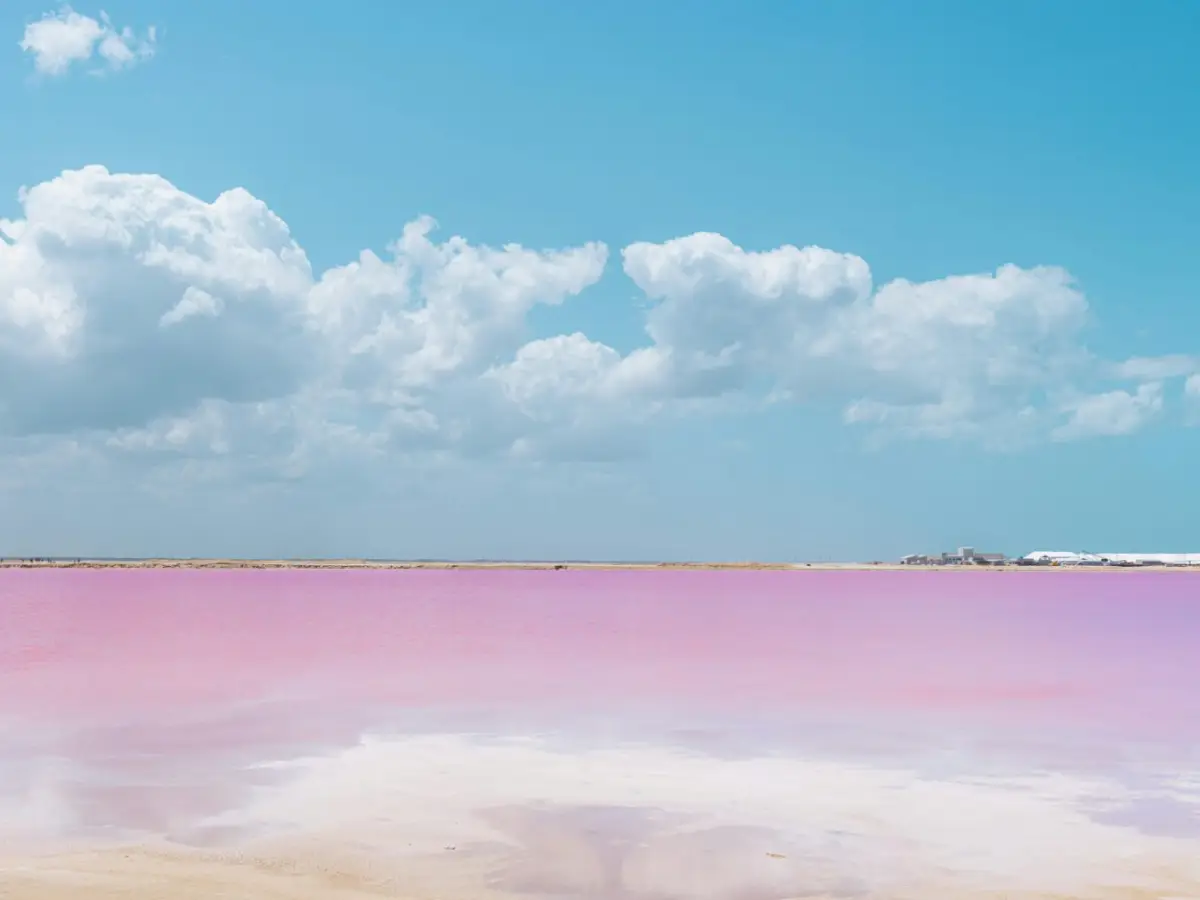
Nature · 12 h
Las Coloradas and Río Lagartos
Genuinely pink lagoons, and flamingos in the estuary
from $1,400 MXN per person
See itinerary
7:00 AM – 8:00 PM · daily
- 7:00 AM Departure from the office — Almost three hours to the north coast, with a stop halfway.
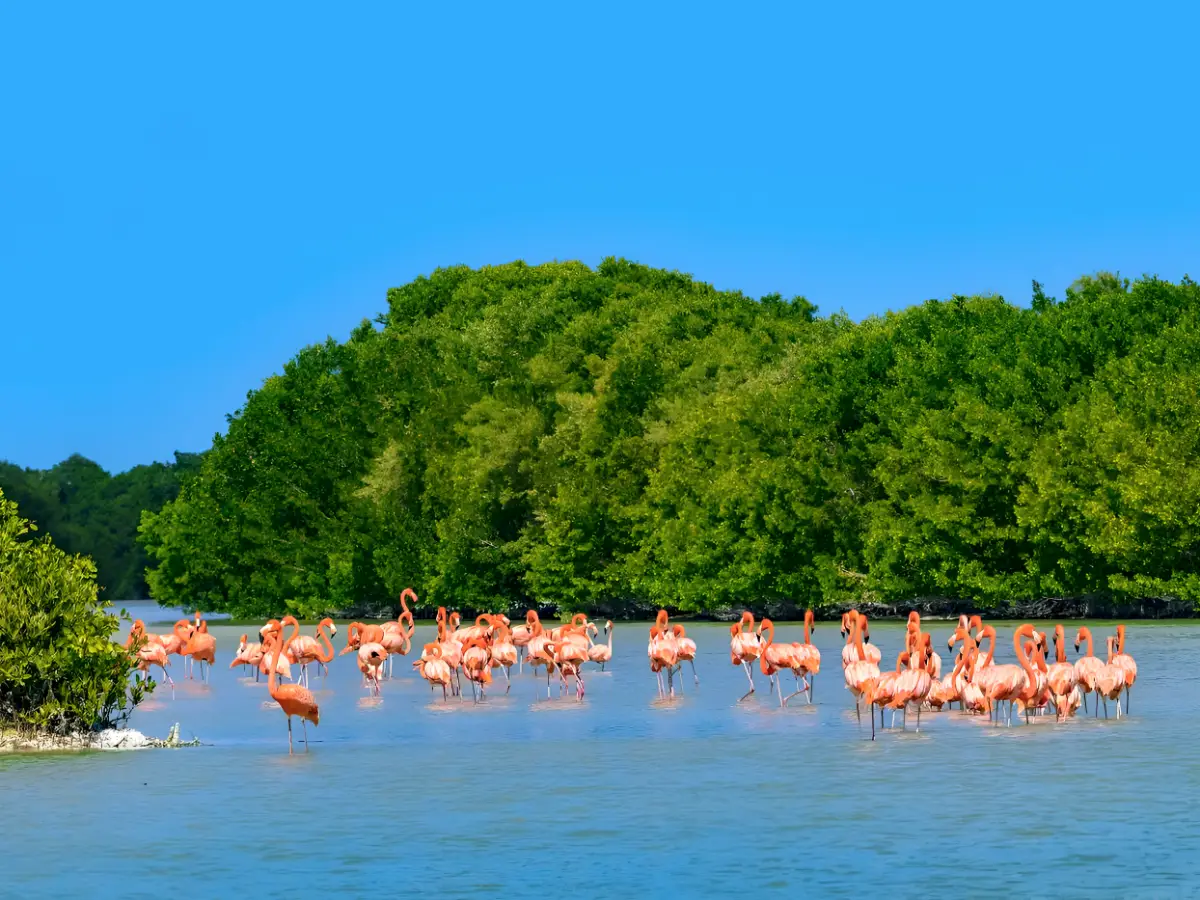
- 9:50 AM Las Coloradas — A guided walk beside the pink, white and orange pools of the salt works. No swimming: it is a protected area.
- 11:00 AM Cancunito beach — A rustic beach inside the reserve, calm water and hardly anyone around.
- 12:30 PM Boat ride through the estuary — Channels through the mangroves, flamingo watching areas, crocodiles in their habitat and the mineral mud bath.
- 2:15 PM Lunch in Río Lagartos — Fresh fish, ceviche, octopus or tikin xic on the waterfront of the fishing village.
- 4:15 PM Back to Mérida — Nearly four hours back, arriving around eight.
Included: Transport, Guide, Boat ride, Lunch from a set menu
Not included: Las Coloradas entrance, Drinks
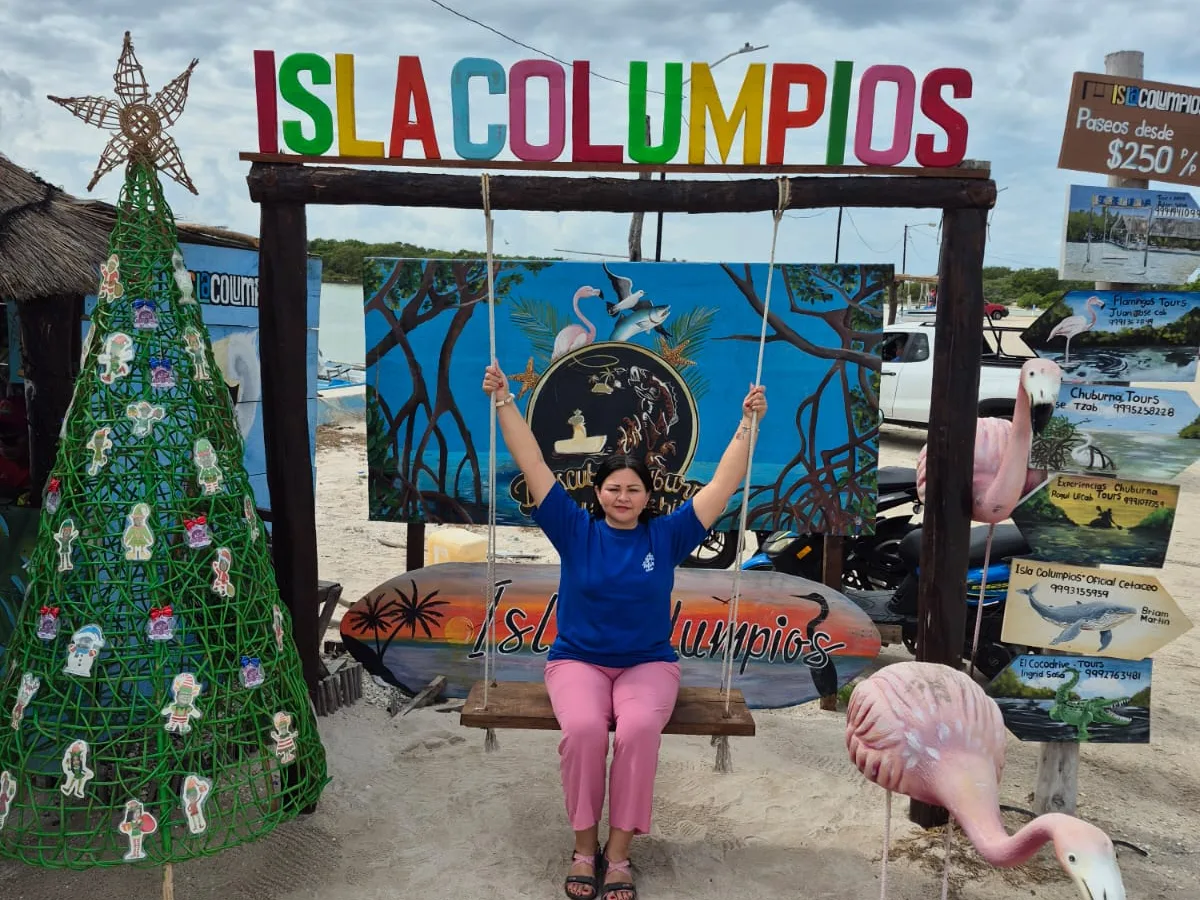
Beach · 8 h
North Coast and Isla Columpios
Wooden swings driven straight into the sea
from $1,250 MXN per person
See itinerary
10:00 AM – 6:00 PM · daily
- 10:00 AM Departure from the office — An hour and a quarter to the Chuburná harbour, where the boat leaves from.
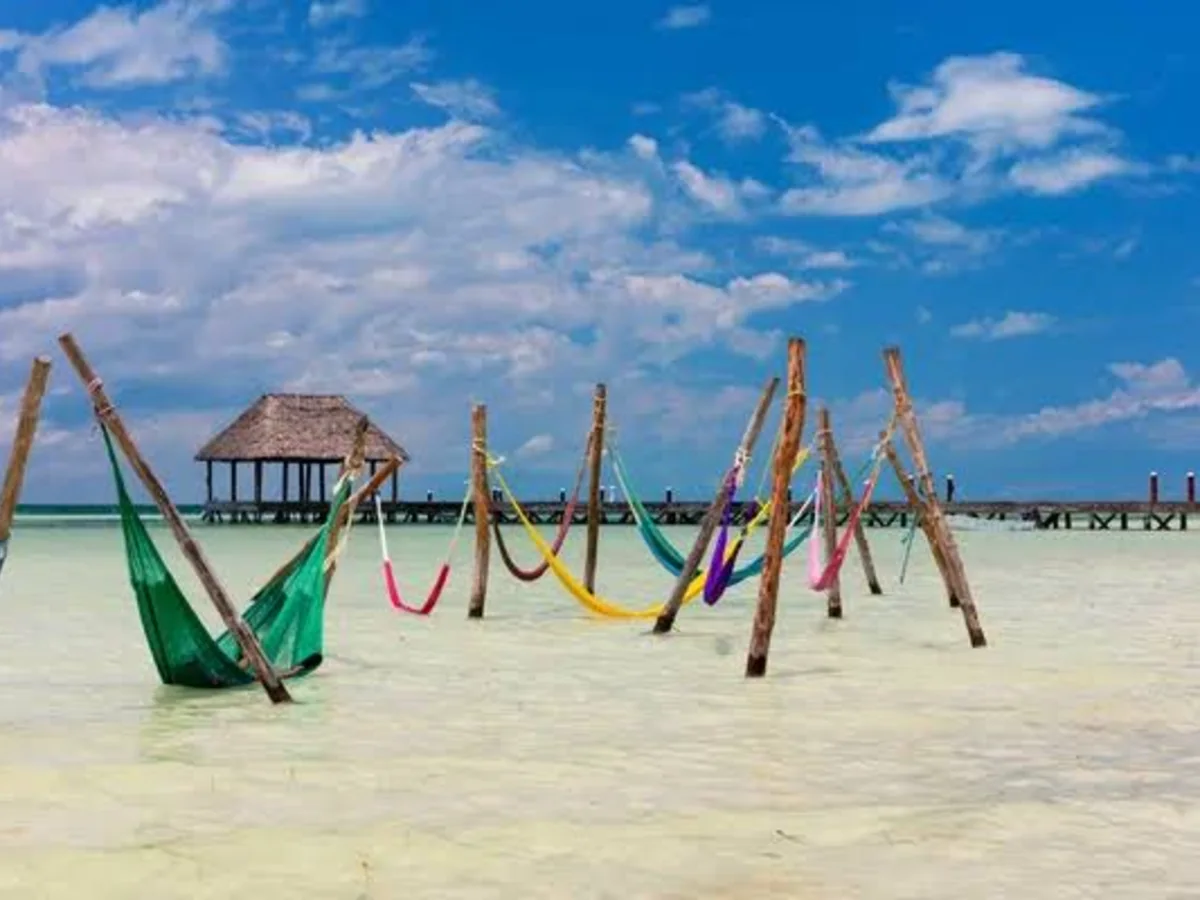
- 11:30 AM Isla Columpios — Turquoise water barely past your knees, swings and hammocks over the sea, and mangrove all around full of birds.
- 1:00 PM Chuburná dunes — White sand mounds shaped by the wind, with nobody around. Good for walking and for photos.
- 2:30 PM Puerto Progreso — Free afternoon: eat on the seafront, walk the pier or stay on the beach.
- 5:30 PM Back to Mérida — Half an hour back, arriving around six.
Included: Transport, Certified guide, Boat and Isla Columpios entry
Not included: Food, Drinks
Frequently asked questions
What's the hottest month in Yucatán?
The hottest months run from May to August, according to CONAGUA.
When does it rain the most?
In summer and early fall; heavy rains account for 60% to 70% of the annual total.
Does it get cold in Yucatán?
With the nortes, from November to February, temperatures drop, but it stays warm for most of the day.
Can you visit in the rainy season?
Yes. Rain usually falls in the afternoon and cenotes are just as enjoyable; check the forecast close to your trip.