The city of three cultures
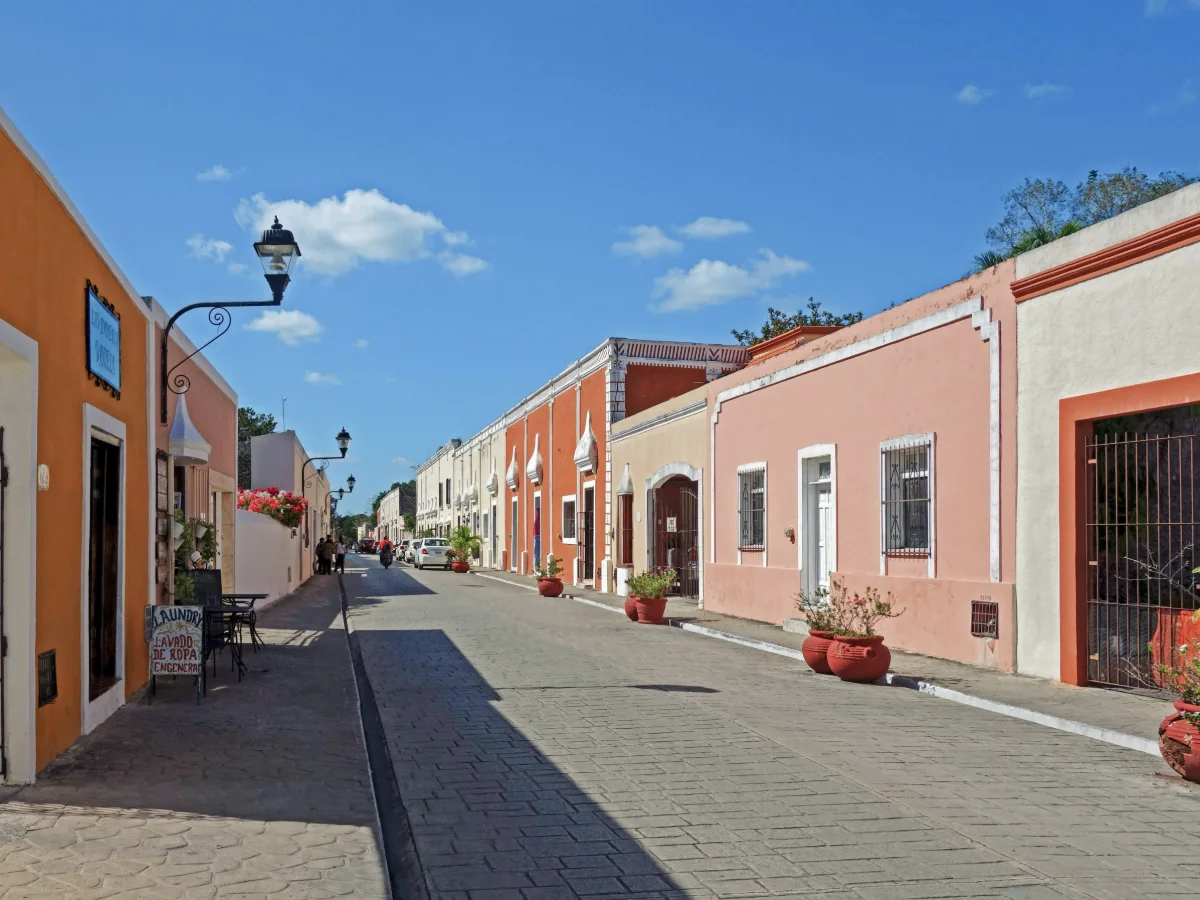
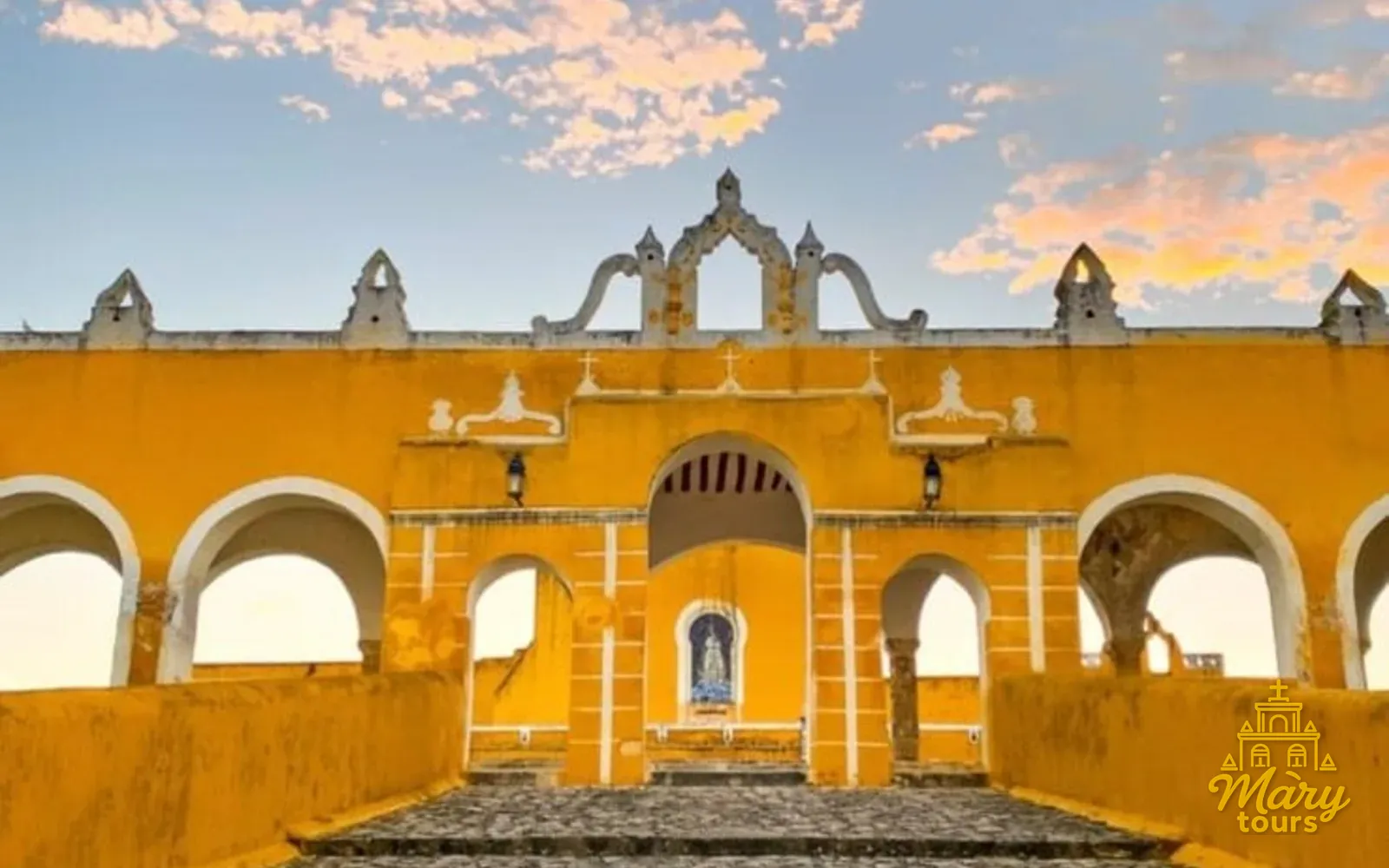
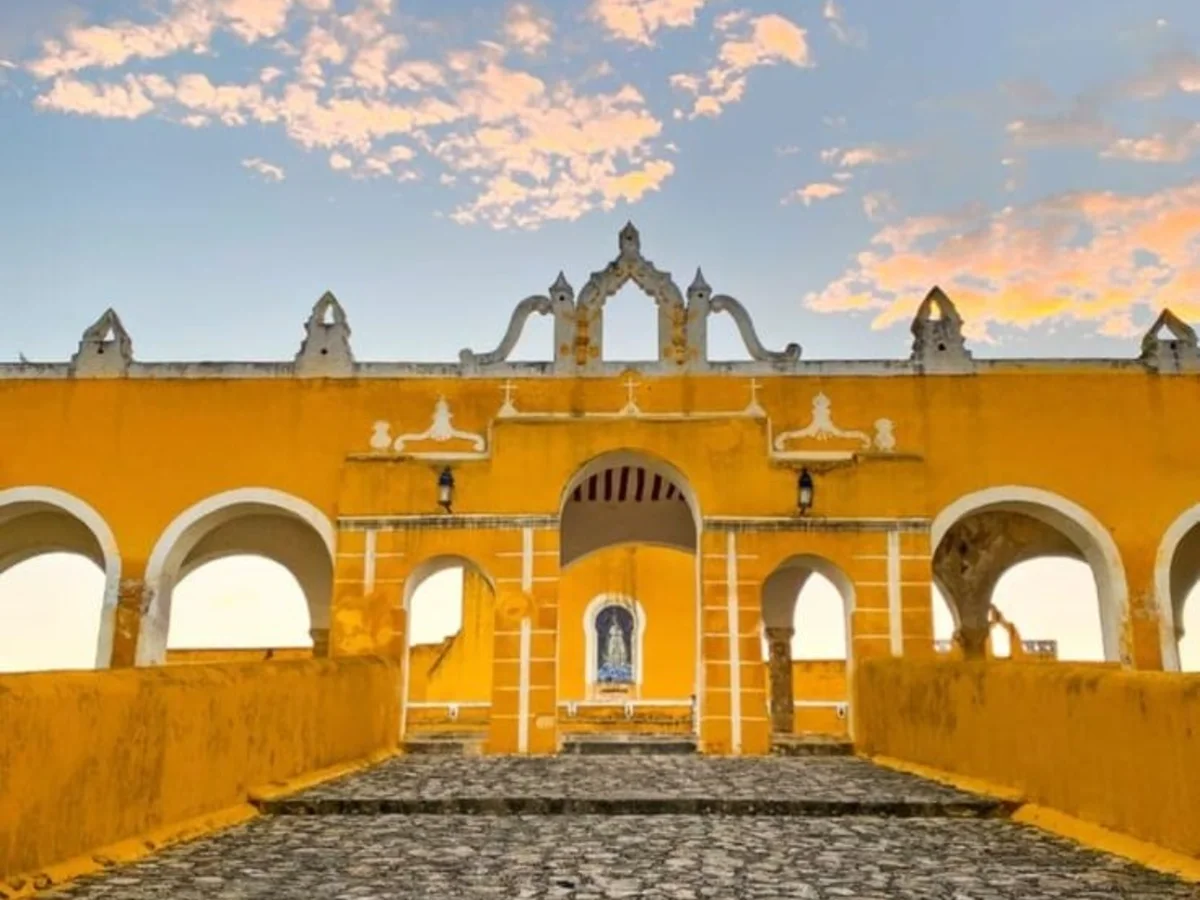
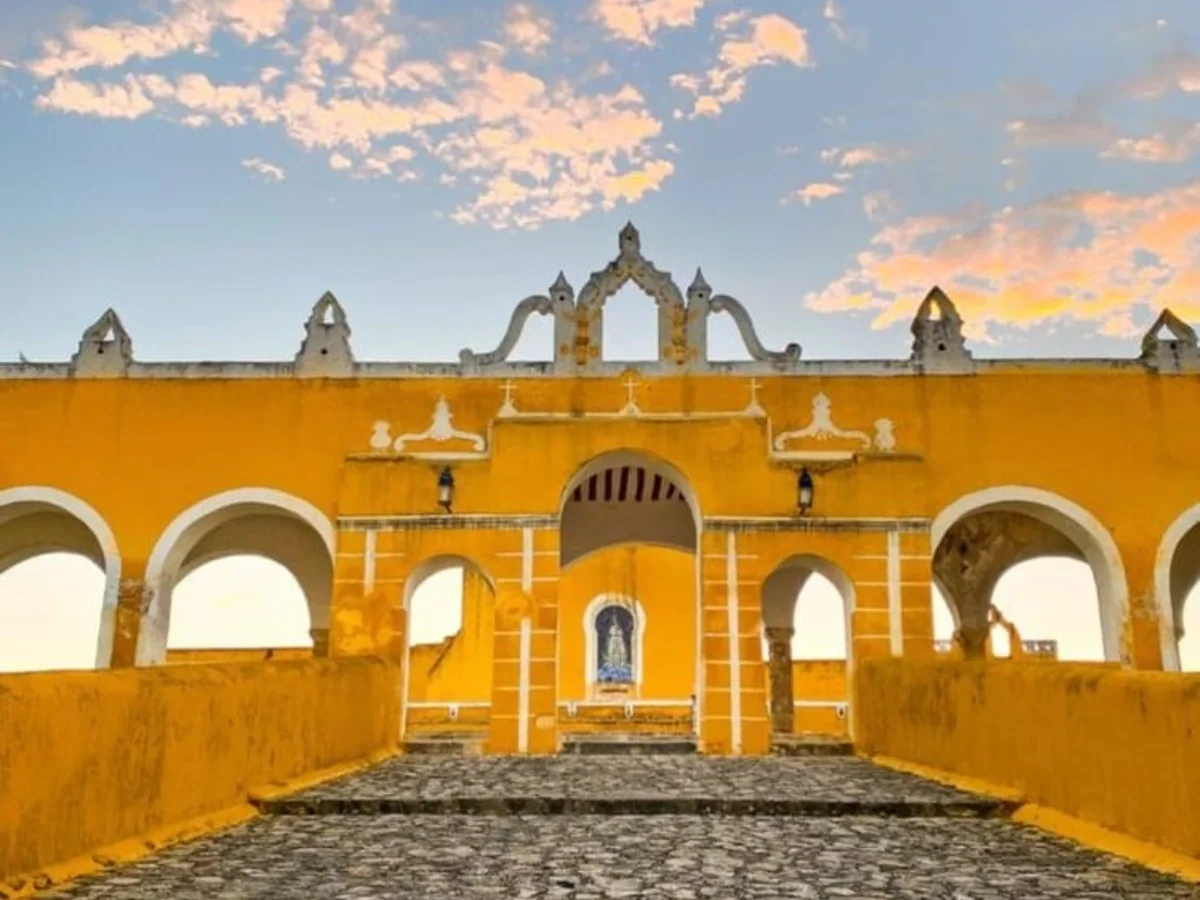
Izamal has been a Pueblo Mágico (Magical Town) since 2002, and Mexico's tourism ministry calls it the "City of Three Cultures" for its Maya past, its colonial era and its life today. You see all three layers at once: houses painted yellow, a 16th-century convent and Maya pyramids standing between the streets.
INAH, Mexico's national institute of anthropology and history, records more than 2,500 years of occupation at Izamal. Its name is linked to the phrase "dew falling from the sky," and its ceremonial center was enormous: taken together, its buildings add up to more than a million cubic meters of construction. A network of sacbés, white Maya causeways, linked it to other cities in the northern peninsula, a sign of its regional importance.
The convent on top of the pyramid
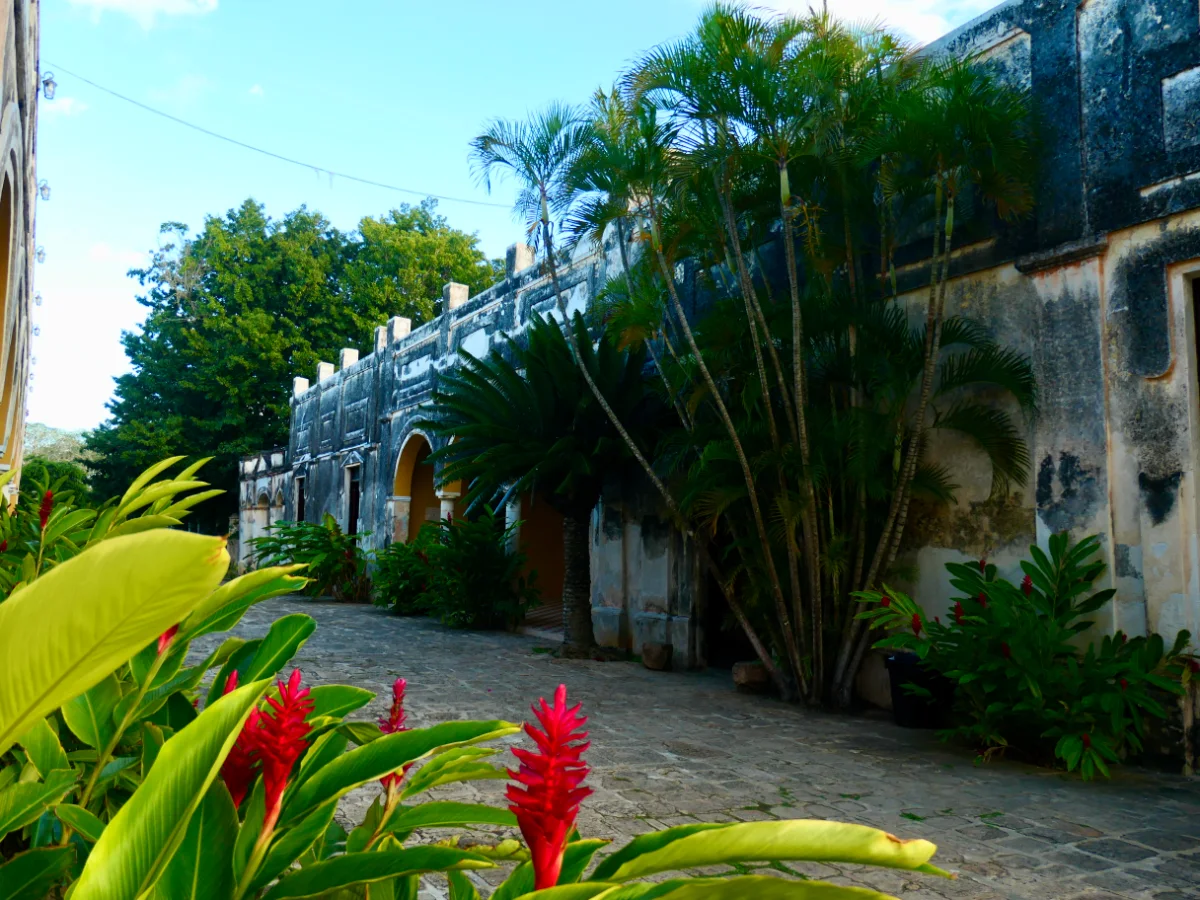
The Franciscan convent of San Antonio de Padua wasn't built on flat ground. According to INAH, it sits on a pre-Hispanic platform called Ppap Hol Chak. If you notice the changes in level across the atrium and ramps, you can still tell you're standing on a Maya base.
Its atrium is among the largest in the Americas. Inside the church there's a Baroque altarpiece, and on the tour the convent's story is told right in the atrium before you get free time to explore the town.
Pyramids among the streets
Izamal has several Maya structures open to the public, woven into the town layout. The best known is Kinich Kakmó, one of the largest pyramid bases on the peninsula. INAH also lists Itzamatul, El Conejo and Habuc. Some of the site's sculptures and decorative stones show Puuc influence, the same style you see at Uxmal.
The tour focuses on the convent and the town center. If you're interested in the pyramids, ask the guide which ones are close by during your free time.
The two afternoon cenotes
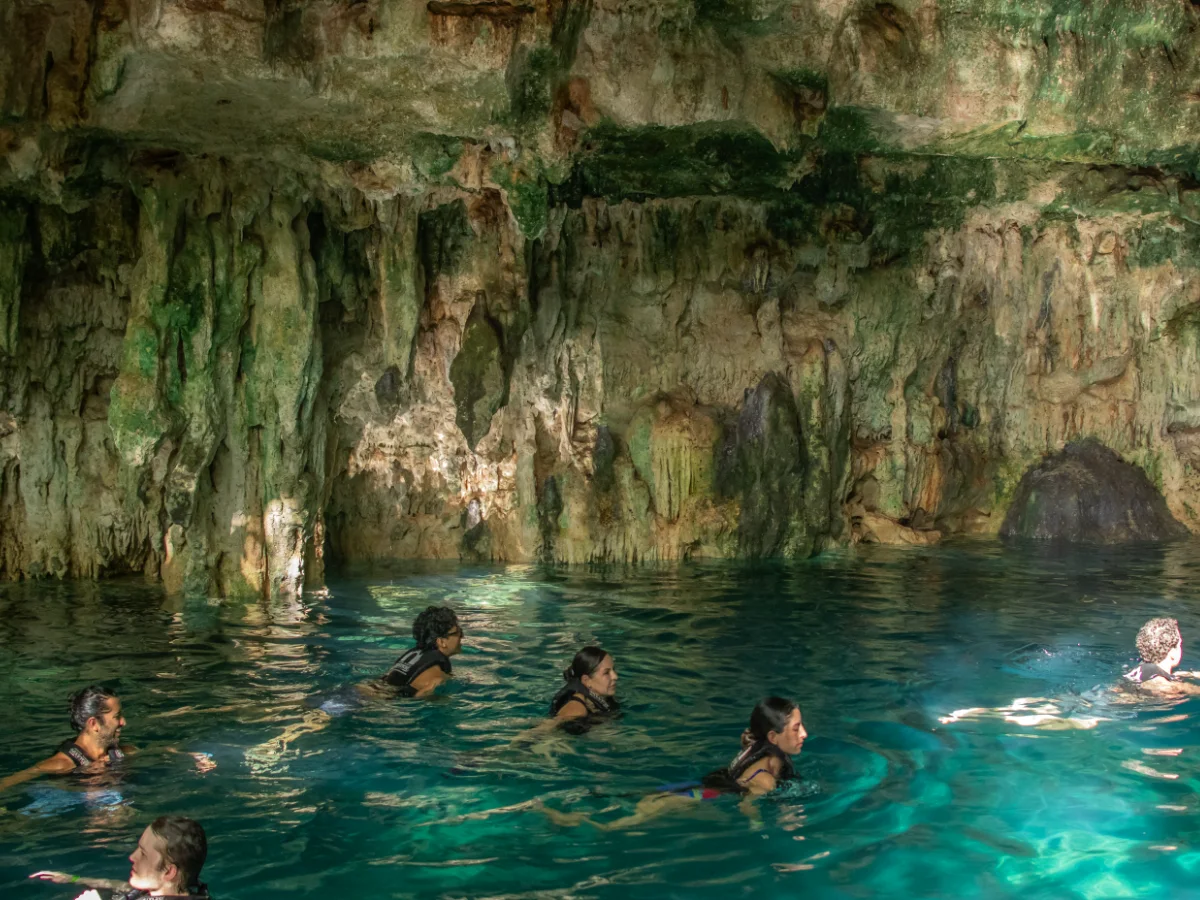
From Izamal, the tour drives about forty minutes to the cenote area around Homún:
- Cenote Yaxbacaltún, the first swim, right after the morning walk.
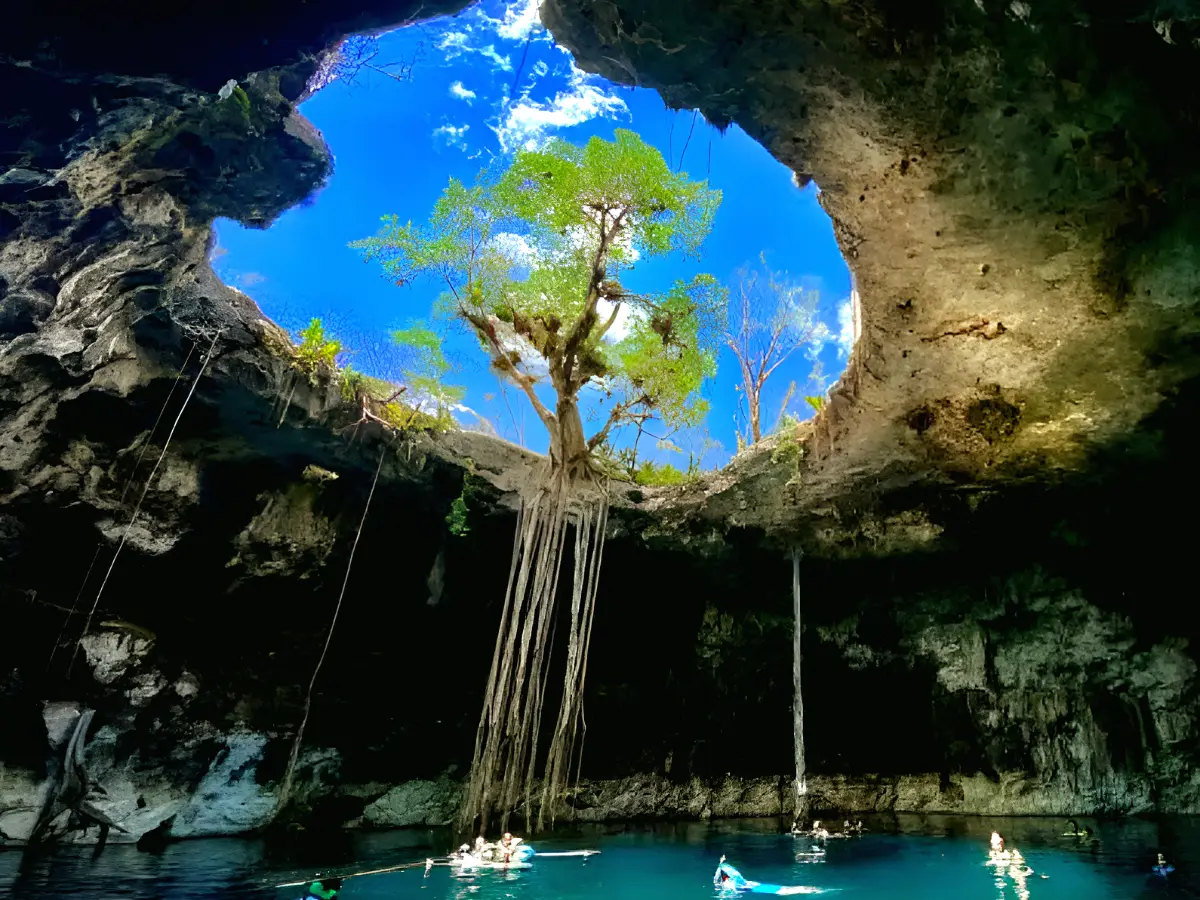
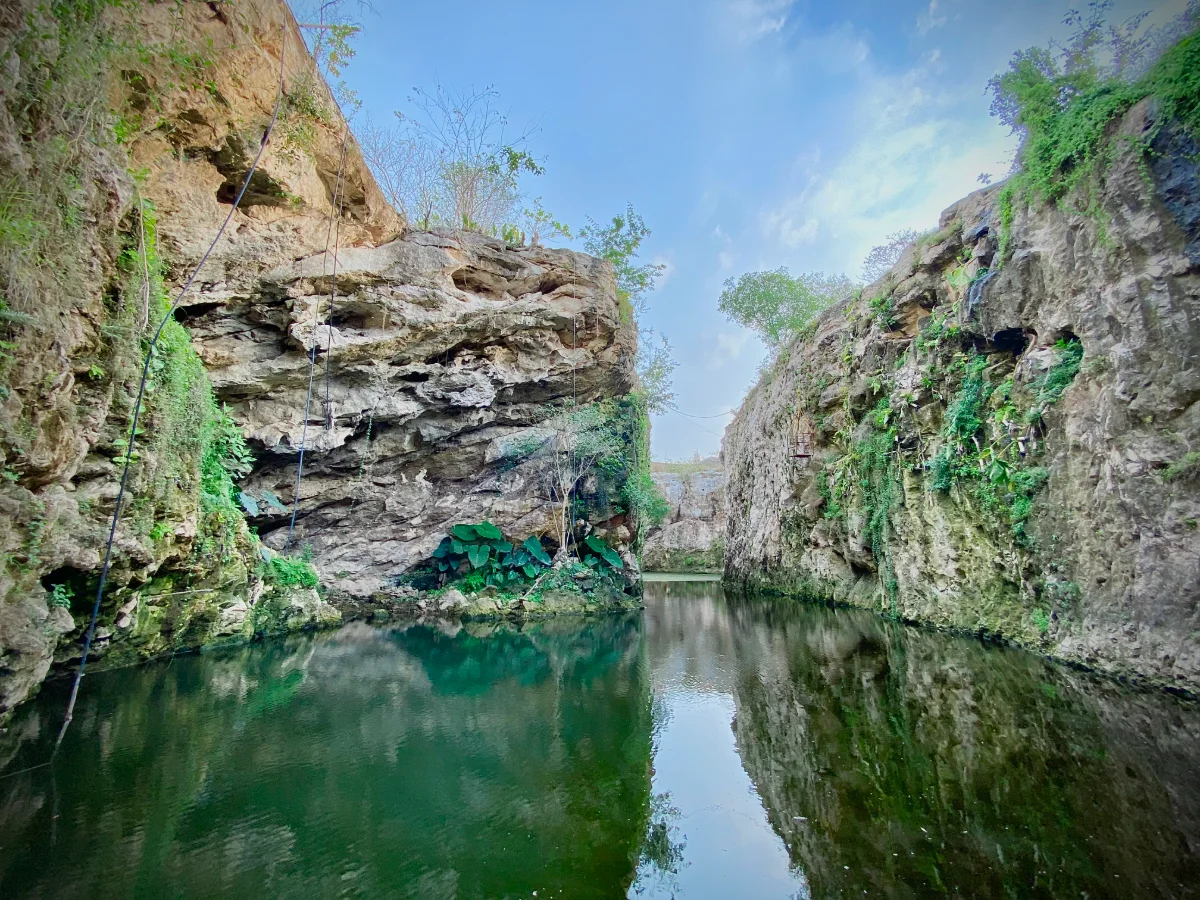
- Cenote San Antonio, semi-closed, with a very different feel from the first. Lunch is served there.
Entry to both cenotes and lunch are included, along with transportation and the guide. Drinks are extra.
What to bring
- Swimsuit on from the start and a towel.
- Comfortable shoes: Izamal is flat, but you'll walk quite a bit.
- A hat: the yellow façades reflect a lot of sun.
- Biodegradable sunscreen for the cenotes.
- Some cash for crafts or a snack in town.
Fun facts
- Izamal's convent was built on top of a Maya platform called Ppap Hol Chak.
- Izamal has been occupied for more than 2,500 years, according to INAH.
- Kinich Kakmó, right in town, is one of the largest pyramid bases on the peninsula.
Related tours
Towns · 9 h
Izamal and two cenotes
Izamal’s yellow first, then two cold cenotes
from $1,300 MXN per person
See itinerary
8:00 AM – 5:00 PM · daily
- 8:00 AM Departure from the office — An hour on the road. The guide uses it to explain where Izamal comes from before you arrive.
- 9:00 AM The yellow town — The convent and its atrium, among the largest on the continent, the baroque altarpiece, and then free time around the streets.
- 10:20 AM On to the Homún ring — Forty more minutes to the cenote area.
- 11:00 AM Yaxbacaltún cenote — The first swim, landing right after the morning’s walking.
- 12:15 PM San Antonio cenote and lunch — A semi-closed cenote that feels nothing like the first one, and lunch served right there.
- 3:15 PM Back to Mérida — Back to Mérida, arriving around five.
Included: Transport, Guide, Entry to both cenotes, Lunch
Not included: Drinks
Cenotes · 9 h
Izamal and the Santa Bárbara cenotes
Izamal early, and the whole afternoon in four cenotes
from $1,550 MXN per person
See itinerary
8:00 AM – 6:00 PM · daily
- 8:00 AM Departure from the office — An hour on the road to Izamal.
- 9:00 AM Izamal — The San Antonio de Padua convent, raised on a Maya platform, the Kinich Kakmó pyramid and the yellow streets.
- 10:30 AM On to Homún — An hour and a quarter through small towns to the cenote grounds.
- 12:00 PM Santa Bárbara cenotes — Five hours inside: Cascabel in a cavern, Chaksikín with its shaft of light, and Xooch and Pool Cocom in the open. You move between them by bike or cart, and lunch is served on site.
- 5:00 PM Back to Mérida — An hour back.
Included: Transport, General culture guide, Entrances, Lunch
Not included: Drinks
Archaeology · 11 h
Chichén Itzá, Izamal and Valladolid
Four stops in one day, and none of them rushed
from $1,200 MXN per person
See itinerary
8:00 AM – 8:00 PM · daily
- 8:00 AM Departure from the office — An hour on the road to Izamal. The guide uses the drive to set up what comes next.
- 9:00 AM San Antonio de Padua Convent — The story of the 16th-century Franciscan convent told in its atrium, then free time to walk the yellow town.
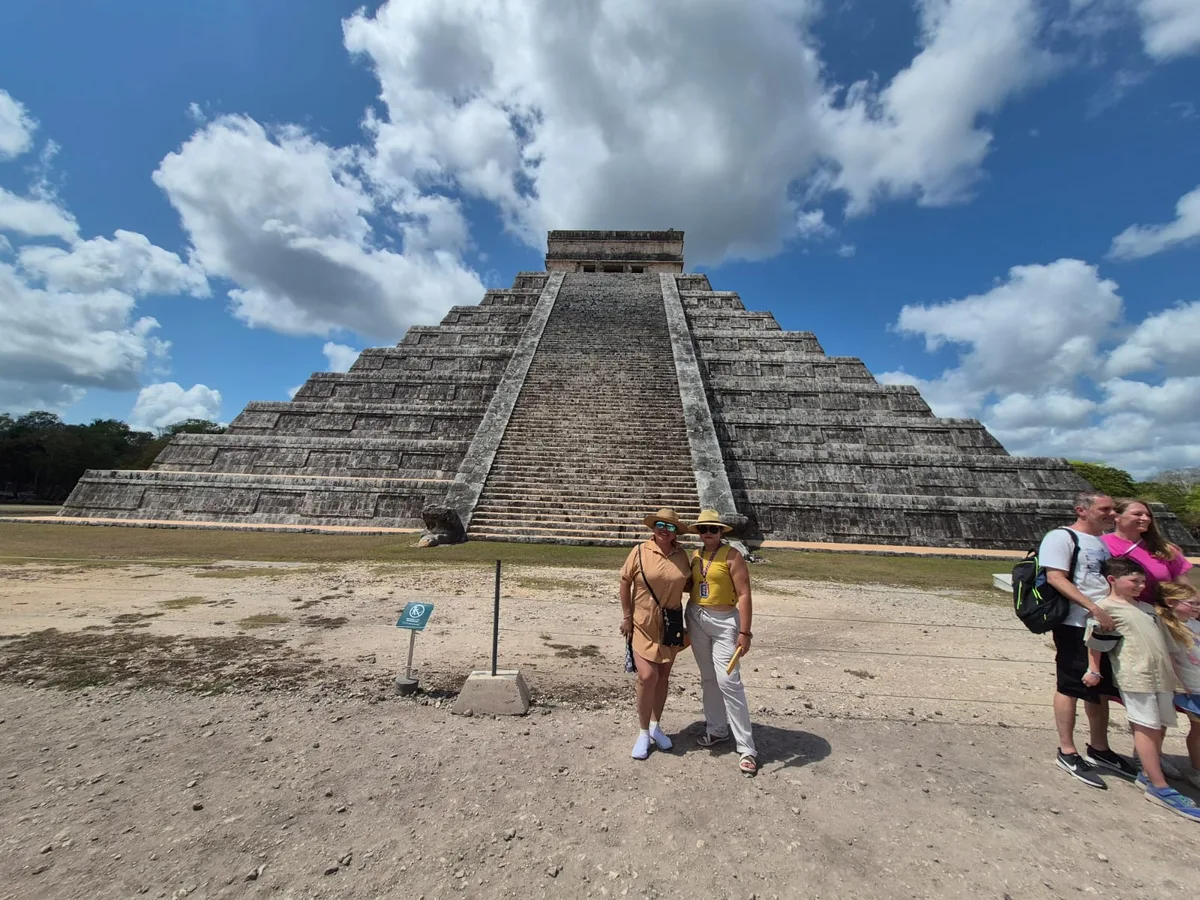
- 11:15 AM Chichén Itzá — Guided walk through the Temple of Kukulkán, the Sacred Cenote, the Ball Court, the Tzompantli and the Jaguars and Eagles platform.
- 1:45 PM Regional lunch in Kaua — Buffet of Yucatecan dishes: cochinita, relleno negro, lime soup and meat-free options.
- 3:00 PM Selva Maya cenote — The swim lands exactly when the sun is at its worst. Changing rooms and showers on site.
- 4:20 PM Valladolid — Francisco Cantón Rosado park with its original railings, the church of San Servacio and the murals in the town hall.
- 8:00 PM Back in Mérida — We drop you off where the day started.
Included: Air-conditioned transport, General culture guide, Regional buffet lunch
Not included: Chichén Itzá entrance, Cenote entrance, Drinks
Transfers · 8.5 h
Transfer to Izamal and Santa Bárbara
The yellow town and four cenotes, with no group schedule
from $2,650 MXN per vehicle
Frequently asked questions
How far is Izamal from Mérida?
The Izamal archaeological zone is about 72 kilometers from Mérida, roughly an hour's drive.
Why is Izamal yellow?
The façades downtown, including the convent, are painted the same shade of yellow. That's why it's known as the yellow town.
What does Izamal mean?
INAH links the name to the phrase "dew falling from the sky."
Does the tour include the cenotes?
Yes. It includes transportation, a guide, entry to both cenotes and lunch. Drinks are extra.
Since when has Izamal been a Magical Town?
Izamal joined Mexico's Pueblos Mágicos program in 2002.