What the dance is like
- Zapateado (footwork) as the basis of the choreography.
- Upright posture throughout.
- Turns in the waltz sections.
- Arms raised at right angles.
- Finger snaps called truenos (thunder), which the state source compares to Spanish castanets.
No single set of steps
The Yucatán government notes there are no single fixed steps: they vary by community. Every town has its own way of dancing jarana.
Where it's danced
The jarana is the centerpiece of vaquerías and part of fairs and patron-saint celebrations. It's danced in gala mestizo dress: the terno for women and a guayabera with white trousers for men.
The bombas
During the jarana, the music stops for the bomba, a spoken interlude of verses and humor.
Tips for seeing it
- Ask about town patron-saint fiestas during your dates.
- If you're invited to dance, go for it!
- Ask permission before photographing dancers up close.
The jarana on your travels
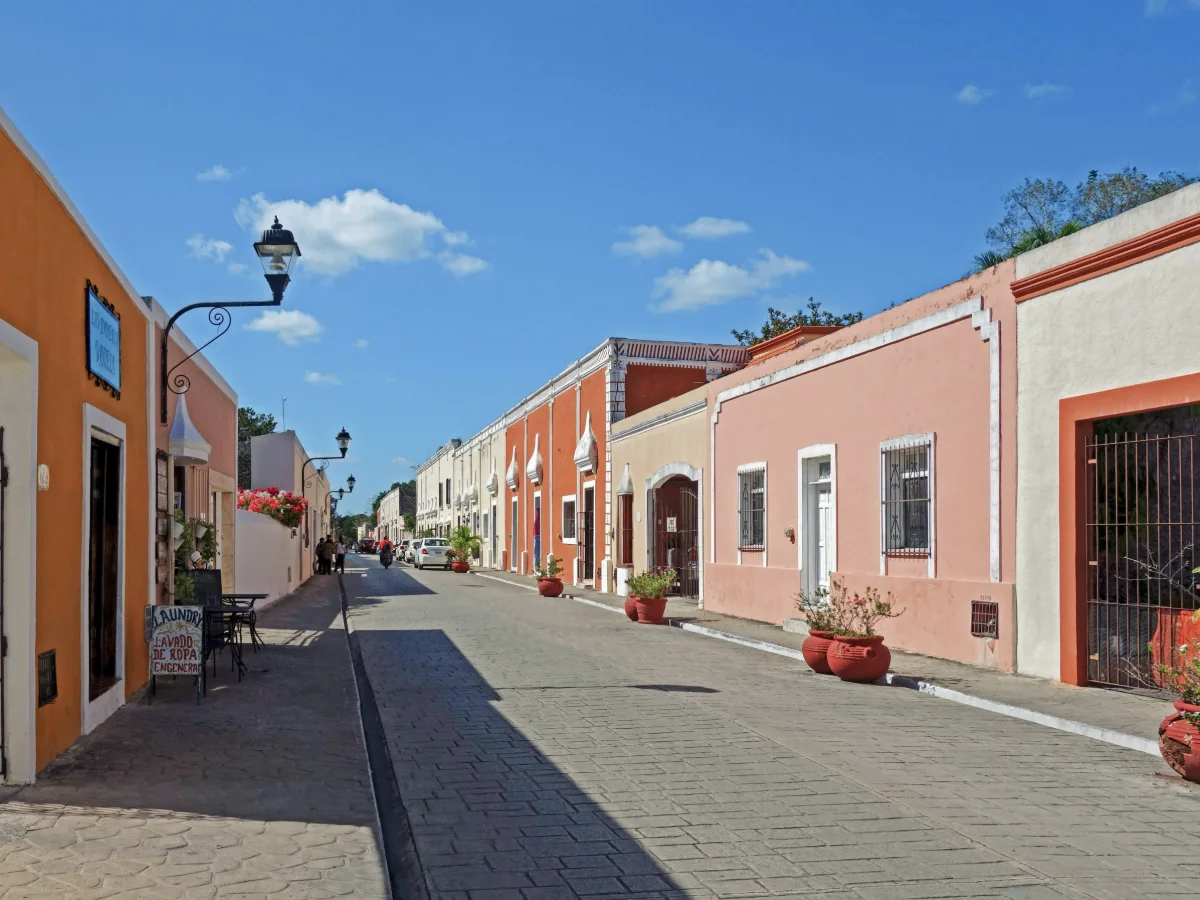
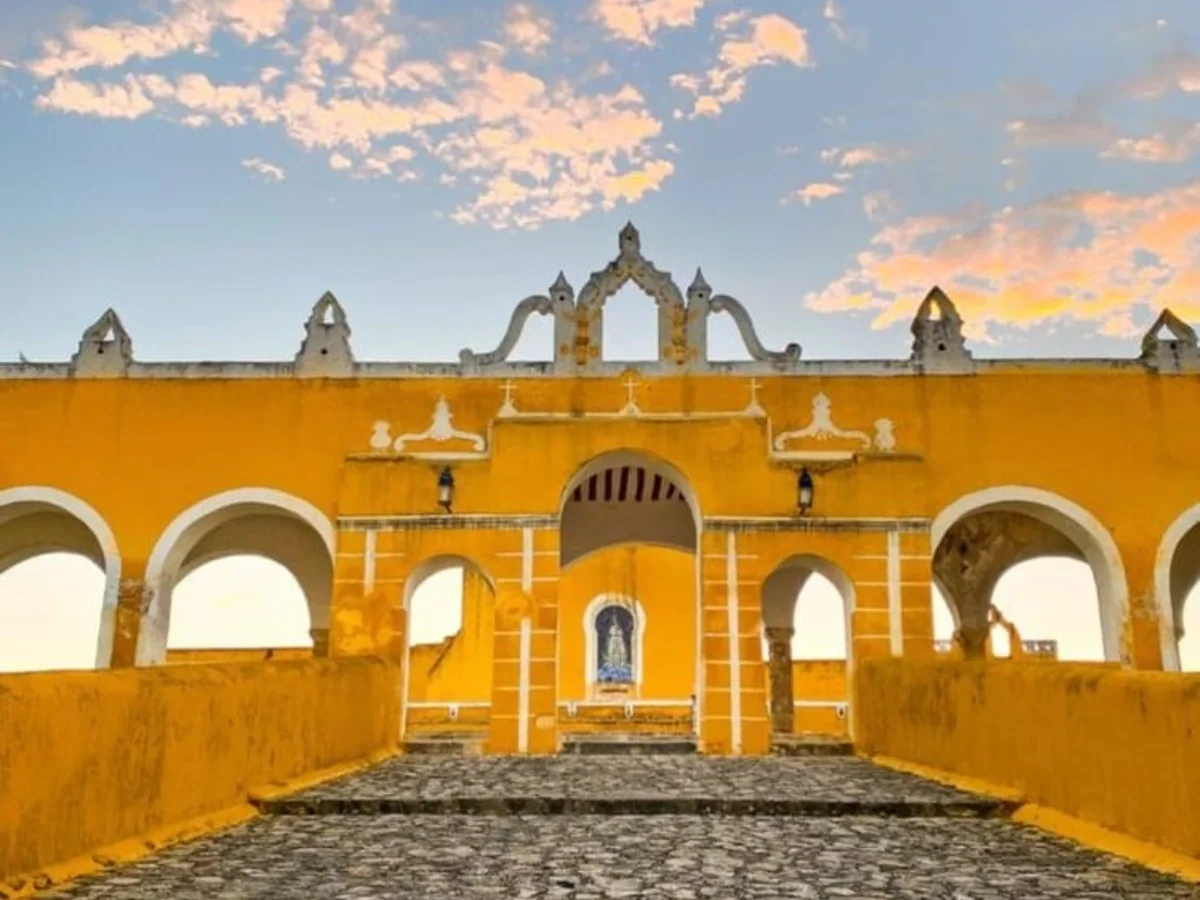
Patron-saint fiestas fall on different dates in each town. If one coincides with a Mary Tours trip to Izamal or Valladolid, it's worth checking out. Trips leave from Calle 61 in downtown Mérida.
Fun facts
- The jarana's finger snaps are called truenos.
- There's no single correct way to dance it.
- It pauses for spoken bombas.
Related tours
Archaeology · 11 h
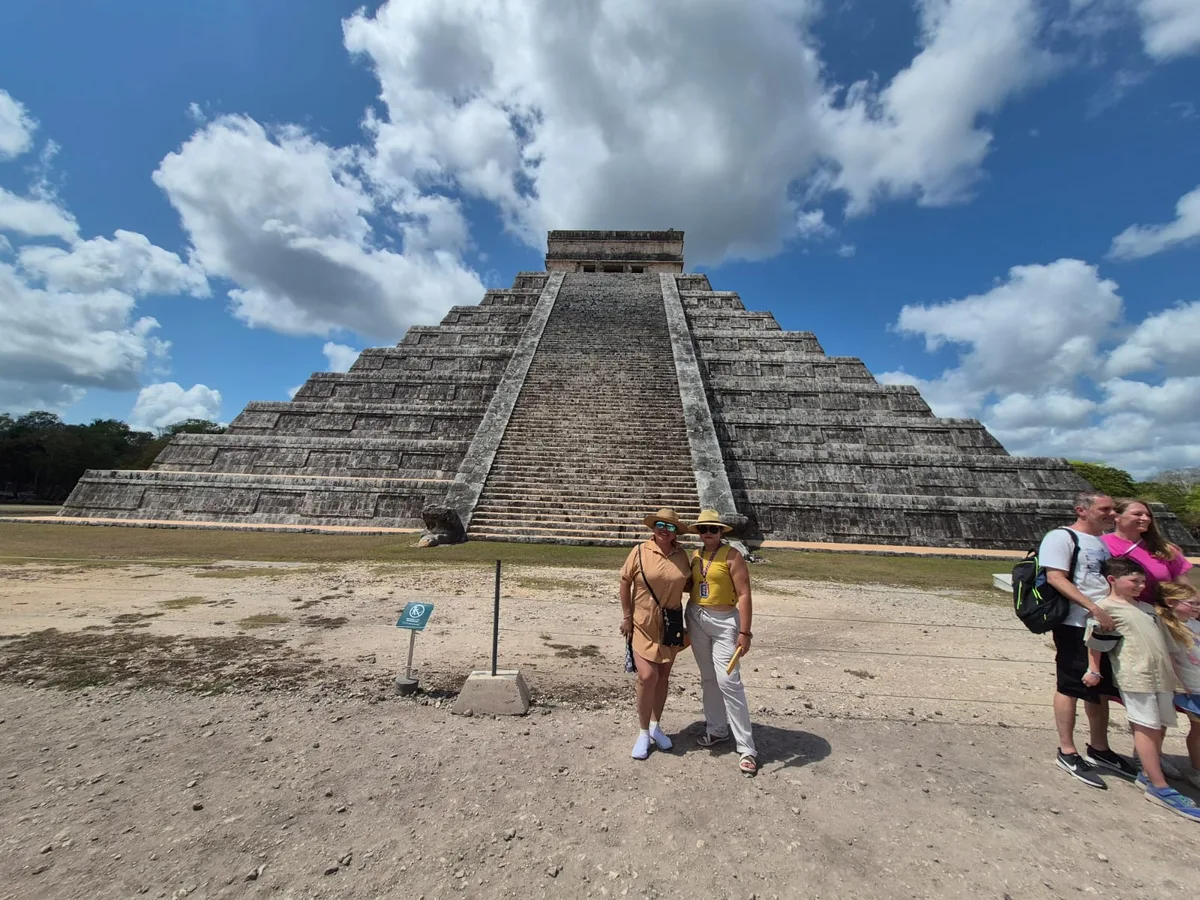
Chichén Itzá, Izamal and Valladolid
Four stops in one day, and none of them rushed
from $1,200 MXN per person
See itinerary
8:00 AM – 8:00 PM · daily
- 8:00 AM Departure from the office — An hour on the road to Izamal. The guide uses the drive to set up what comes next.
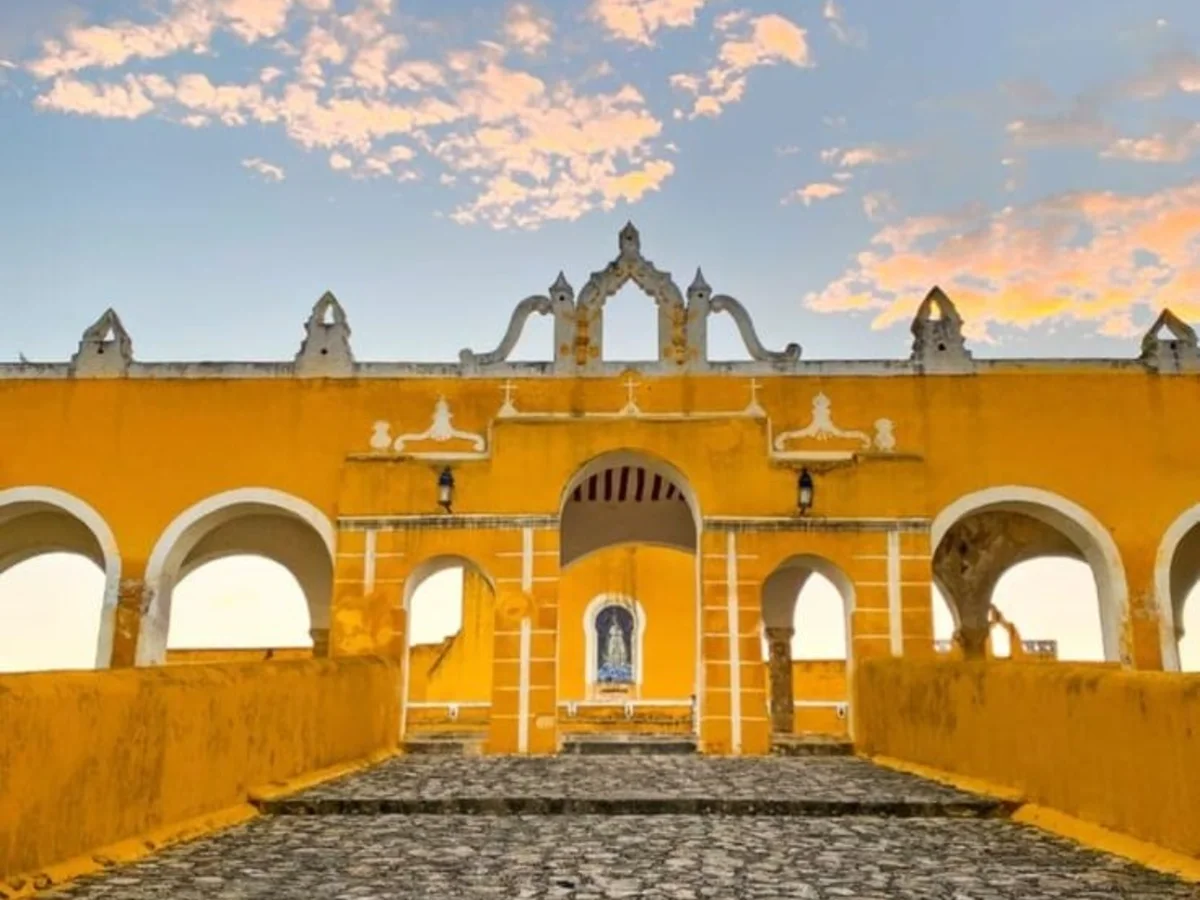
- 9:00 AM San Antonio de Padua Convent — The story of the 16th-century Franciscan convent told in its atrium, then free time to walk the yellow town.
- 11:15 AM Chichén Itzá — Guided walk through the Temple of Kukulkán, the Sacred Cenote, the Ball Court, the Tzompantli and the Jaguars and Eagles platform.
- 1:45 PM Regional lunch in Kaua — Buffet of Yucatecan dishes: cochinita, relleno negro, lime soup and meat-free options.
- 3:00 PM Selva Maya cenote — The swim lands exactly when the sun is at its worst. Changing rooms and showers on site.
- 4:20 PM Valladolid — Francisco Cantón Rosado park with its original railings, the church of San Servacio and the murals in the town hall.
- 8:00 PM Back in Mérida — We drop you off where the day started.
Included: Air-conditioned transport, General culture guide, Regional buffet lunch
Not included: Chichén Itzá entrance, Cenote entrance, Drinks
Towns · 9 h
Izamal and two cenotes
Izamal’s yellow first, then two cold cenotes
from $1,300 MXN per person
See itinerary
8:00 AM – 5:00 PM · daily
- 8:00 AM Departure from the office — An hour on the road. The guide uses it to explain where Izamal comes from before you arrive.
- 9:00 AM The yellow town — The convent and its atrium, among the largest on the continent, the baroque altarpiece, and then free time around the streets.
- 10:20 AM On to the Homún ring — Forty more minutes to the cenote area.
- 11:00 AM Yaxbacaltún cenote — The first swim, landing right after the morning’s walking.
- 12:15 PM San Antonio cenote and lunch — A semi-closed cenote that feels nothing like the first one, and lunch served right there.
- 3:15 PM Back to Mérida — Back to Mérida, arriving around five.
Included: Transport, Guide, Entry to both cenotes, Lunch
Not included: Drinks
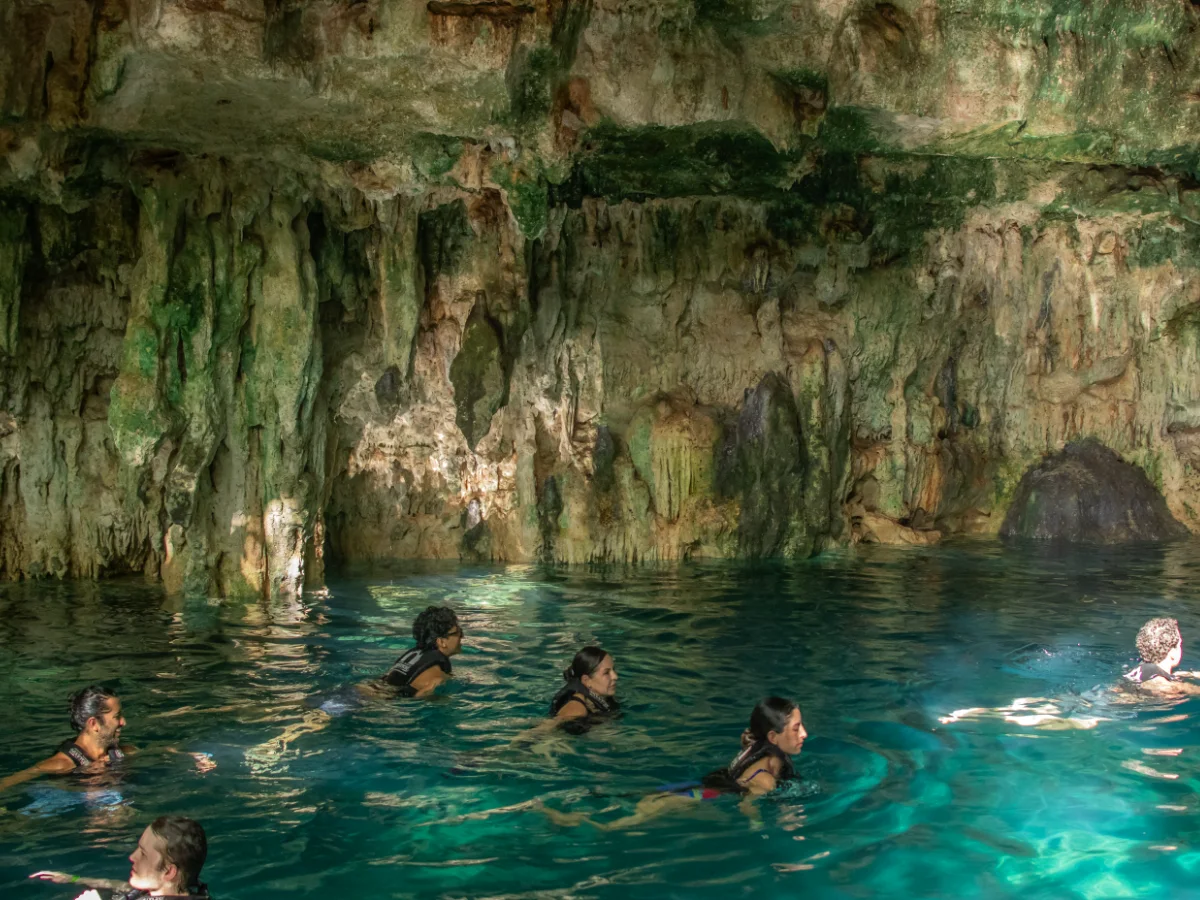
Cenotes · 7 h
Hacienda Mucuyché
A stone channel joining two cenotes
from $1,800 MXN per person
See itinerary
9:30 AM – 4:00 PM · daily
- 9:30 AM Departure from the office — An hour on the road to the estate, in the municipality of Abalá.
- 10:30 AM Check-in and historical tour — A guide from the estate itself explains how the henequen business worked and what survives of it.
- 11:00 AM Carlota and Azul Maya cenotes — Two hours in the water. To move between the cenotes you cross the channel, swimming or along the stone path.
- 1:00 PM Time for lunch — Yucatecan food at the estate restaurant, paid per order. There is a pool for anyone who wants to stay in the water.
- 3:00 PM Back to Mérida — An hour back.
Included: Transport, Guide, Entry to the hacienda and cenotes
Not included: Food, Drinks
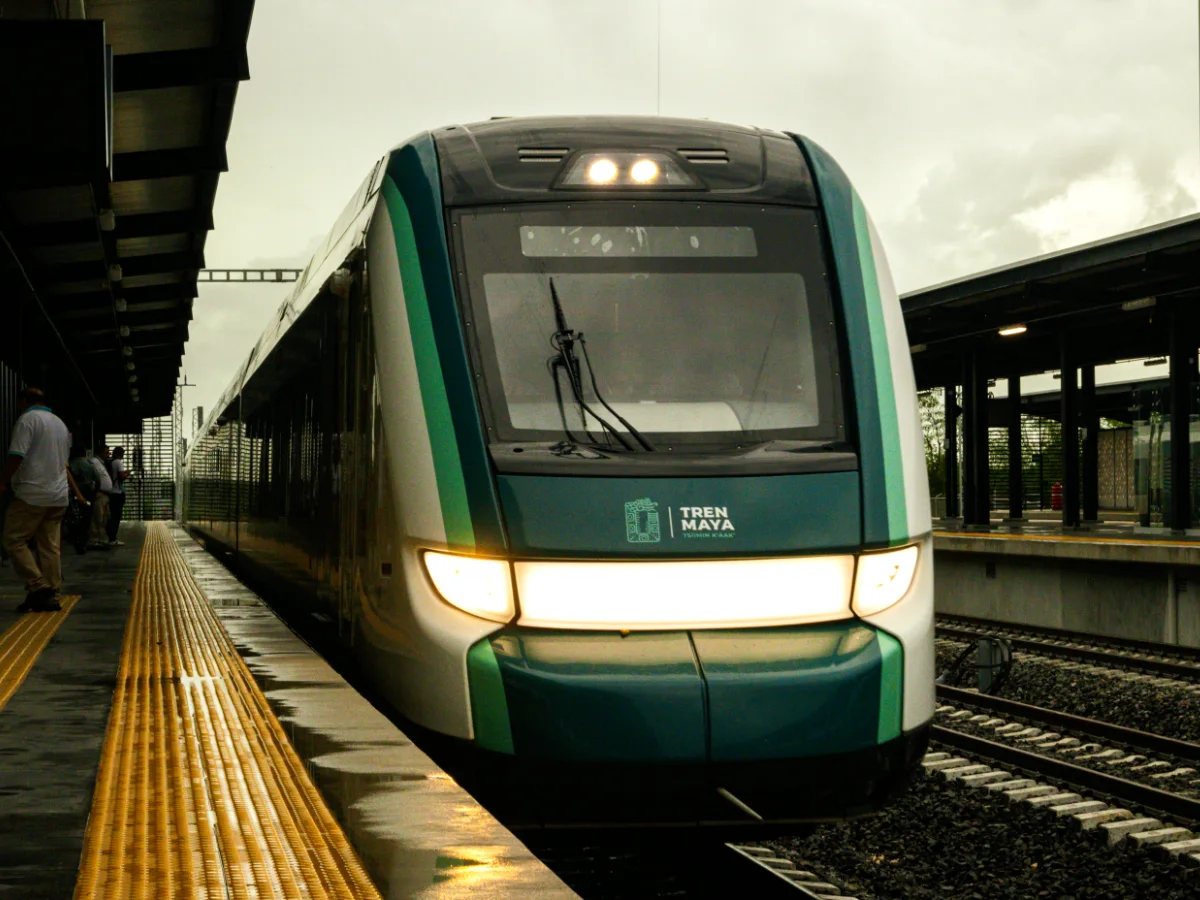
Archaeology · 11 h
Maya Train, Chichén Itzá and Izamal
The Mérida–Izamal leg by train, the rest by road
from $1,600 MXN per person
See itinerary
8:00 AM – 7:00 PM · daily
- 8:00 AM Transfer to the station — From the office to the Maya Train station in Mérida.
- 9:18 AM Maya Train ride — Forty minutes from Mérida to Izamal. Ticket included.
- 10:15 AM Izamal — The yellow town, the three-tier Baroque altarpiece and free time on the main square.
- 12:30 PM Chichén Itzá — Guided walk through the Sacred Cenote, the Temple of Kukulkán, the Jaguars and Eagles platform and the Ball Court.
- 2:30 PM Lunch in Kaua — Buffet of typical regional dishes.
- 3:45 PM Selva Maya cenote — The swim of the day, with the heat already easing off.
- 5:00 PM Back to Mérida — Two hours on the road back.
Included: Transport, General culture guide, Maya Train ticket Mérida–Izamal, Midday meal
Not included: Chichén Itzá entrance, Cenote entrance, Drinks
Frequently asked questions
What is the jarana?
Yucatán's most important regional dance, based on footwork.
Where is it danced?
At vaquerías, fairs and patron-saint fiestas.
Does it have fixed steps?
No single steps; they vary by community.
What do dancers wear?
Gala mestizo dress: terno and guayabera.