A chile with a designation of origin
Mexico's official federal gazette published the protection declaration for the Yucatán Peninsula Habanero Chile Designation of Origin in June 2010. The protected area covers Yucatán, Campeche and Quintana Roo, and the scientific name is Capsicum chinense.
What it protects
The declaration covers the fruit and its derived products within the region: fresh habanero, unripe or ripe, plus pickled chile, paste, whole or powdered dried chile and salsas. The official standard NOM-189-SCFI-2012 grades fresh habanero into four commercial categories. Using the designation requires authorization from the relevant authority.
In Yucatecan cooking
Habanero appears in salsas served with regional dishes, including sopa de lima. Yucatán's tourism ministry records xnipec, made with roasted, ground habanero, lime juice and onion. The Yucatán government also lists other regional chiles: sweet, xcatik and max.
Handling the heat
- It's almost always served on the side: you decide how much.
- Start with a drop; it's very hot.
- Wash your hands after touching it and don't rub your eyes.
Taking the flavor home
Habanero salsas and pastes are sold in markets and shops across the region; look for ones bearing the designation of origin. On Mary Tours trips with lunch included, habanero salsa is usually on the table. Trips leave from the office on Calle 61 in downtown Mérida.
| Details | |
|---|---|
| Scientific name | Capsicum chinense |
| Designation of origin | June 2010 |
| States | Yucatán, Campeche and Quintana Roo |
| Fresh grades | 4 (NOM-189-SCFI-2012) |
| Protected products | Pickled, paste, dried and salsas |
Fun facts
- The habanero's designation of origin dates to 2010.
- It protects salsas and pastes, not just the fresh chile.
- Yucatán also uses sweet, xcatik and max chiles.
Related tours
Archaeology · 11 h
Chichén Itzá, Izamal and Valladolid
Four stops in one day, and none of them rushed
from $1,200 MXN per person
See itinerary
8:00 AM – 8:00 PM · daily
- 8:00 AM Departure from the office — An hour on the road to Izamal. The guide uses the drive to set up what comes next.
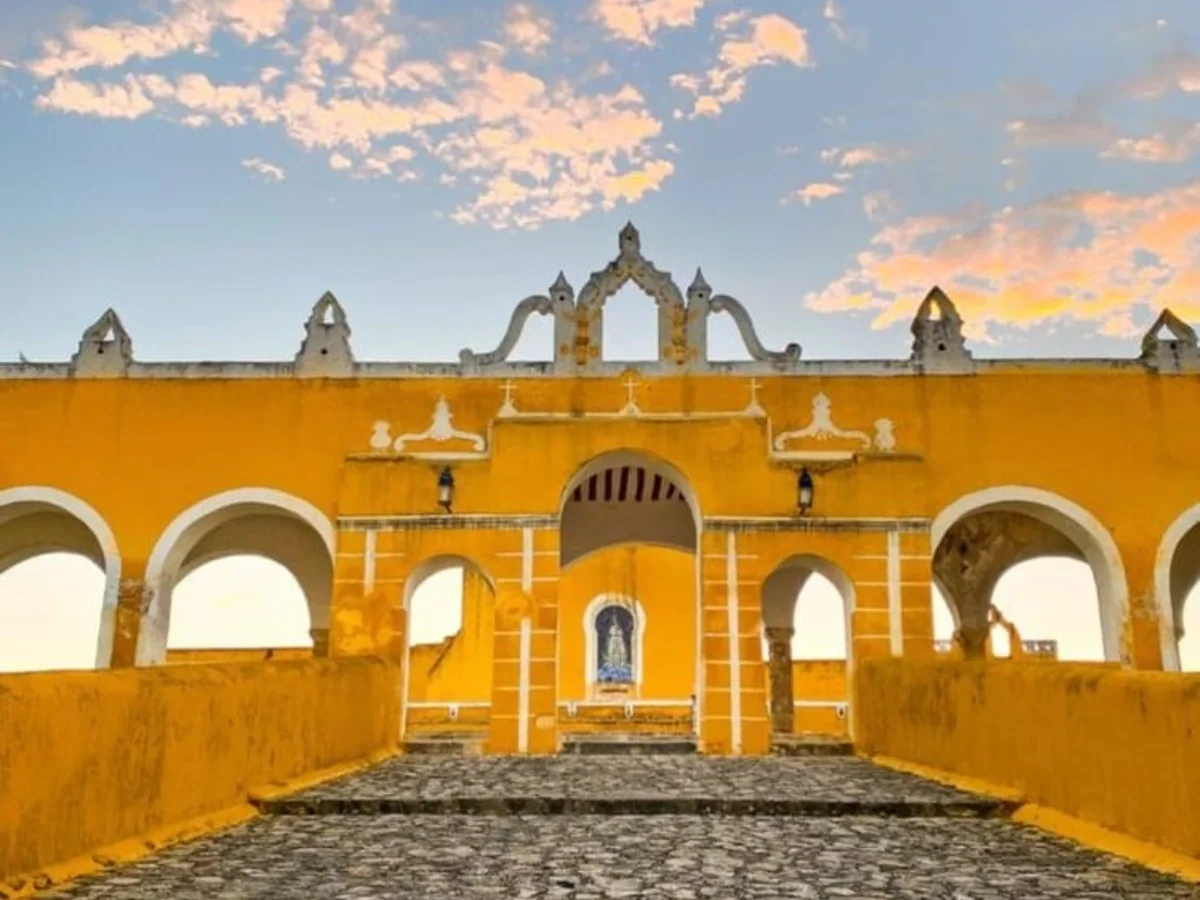
- 9:00 AM San Antonio de Padua Convent — The story of the 16th-century Franciscan convent told in its atrium, then free time to walk the yellow town.
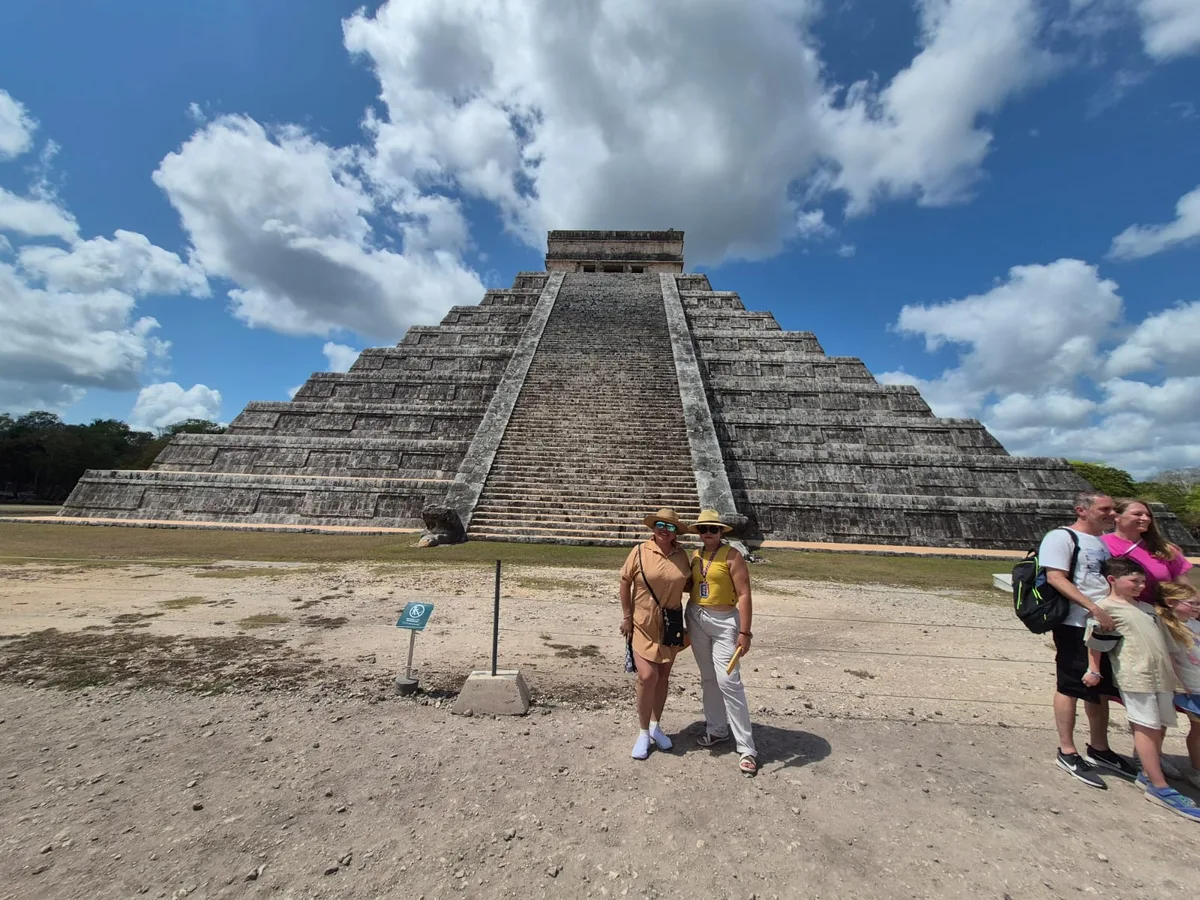
- 11:15 AM Chichén Itzá — Guided walk through the Temple of Kukulkán, the Sacred Cenote, the Ball Court, the Tzompantli and the Jaguars and Eagles platform.
- 1:45 PM Regional lunch in Kaua — Buffet of Yucatecan dishes: cochinita, relleno negro, lime soup and meat-free options.
- 3:00 PM Selva Maya cenote — The swim lands exactly when the sun is at its worst. Changing rooms and showers on site.
- 4:20 PM Valladolid — Francisco Cantón Rosado park with its original railings, the church of San Servacio and the murals in the town hall.
- 8:00 PM Back in Mérida — We drop you off where the day started.
Included: Air-conditioned transport, General culture guide, Regional buffet lunch
Not included: Chichén Itzá entrance, Cenote entrance, Drinks
Cenotes · 7 h
The four cenotes of Santa Bárbara
Four different cenotes and a lunch made by hand
from $1,450 MXN per person
See itinerary
10:00 AM – 5:00 PM · daily
- 10:00 AM Departure from the office — An hour on the road to Homún, through the ring of cenotes.
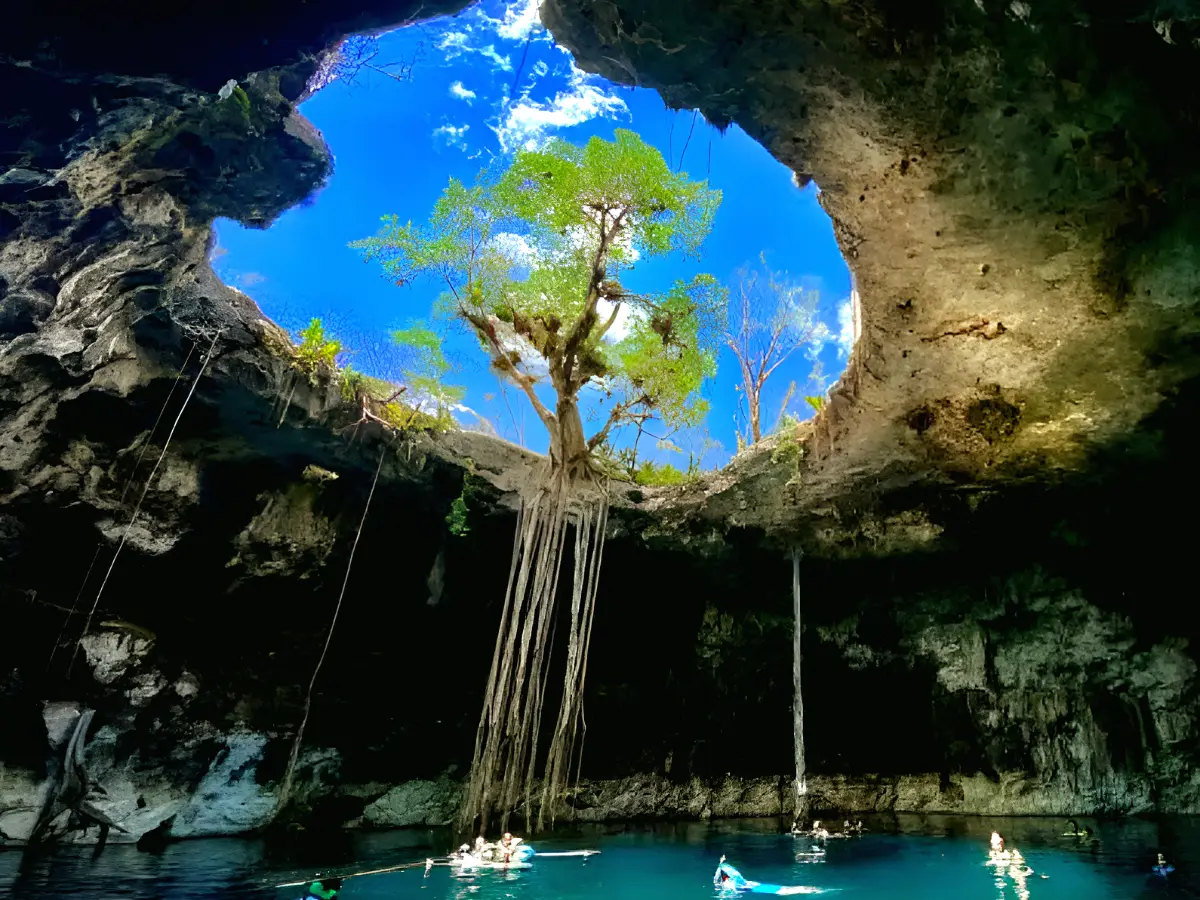
- 11:00 AM Cascabel cenote — Closed, cave type. You descend inside and the water sits in half-light: the most striking of the four.
- 11:30 AM Chaksikín cenote — Semi-open. You go down between limestone walls painted with Maya-themed murals.
- 12:00 PM Xooch cenote — Semi-open, with a shaft of light that falls straight onto the water mid-morning.
- 12:30 PM Pool Cocom cenote — Open and surrounded by vegetation. You swim along a channel out to the wide part.
- 1:30 PM Regional lunch — Home cooking with hand-made tortillas. Plenty of time to eat without rushing.
- 4:00 PM Back to Mérida — An hour back, arriving around five.
Included: Transport, Certified guide, Entry to all four cenotes, Regional lunch
Not included: Drinks with lunch
Nature · 12 h
Las Coloradas and Río Lagartos
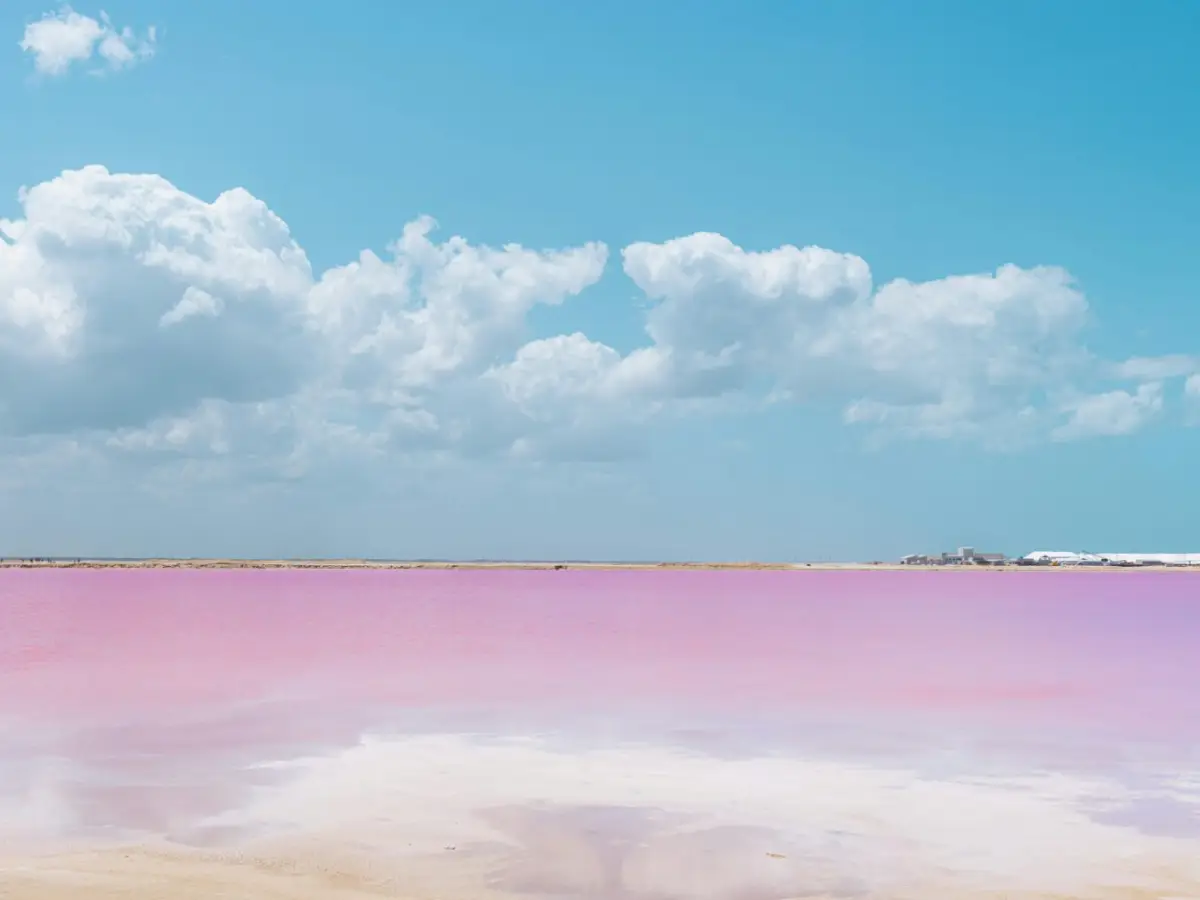
Genuinely pink lagoons, and flamingos in the estuary
from $1,400 MXN per person
See itinerary
7:00 AM – 8:00 PM · daily
- 7:00 AM Departure from the office — Almost three hours to the north coast, with a stop halfway.
- 9:50 AM Las Coloradas — A guided walk beside the pink, white and orange pools of the salt works. No swimming: it is a protected area.
- 11:00 AM Cancunito beach — A rustic beach inside the reserve, calm water and hardly anyone around.
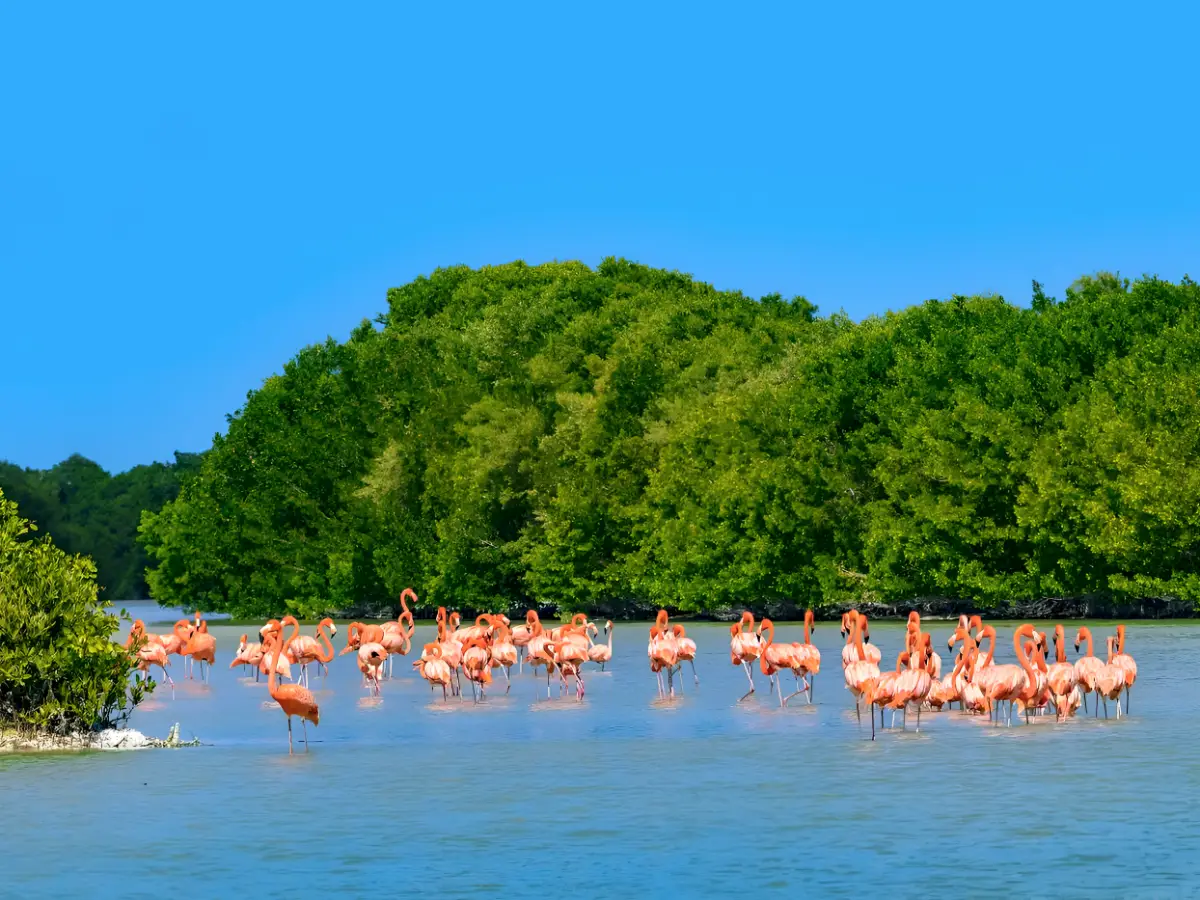
- 12:30 PM Boat ride through the estuary — Channels through the mangroves, flamingo watching areas, crocodiles in their habitat and the mineral mud bath.
- 2:15 PM Lunch in Río Lagartos — Fresh fish, ceviche, octopus or tikin xic on the waterfront of the fishing village.
- 4:15 PM Back to Mérida — Nearly four hours back, arriving around eight.
Included: Transport, Guide, Boat ride, Lunch from a set menu
Not included: Las Coloradas entrance, Drinks
Towns · 9 h
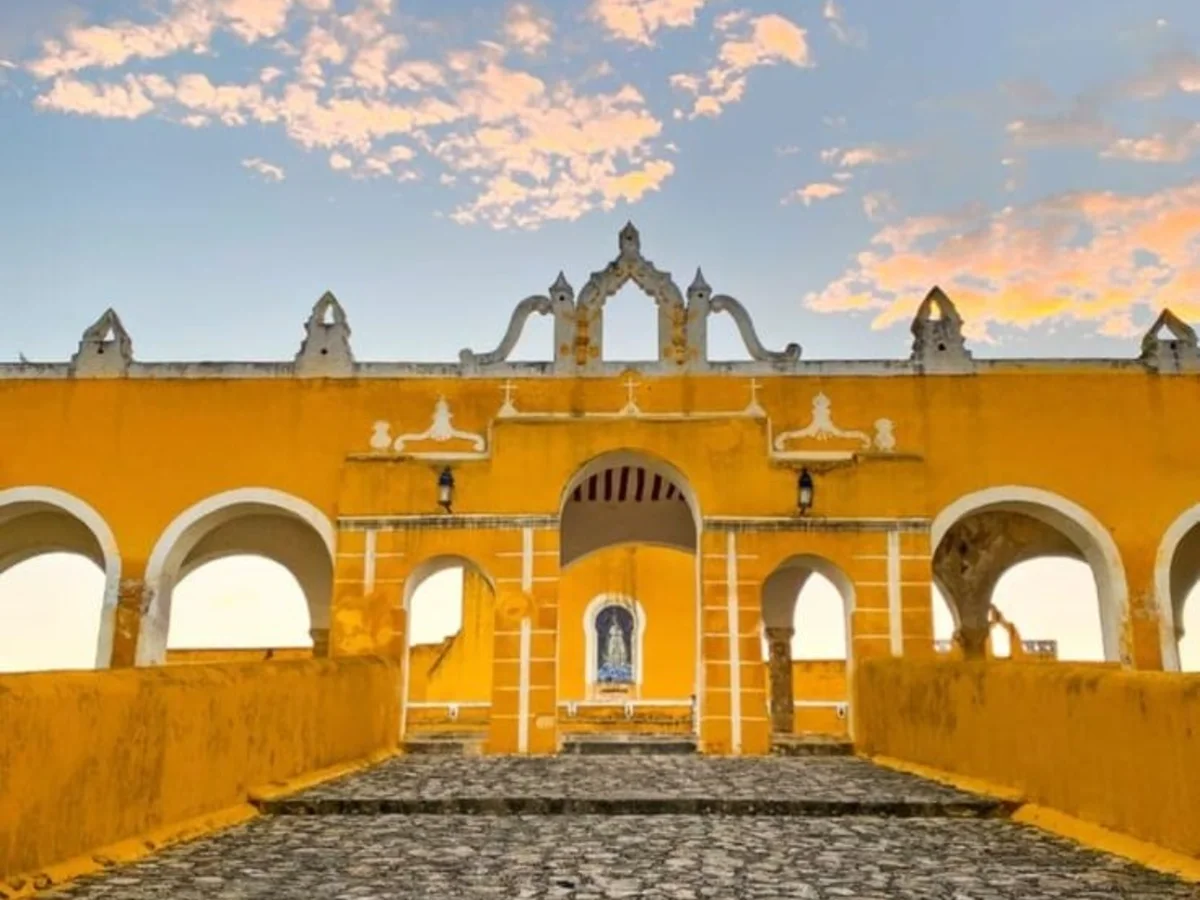
Izamal and two cenotes
Izamal’s yellow first, then two cold cenotes
from $1,300 MXN per person
See itinerary
8:00 AM – 5:00 PM · daily
- 8:00 AM Departure from the office — An hour on the road. The guide uses it to explain where Izamal comes from before you arrive.
- 9:00 AM The yellow town — The convent and its atrium, among the largest on the continent, the baroque altarpiece, and then free time around the streets.
- 10:20 AM On to the Homún ring — Forty more minutes to the cenote area.
- 11:00 AM Yaxbacaltún cenote — The first swim, landing right after the morning’s walking.
- 12:15 PM San Antonio cenote and lunch — A semi-closed cenote that feels nothing like the first one, and lunch served right there.
- 3:15 PM Back to Mérida — Back to Mérida, arriving around five.
Included: Transport, Guide, Entry to both cenotes, Lunch
Not included: Drinks
Frequently asked questions
Does the habanero have a designation of origin?
Yes, since June 2010, for the Yucatán Peninsula.
Which states does it cover?
Yucatán, Campeche and Quintana Roo.
What's its scientific name?
Capsicum chinense.
Which Yucatecan salsa uses habanero?
Xnipec, among others.