A bird of the Yucatán coast
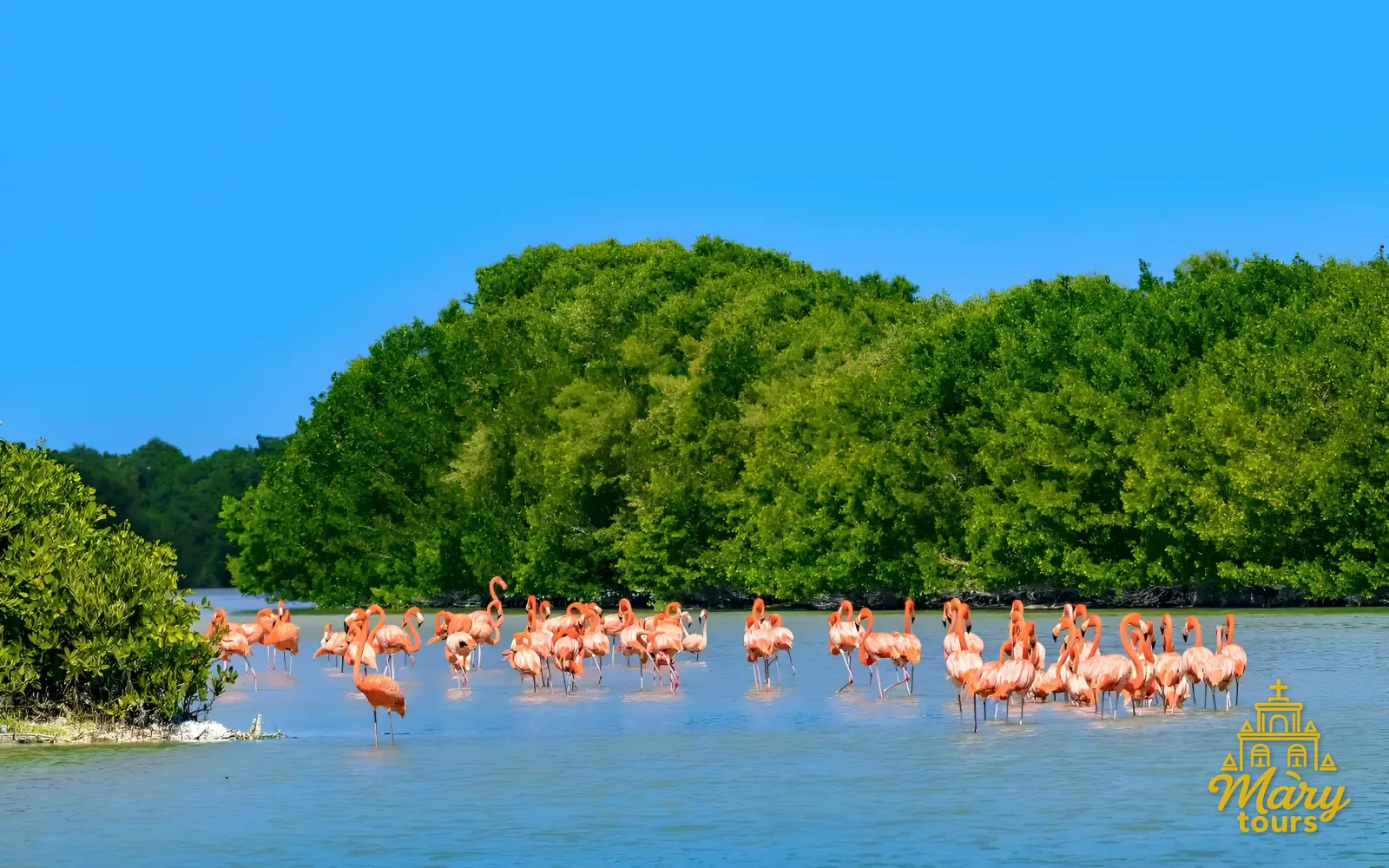
The flamingo you'll see in Yucatán is the Caribbean flamingo, also called the American flamingo, Phoenicopterus ruber. According to Mexico's National Commission of Natural Protected Areas (CONANP), it ranges along the entire peninsula coast, but its key sites are two biosphere reserves: Ría Celestún in the west and Ría Lagartos in the east. Both offer shallow, brackish water for feeding and resting.
Why flamingos are pink
Flamingos aren't born pink; chicks are grayish. The color comes from their diet. CONANP explains that the pink plumage is linked to what they eat: small organisms in brackish water loaded with pigments that build up in the birds' feathers.
That's why the shade can vary from bird to bird. The wingtips are black, which you only really notice when a flamingo takes off.
Size and appearance
CONANP puts an adult flamingo at roughly 0.8 to 1.5 meters (about 2.6 to 5 feet) tall, with males usually larger than females. Long legs let it wade through shallow water, and its bent bill works like a strainer: it dips its head upside down to filter food from the water.
Where it nests and how far it travels
The Caribbean flamingo nests on the peninsula, but the exact spot shifts with weather conditions. CONANP names Ría Lagartos, Ría Celestún and San Crisanto as nesting sites.
It also moves with the seasons. In winter, the biggest regional concentration is between Ría Celestún and Los Petenes in Campeche; toward summer, many move to Ría Lagartos and Yum Balam in Quintana Roo.
Thanks to banding programs, CONANP has recorded Yucatán-banded flamingos turning up in the United States, Cuba, the Bahamas and the Cayman Islands.
A 25-year conservation program
Since 1999, CONANP has coordinated a regional monitoring program. Between 1999 and 2024 it recorded 154,446 chicks hatched and banded 7,142 birds. Counts vary from year to year; they describe specific periods, not a fixed population.
That variation is exactly why no tour can promise flamingos: they depend on each season's water, food and weather.
Seeing flamingos from Mérida
Mary Tours offers three ways to look for flamingos in their habitat: the Celestún boat tour through the estuary, the Las Coloradas and Río Lagartos trip with a ride through the mangrove channels, and the Sisal kayak trip through the coastal wetland. On all of them, sightings depend on the season and happen at the distance the reserves require.
The office is on Calle 61 in Mérida's historic center; schedules and prices are in the booking section.
| Details | |
|---|---|
| Scientific name | Phoenicopterus ruber |
| Height | About 0.8–1.5 m |
| Color | Pink from diet; black wingtips |
| Key sites | Ría Celestún and Ría Lagartos |
| Chicks recorded (1999–2024) | 154,446 |
| Birds banded | 7,142 |
Fun facts
- Flamingo chicks hatch gray; the pink comes later from their diet.
- Flamingos banded in Yucatán have been recorded as far away as the U.S. and the Cayman Islands.
- Their nesting site changes from year to year depending on the weather.
Related tours
Nature · 9 h
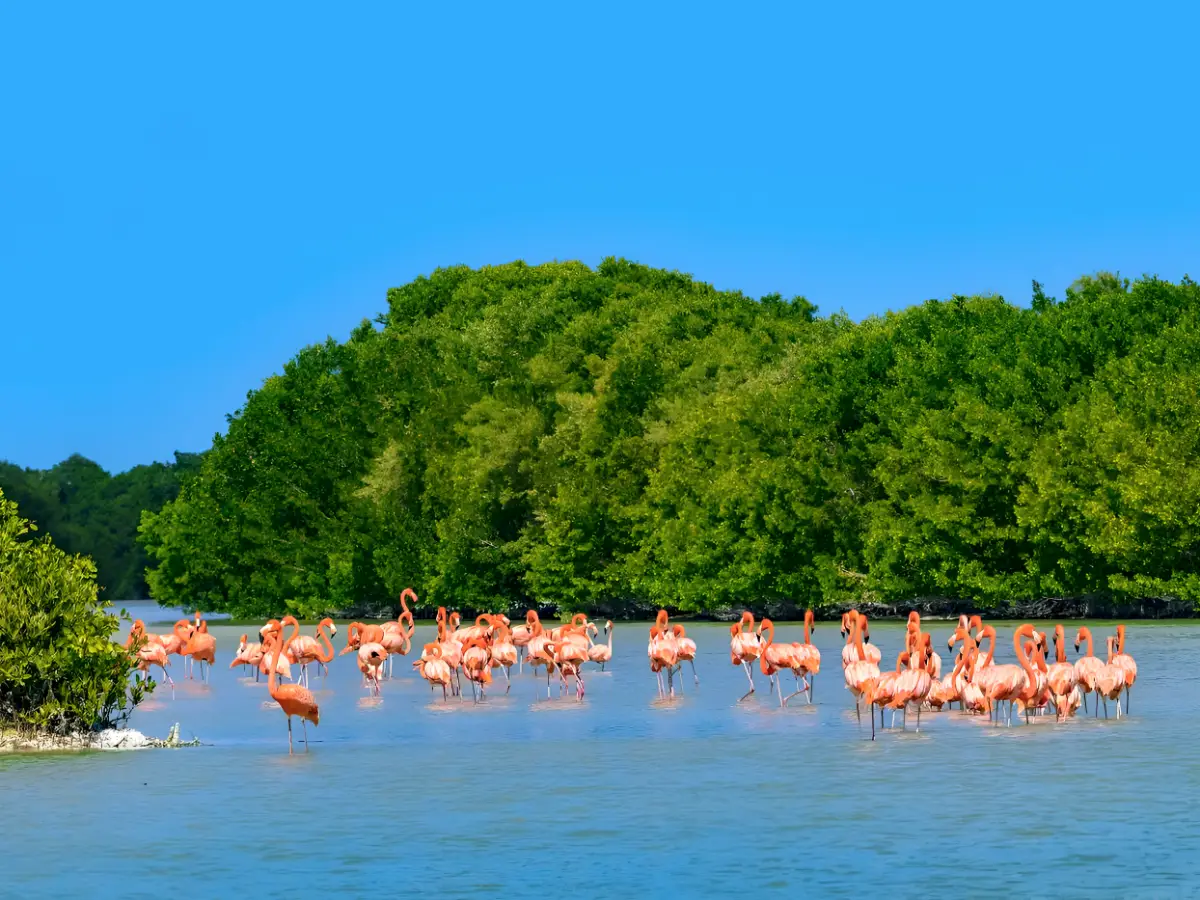
Celestún and the pink flamingos
The largest flamingo colony in North America
from $1,600 MXN per person
See itinerary
8:00 AM – 5:00 PM · daily
- 8:00 AM Departure from the office — An hour and a half west, out to the port.
- 9:30 AM Boat ride — Flamingo and bird watching, the mangrove tunnel, the freshwater spring and the Maya bath on the sandbar.
- 11:00 AM Lunch by the beach — Fish, octopus or shrimp from the gulf, at a table facing the sea.
- 1:00 PM Free time on the beach — Almost three hours to swim, walk the shore or do nothing at all.
- 4:00 PM Back to Mérida — Arriving around five.
Included: Transport, Guide, Boat ride, Lunch from a set menu
Not included: Drinks
Nature · 12 h
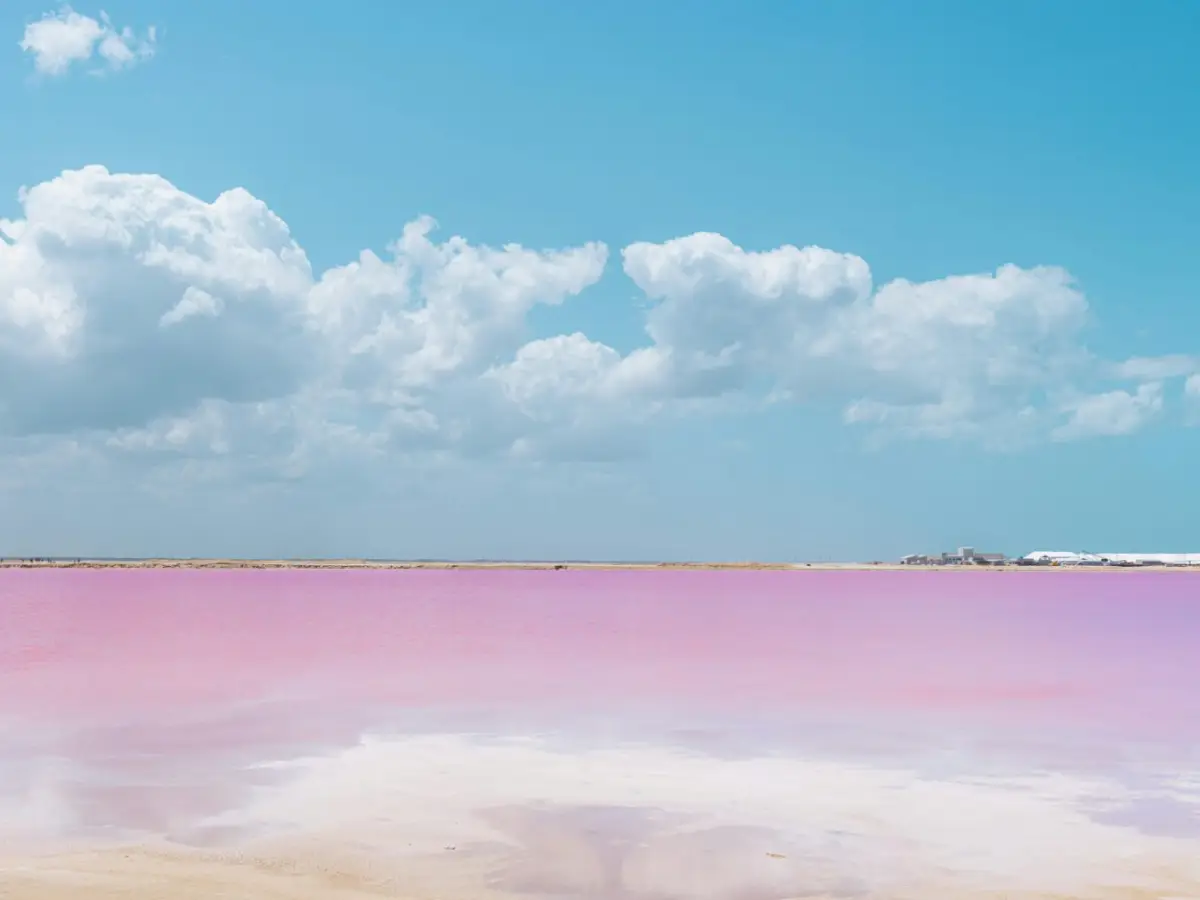
Las Coloradas and Río Lagartos
Genuinely pink lagoons, and flamingos in the estuary
from $1,400 MXN per person
See itinerary
7:00 AM – 8:00 PM · daily
- 7:00 AM Departure from the office — Almost three hours to the north coast, with a stop halfway.
- 9:50 AM Las Coloradas — A guided walk beside the pink, white and orange pools of the salt works. No swimming: it is a protected area.
- 11:00 AM Cancunito beach — A rustic beach inside the reserve, calm water and hardly anyone around.
- 12:30 PM Boat ride through the estuary — Channels through the mangroves, flamingo watching areas, crocodiles in their habitat and the mineral mud bath.
- 2:15 PM Lunch in Río Lagartos — Fresh fish, ceviche, octopus or tikin xic on the waterfront of the fishing village.
- 4:15 PM Back to Mérida — Nearly four hours back, arriving around eight.
Included: Transport, Guide, Boat ride, Lunch from a set menu
Not included: Las Coloradas entrance, Drinks
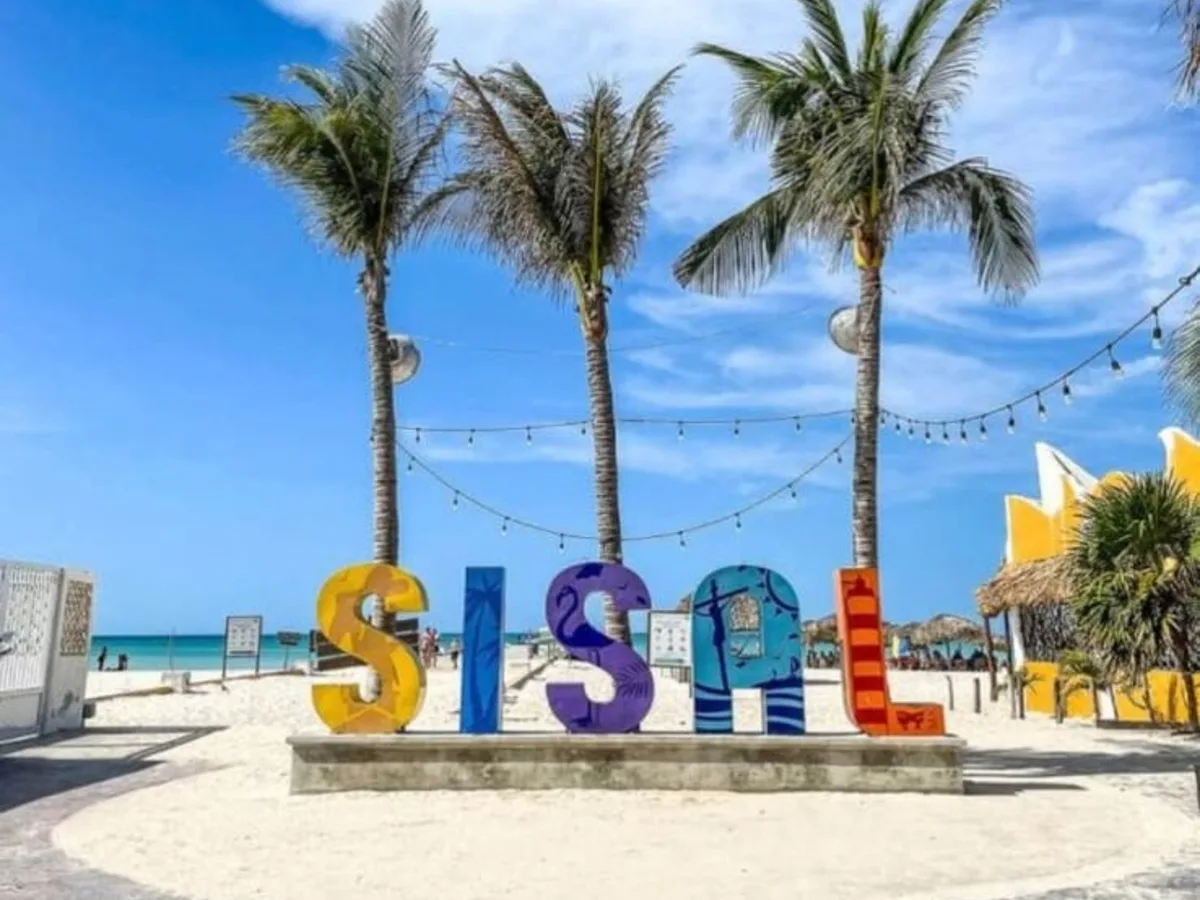
Beach · 9.5 h
Sisal: kayak, flamingos and beach
A magic town that is still a fishing port
from $1,500 MXN per person
See itinerary
8:00 AM – 5:30 PM · daily
- 8:00 AM Departure from the office — An hour and a half on the road to the port.
- 10:00 AM Kayaking in the coastal wetland — A paddle by kayak or flat-bottomed boat through the mangrove, with birdwatching — pink flamingos included — and a dip in a freshwater spring.
- 11:45 AM Sisal beach — Over four hours free. There are seafood places along the shore and palapas you can rent for shade.
- 4:00 PM Back to Mérida — An hour and a half back.
Included: Transport, Kayaking in the coastal wetlands, Free time on the beach
Not included: Food, Drinks, Palapa rental
Frequently asked questions
Why are flamingos pink?
Because of pigments in the organisms they eat in brackish water. Chicks hatch grayish.
How tall is a flamingo?
About 0.8 to 1.5 meters (2.6 to 5 feet), according to CONANP. Males are usually larger.
Do Yucatán's flamingos migrate?
They move around the peninsula with the seasons, and some banded birds have reached the United States, Cuba, the Bahamas and the Cayman Islands.
Where can I see flamingos near Mérida?
Celestún, Sisal and Río Lagartos. Whether they're there, and how many, depends on the season.