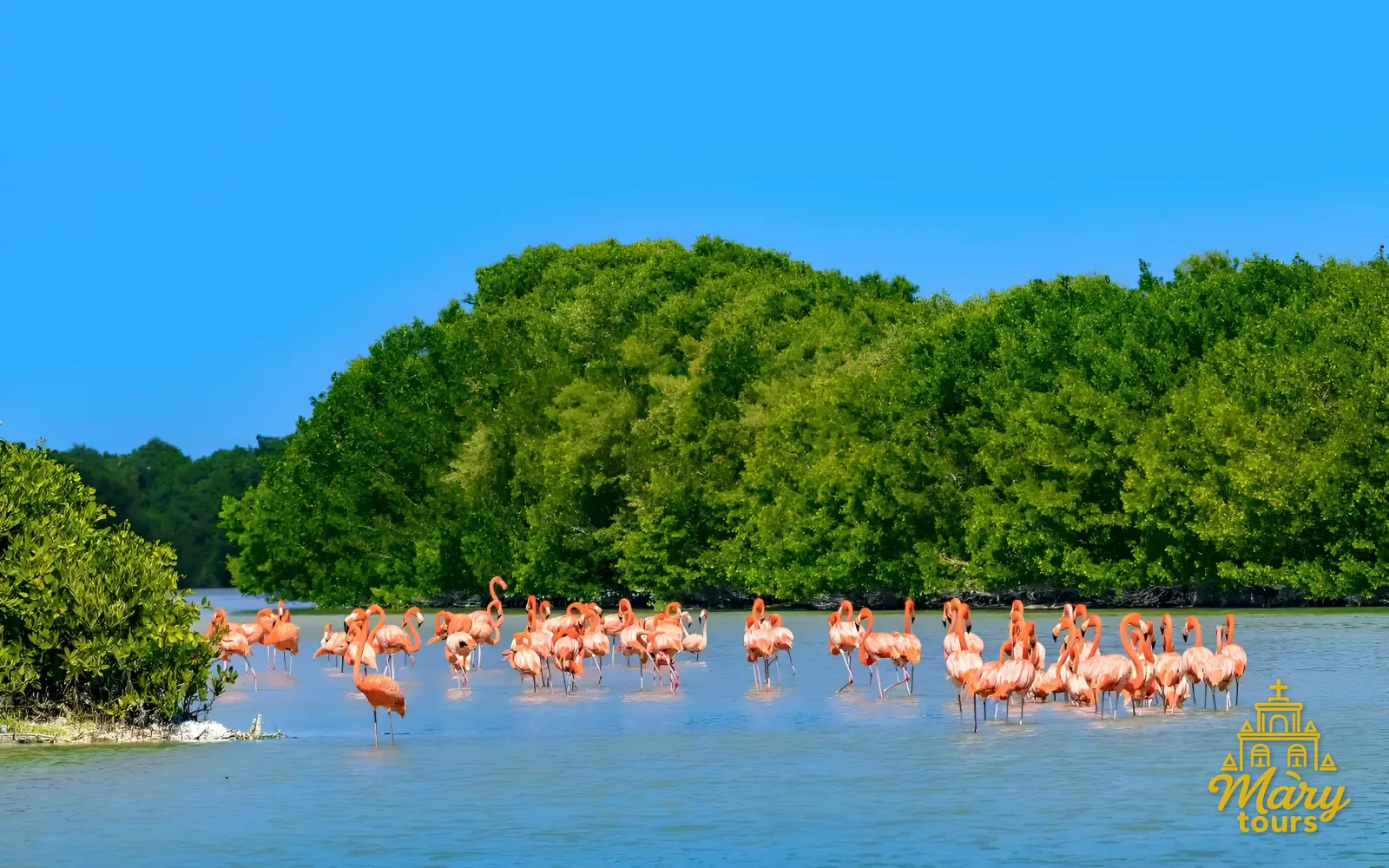
What Ría Celestún is
A ría is an arm of the sea reaching inland, where salt water mixes with fresh. Celestún's runs parallel to the coast at the far western edge of Yucatán, separated from the Gulf of Mexico by a strip of land where the fishing port sits.
Since November 27, 2000 it has been a Biosphere Reserve, Mexico's federal category for protecting largely intact ecosystems while allowing managed human activity. According to Mexico's National Commission of Natural Protected Areas (CONANP), it covers 81,482.33 hectares in Yucatán and Campeche, including parts of the Yucatán municipalities of Celestún, Halachó, Hunucmá and Maxcanú.
Why it matters
The water is what makes Celestún special. Groundwater from the peninsula's aquifer flows into the estuary and mixes with salt water from the Gulf, creating conditions that, according to CONANP, favor nesting American flamingos.
The reserve also has international recognition: it's part of UNESCO's Man and the Biosphere (MaB) program, a Ramsar site (a wetland of international importance) and an Important Bird Area (AICA in Spanish). It belongs to a chain of wetlands along the peninsula's west coast that links with the El Palmar state reserve and the Los Petenes Biosphere Reserve in Campeche.
What it protects: mangroves, birds and more
The dominant landscape is mangrove: trees and shrubs that thrive in brackish water. Mexico's biodiversity commission (CONABIO) notes that four species dominate in the country, red, white, black and buttonwood mangrove, and on a boat ride you'll see their tangled roots forming green tunnels.
CONANP lists the American flamingo, Morelet's crocodile and the Yucatán wren among the reserve's representative species. It's also a key stop for migratory birds, especially in the cooler months.
Rules for visitors
The reserve's rules are designed so wildlife isn't frightened or pushed away. The main ones CONANP highlights:
- Stay at least 50 meters (about 165 feet) from flamingo flocks. Licensed boats know this and stop at that distance.
- Don't disturb wildlife: no shouting, whistling or trying to get closer.
- Leave no trash in the estuary or on the sandbanks.
Seeing flamingos depends on the season and natural conditions; CONANP is clear that sightings can't be guaranteed.
Practical tips
- Season: CONANP recommends November through February for the largest numbers of flamingos and migratory birds. Other months can still have some, in smaller numbers.
- Sun and wind: the boat is open. Bring a hat that won't blow off, sunglasses and a light shirt.
- Binoculars: with the required distance, they make a real difference.
- Mosquitoes: they can show up in the mangroves; apply repellent before boarding.
- Dry bag for your phone and camera.
Ría Celestún from Mérida
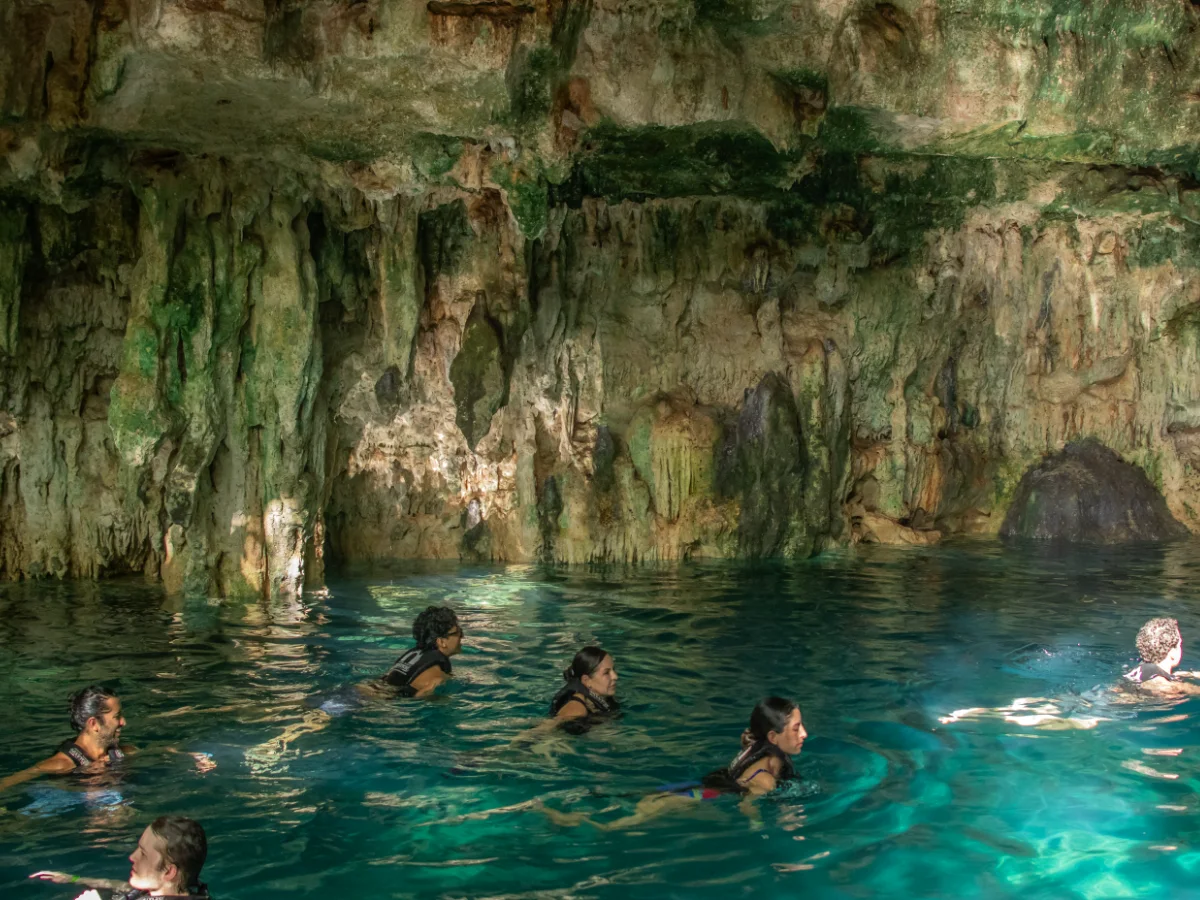
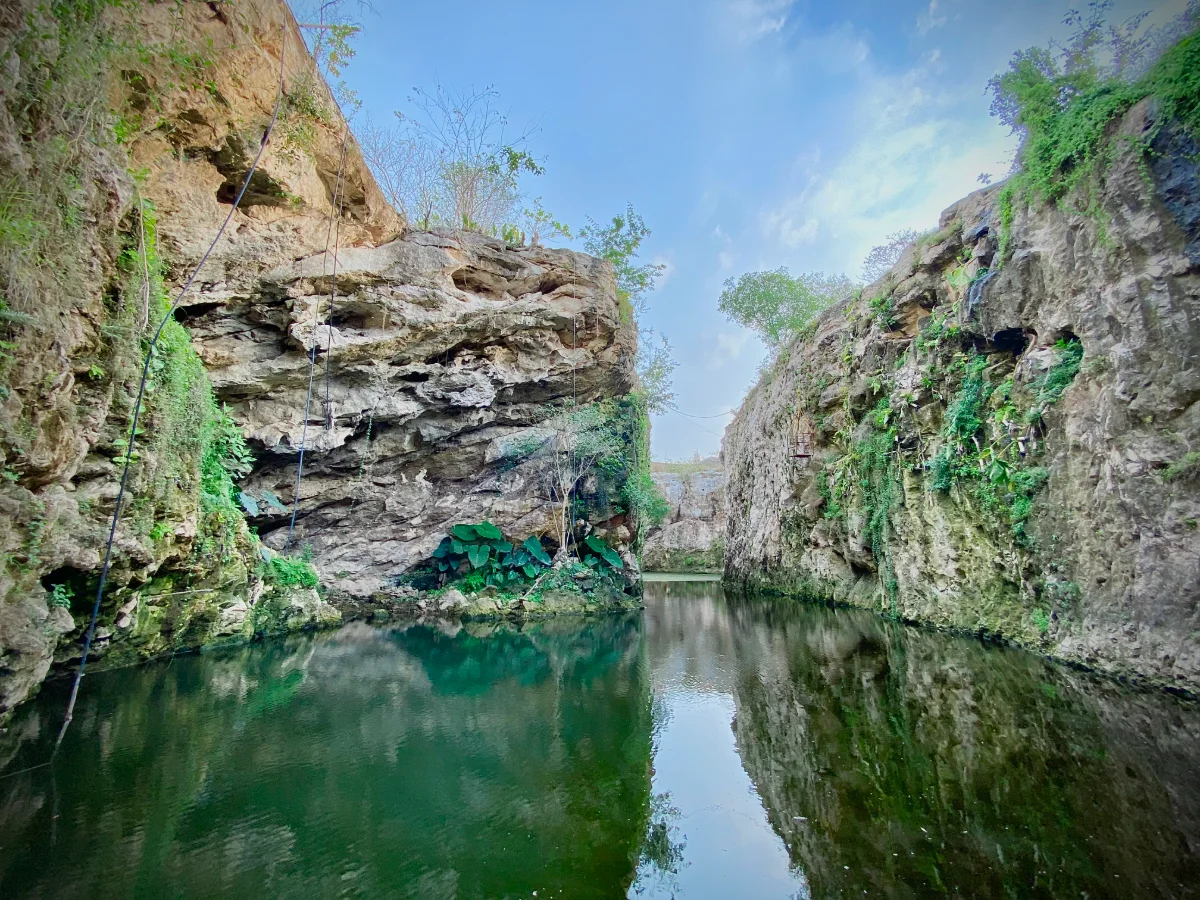
Celestún lies west of Mérida and makes an easy day trip. Mary Tours' Flamingo Route: Celestún tour includes a boat ride to see flamingos and other birds, the mangrove tunnel, a freshwater spring and a dip at a sandbank, plus a beachfront lunch and free time on the beach. If you'd rather go at your own pace, there's also a private transfer to Celestún.
Mary Tours has its office on Calle 61 in Mérida's historic center. Schedule, price and inclusions are in the booking section.
| Details | |
|---|---|
| Category | Biosphere Reserve (federal) |
| Created | November 27, 2000 |
| Area | 81,482.33 hectares |
| States | Yucatán and Campeche |
| Designations | UNESCO MaB, Ramsar site, Important Bird Area |
| Minimum distance from flamingos | 50 meters |
Fun facts
- Ría Celestún holds three designations at once: UNESCO MaB, Ramsar and Important Bird Area.
- Fresh water seeping up from underground is key to the conditions flamingos favor.
- The reserve forms a wetland corridor with Los Petenes and El Palmar.
Related tours
Nature · 9 h
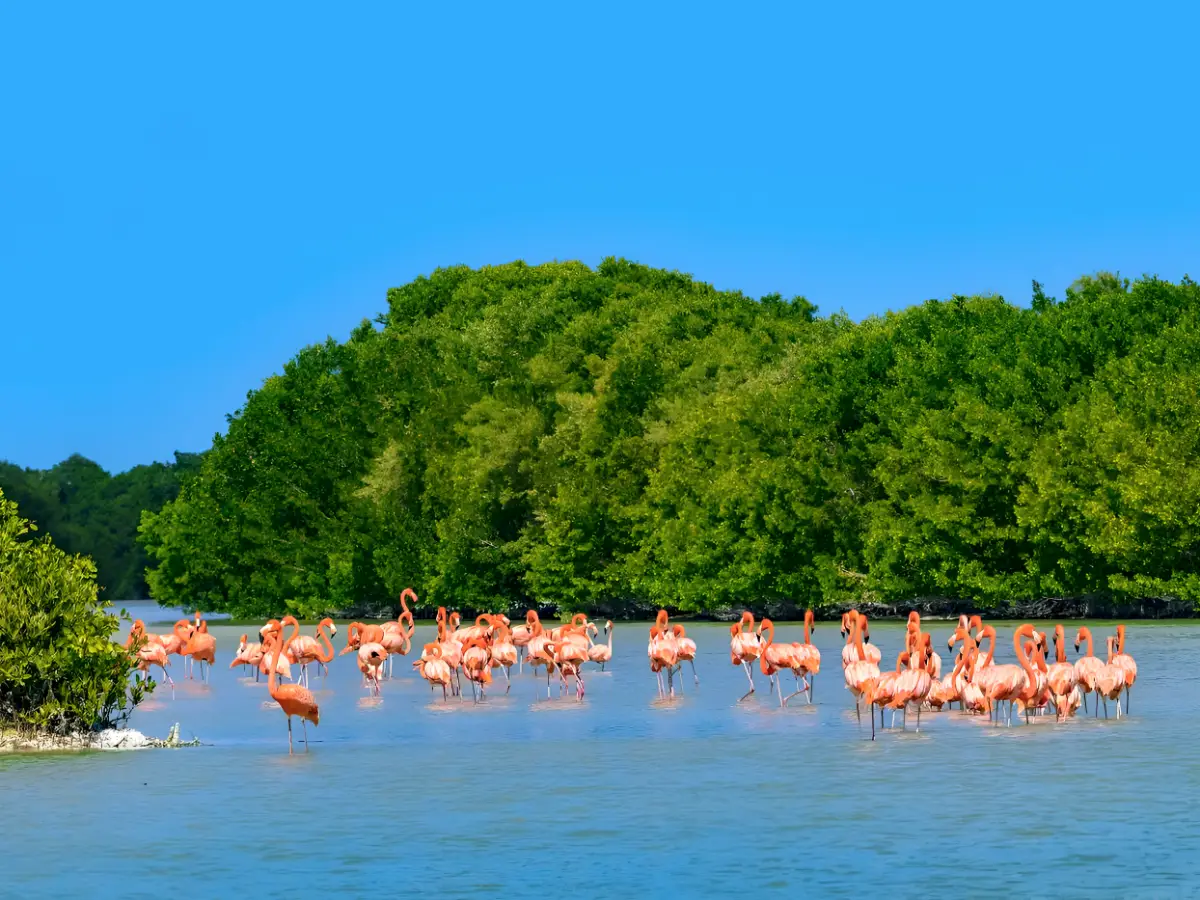
Celestún and the pink flamingos
The largest flamingo colony in North America
from $1,600 MXN per person
See itinerary
8:00 AM – 5:00 PM · daily
- 8:00 AM Departure from the office — An hour and a half west, out to the port.
- 9:30 AM Boat ride — Flamingo and bird watching, the mangrove tunnel, the freshwater spring and the Maya bath on the sandbar.
- 11:00 AM Lunch by the beach — Fish, octopus or shrimp from the gulf, at a table facing the sea.
- 1:00 PM Free time on the beach — Almost three hours to swim, walk the shore or do nothing at all.
- 4:00 PM Back to Mérida — Arriving around five.
Included: Transport, Guide, Boat ride, Lunch from a set menu
Not included: Drinks
Transfers · 10 h
Transfer to Celestún
We drive you to the estuary, wait for you and bring you back
from $2,550 MXN per vehicle
Beach · 9.5 h
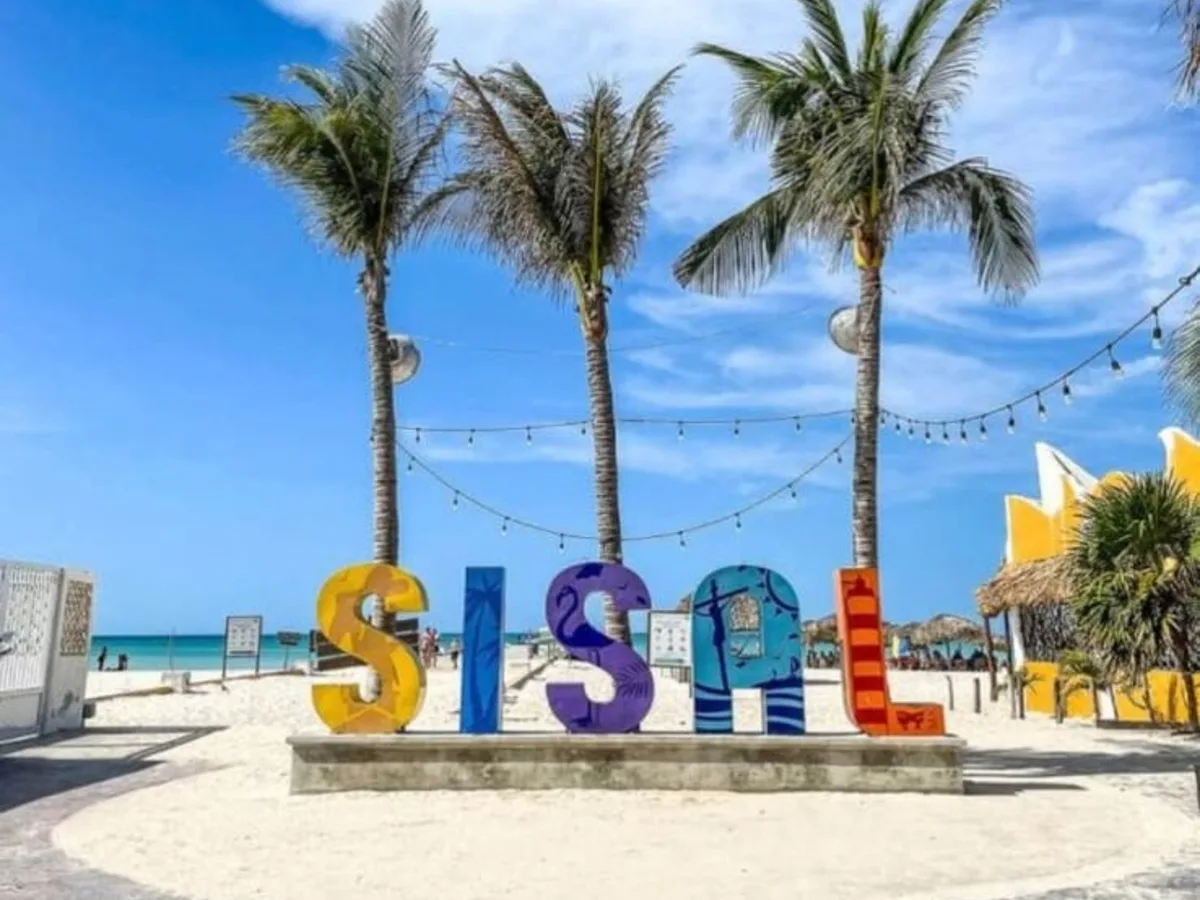
Sisal: kayak, flamingos and beach
A magic town that is still a fishing port
from $1,500 MXN per person
See itinerary
8:00 AM – 5:30 PM · daily
- 8:00 AM Departure from the office — An hour and a half on the road to the port.
- 10:00 AM Kayaking in the coastal wetland — A paddle by kayak or flat-bottomed boat through the mangrove, with birdwatching — pink flamingos included — and a dip in a freshwater spring.
- 11:45 AM Sisal beach — Over four hours free. There are seafood places along the shore and palapas you can rent for shade.
- 4:00 PM Back to Mérida — An hour and a half back.
Included: Transport, Kayaking in the coastal wetlands, Free time on the beach
Not included: Food, Drinks, Palapa rental
 Coupon −$300 MXN per person
Caribbean · 17 h
Bacalar, the lagoon of seven colours
Seventeen hours for water that changes colour every metre
from $2,800 MXN per person
See itinerary
5:00 AM – 10:00 PM · daily
- 4:45 AM Boarding — We leave from the downtown office. If your accommodation is on the way, we collect you there — agreed beforehand on WhatsApp.
- 5:30 AM Drive to José María Morelos — Two hours. Fifteen minutes there for toilets and to stretch your legs.
- 7:30 AM Drive to Bacalar — Two and a half hours more, now crossing into Quintana Roo.
- 10:15 AM Boat trip on the lagoon — Pirates’ Channel, Cenote Negro, Cenote Esmeralda and Bird Island, with an explanation of the stromatolites and the ecosystem.
- 12:15 PM Lunch — Lunch in the town, beside the lagoon.
- 1:30 PM Bacalar magic town — Three and a half hours free: the San Felipe fort, the square, the piers, the cafés and the crafts.
- 5:00 PM Back to Mérida — Five hours back, with a stop halfway. Arriving around ten.
Included: Transport, Guide, Boat trip, Lunch
Not included: Drinks
Frequently asked questions
Are there always flamingos in Celestún?
It can't be guaranteed. CONANP recommends November to February for the biggest flocks, but numbers vary year to year.
Can you swim in the estuary?
Tours usually stop at an authorized spring or sandbank. Elsewhere, follow your boat captain's instructions.
Why don't the boats get closer to the flamingos?
Reserve rules require staying at least 50 meters away so the birds aren't disturbed.
Is Ría Celestún in Yucatán or Campeche?
Both. The reserve spans municipalities in both states; the port of Celestún is in Yucatán.
How do I get to Celestún from Mérida?
On Mary Tours' day trip or with its private transfer to Celestún. Details are in the booking section.