Water in a land without rivers
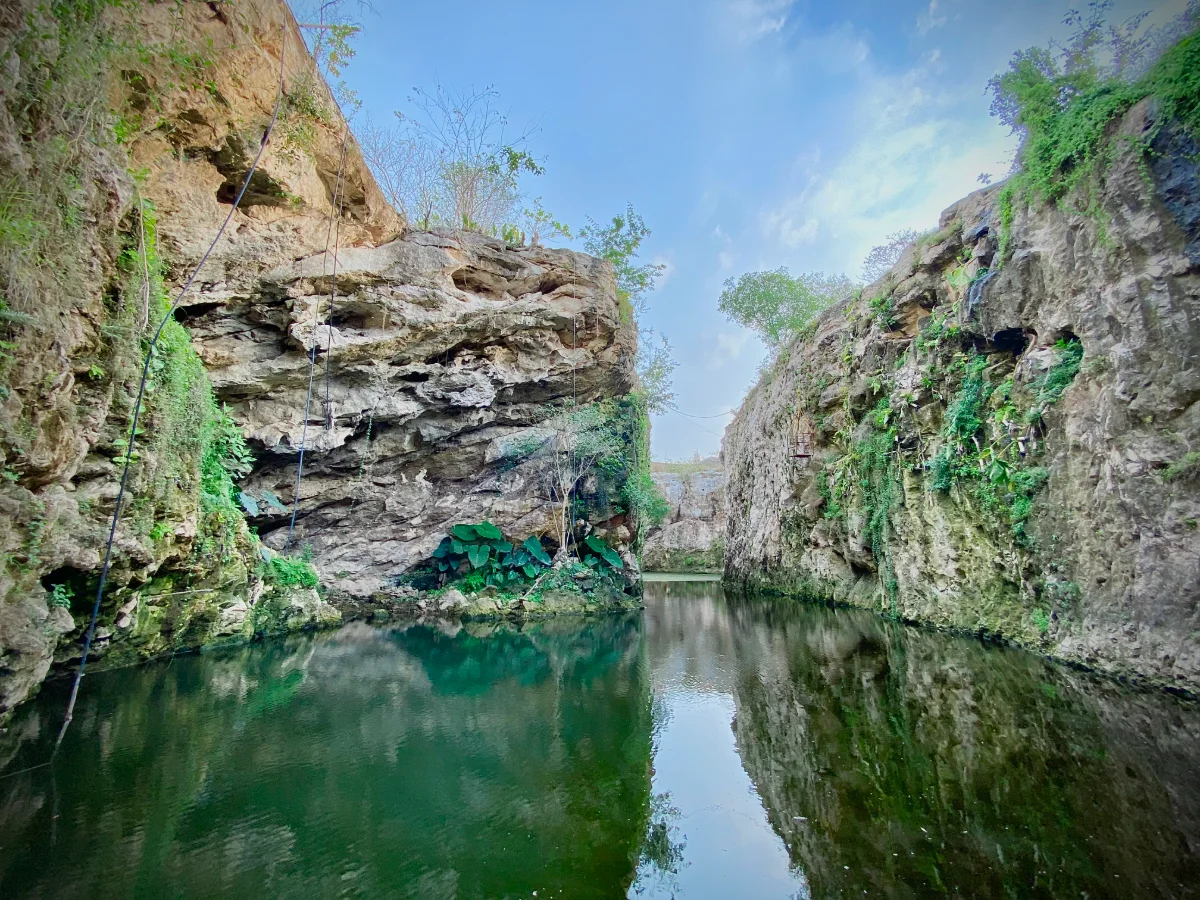
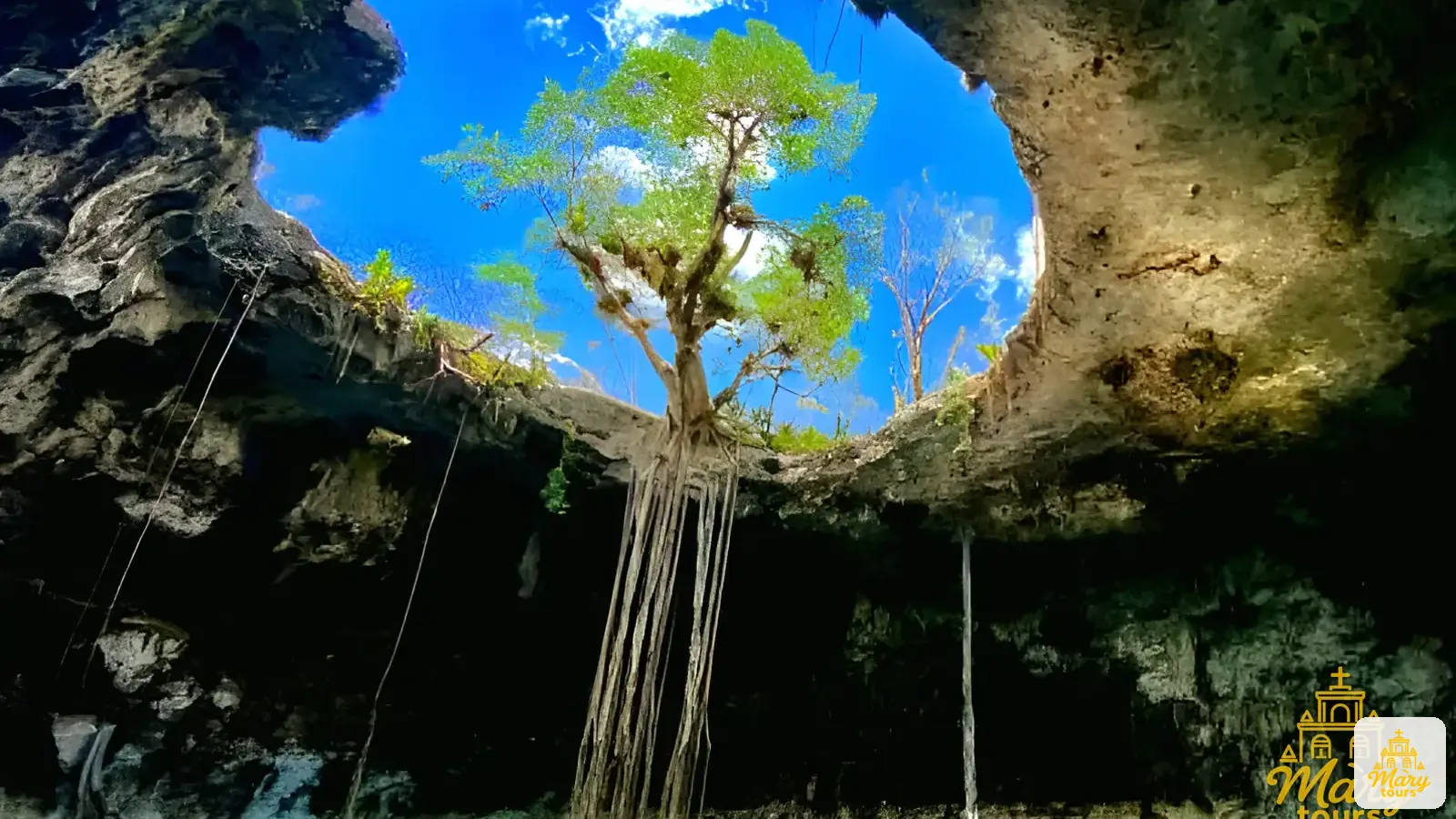
The northern peninsula has no surface rivers. For centuries, cenotes were the main source of water, and many Maya cities and towns grew up near them. That dependence helps explain why they also carried sacred meaning.
Ritual places
Mexico's National Institute of Anthropology and History (INAH) records caves and cenotes as places of ritual importance in Maya societies. They were spaces where the surface world connected with the inside of the earth, and where offerings were left.
Chichén Itzá's Sacred Cenote
The best-known example is the Sacred Cenote at Chichén Itzá. Since the early 20th century, jade, gold and copper objects have been recovered from its depths, materials not found in Yucatán that came from other parts of Mesoamerica. The offerings are associated with Chaac, the rain god.
Today the Sacred Cenote is heritage under INAH protection: no swimming, just a view from the edge during your visit to Chichén Itzá.
Between evidence and legend
Plenty of stories surround cenotes, such as that every one was a "gateway to the underworld." It's worth separating them: their role as ritual and offering sites is well documented; other interpretations are tradition or hypothesis. A good guide will tell you which is which.
A relationship that's still alive
Maya culture isn't just in the past. In many Yucatán communities, cenotes remain part of daily life and celebrations. Visiting one respectfully, without polluting the water or damaging the site, is a way of honoring that relationship.
From Mérida
Mary Tours' Chichén Itzá trips (by van or on the Maya Train) include the Sacred Cenote on the guided walk and end with a swim at Cenote Selva Maya. To swim in several cenotes, try the Santa Bárbara trip in Homún. The office is on Calle 61 in Mérida's historic center.
Fun facts
- The Sacred Cenote's jade and gold came from outside Yucatán.
- In northern Yucatán, cenotes were the main source of water.
- You can see the Sacred Cenote, but not swim in it.
Related tours
Archaeology · 11 h
Chichén Itzá, Izamal and Valladolid
Four stops in one day, and none of them rushed
from $1,200 MXN per person
See itinerary
8:00 AM – 8:00 PM · daily
- 8:00 AM Departure from the office — An hour on the road to Izamal. The guide uses the drive to set up what comes next.
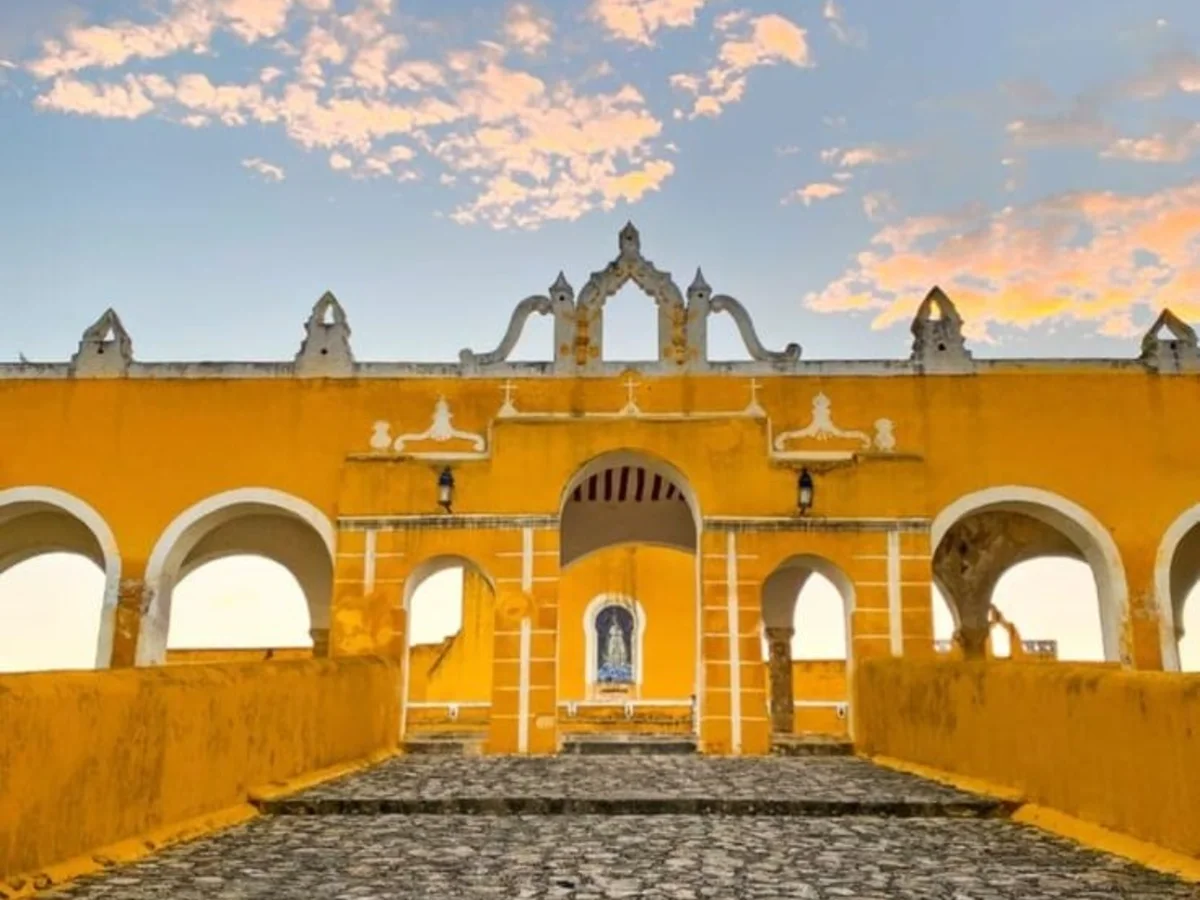
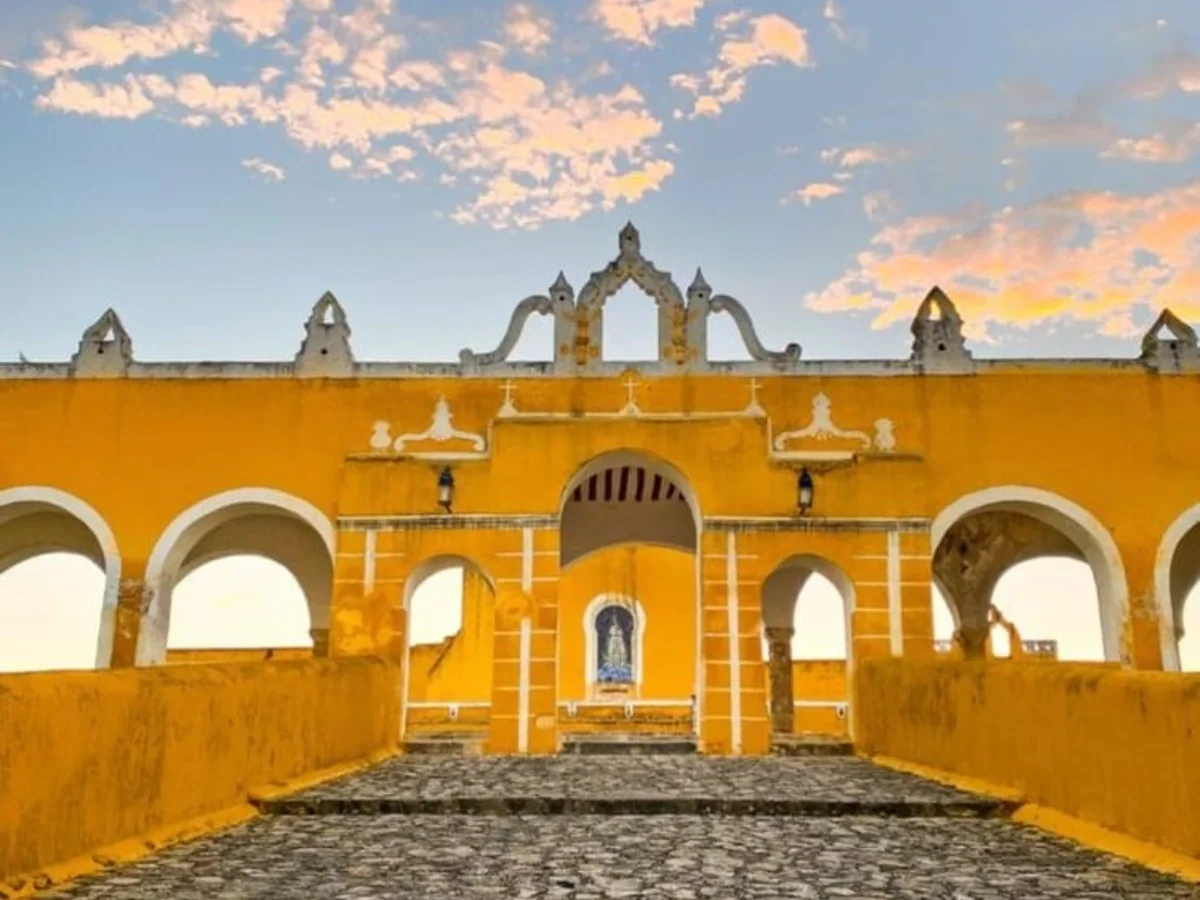
- 9:00 AM San Antonio de Padua Convent — The story of the 16th-century Franciscan convent told in its atrium, then free time to walk the yellow town.
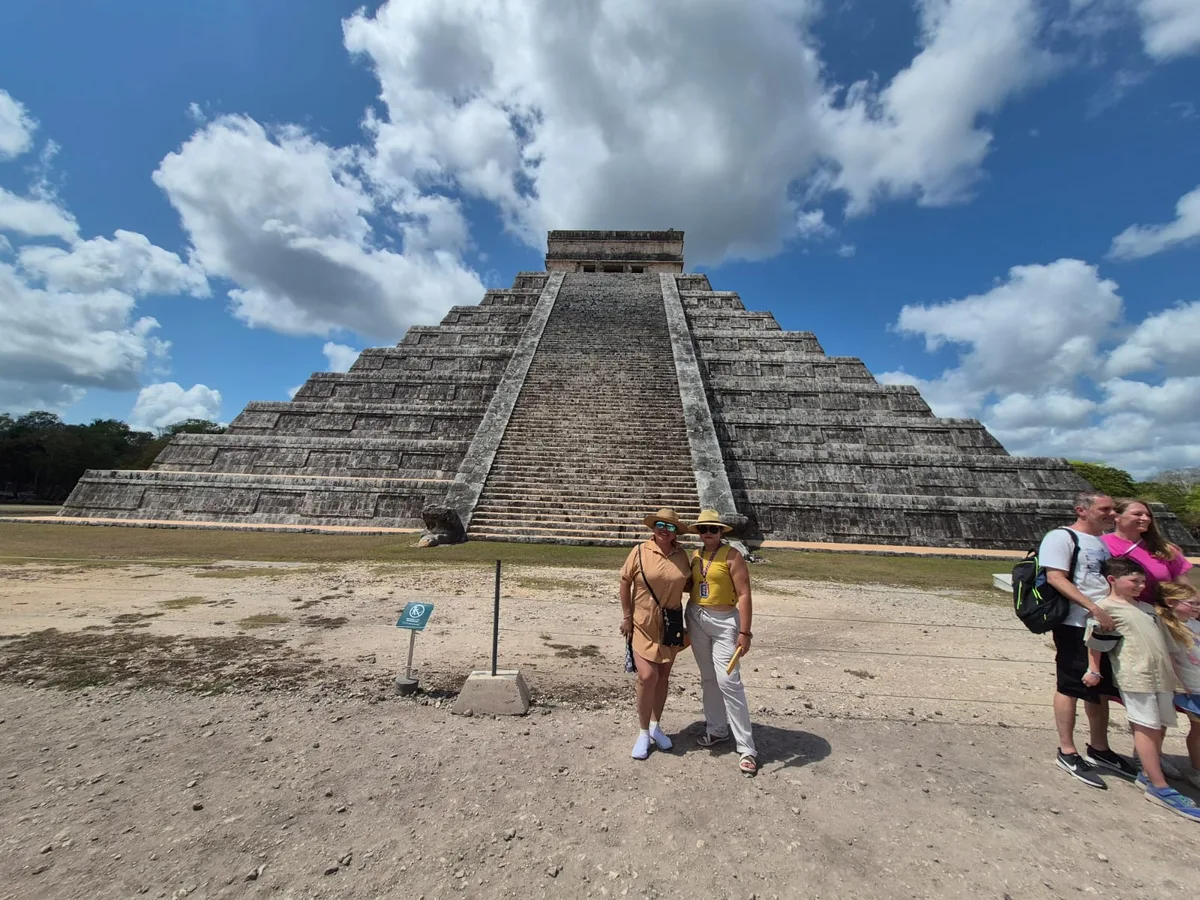
- 11:15 AM Chichén Itzá — Guided walk through the Temple of Kukulkán, the Sacred Cenote, the Ball Court, the Tzompantli and the Jaguars and Eagles platform.
- 1:45 PM Regional lunch in Kaua — Buffet of Yucatecan dishes: cochinita, relleno negro, lime soup and meat-free options.
- 3:00 PM Selva Maya cenote — The swim lands exactly when the sun is at its worst. Changing rooms and showers on site.
- 4:20 PM Valladolid — Francisco Cantón Rosado park with its original railings, the church of San Servacio and the murals in the town hall.
- 8:00 PM Back in Mérida — We drop you off where the day started.
Included: Air-conditioned transport, General culture guide, Regional buffet lunch
Not included: Chichén Itzá entrance, Cenote entrance, Drinks
Archaeology · 11 h
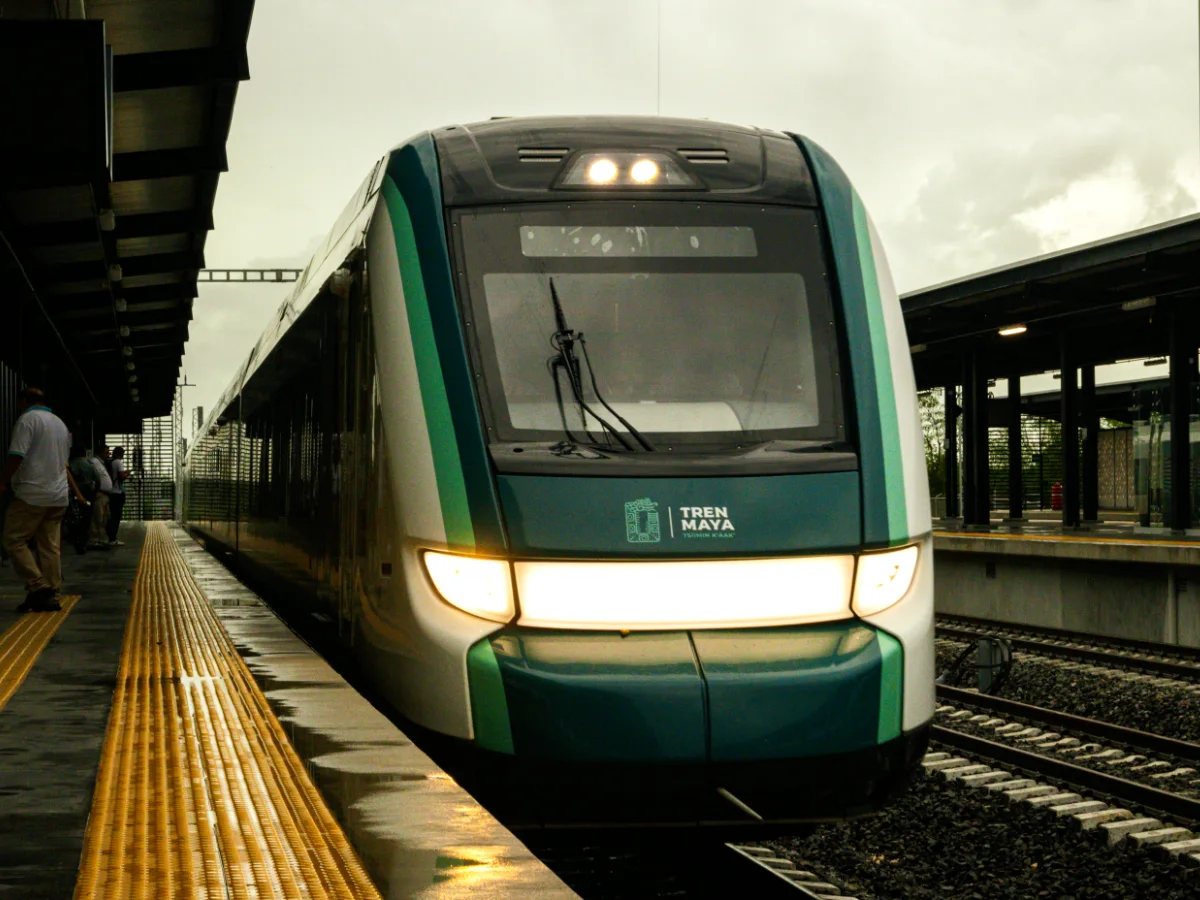
Maya Train, Chichén Itzá and Izamal
The Mérida–Izamal leg by train, the rest by road
from $1,600 MXN per person
See itinerary
8:00 AM – 7:00 PM · daily
- 8:00 AM Transfer to the station — From the office to the Maya Train station in Mérida.
- 9:18 AM Maya Train ride — Forty minutes from Mérida to Izamal. Ticket included.
- 10:15 AM Izamal — The yellow town, the three-tier Baroque altarpiece and free time on the main square.
- 12:30 PM Chichén Itzá — Guided walk through the Sacred Cenote, the Temple of Kukulkán, the Jaguars and Eagles platform and the Ball Court.
- 2:30 PM Lunch in Kaua — Buffet of typical regional dishes.
- 3:45 PM Selva Maya cenote — The swim of the day, with the heat already easing off.
- 5:00 PM Back to Mérida — Two hours on the road back.
Included: Transport, General culture guide, Maya Train ticket Mérida–Izamal, Midday meal
Not included: Chichén Itzá entrance, Cenote entrance, Drinks
Cenotes · 7 h
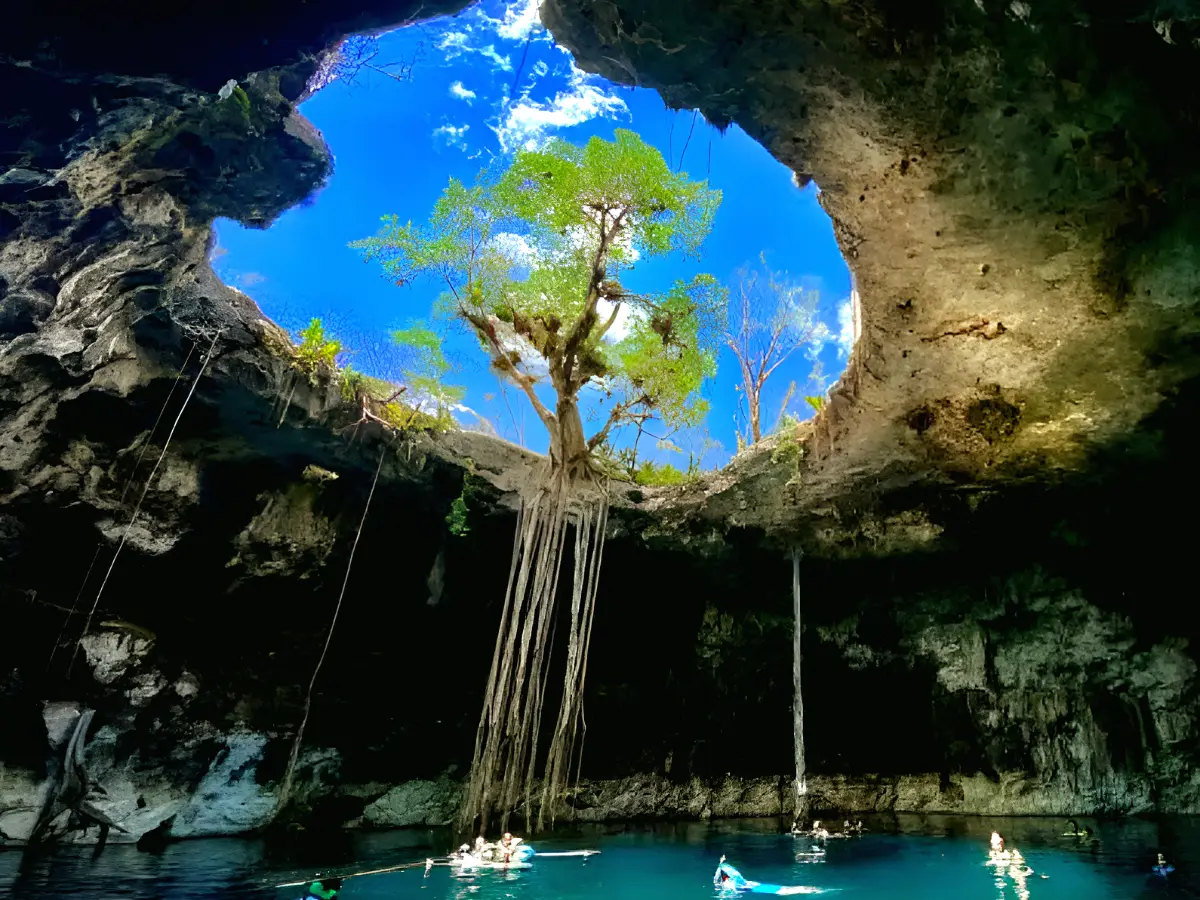
The four cenotes of Santa Bárbara
Four different cenotes and a lunch made by hand
from $1,450 MXN per person
See itinerary
10:00 AM – 5:00 PM · daily
- 10:00 AM Departure from the office — An hour on the road to Homún, through the ring of cenotes.
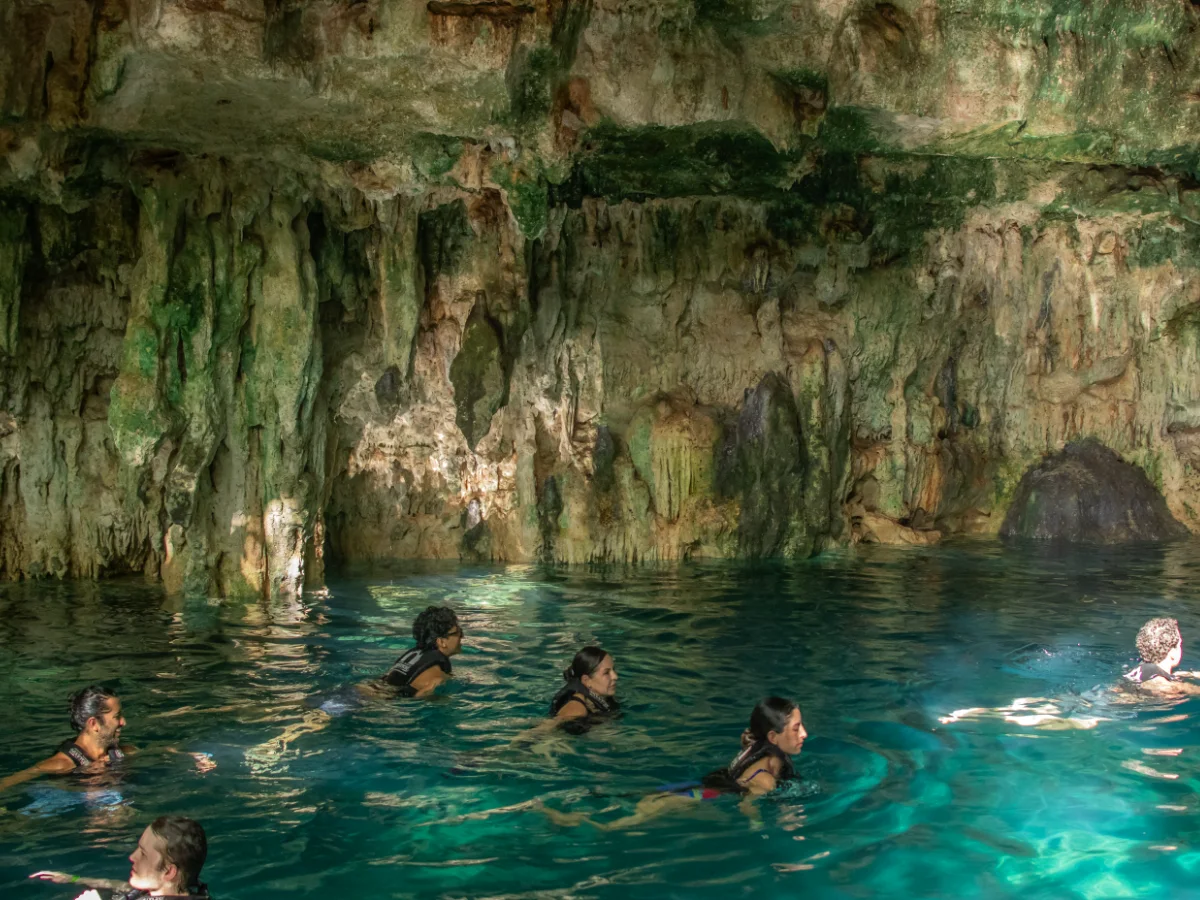
- 11:00 AM Cascabel cenote — Closed, cave type. You descend inside and the water sits in half-light: the most striking of the four.
- 11:30 AM Chaksikín cenote — Semi-open. You go down between limestone walls painted with Maya-themed murals.
- 12:00 PM Xooch cenote — Semi-open, with a shaft of light that falls straight onto the water mid-morning.
- 12:30 PM Pool Cocom cenote — Open and surrounded by vegetation. You swim along a channel out to the wide part.
- 1:30 PM Regional lunch — Home cooking with hand-made tortillas. Plenty of time to eat without rushing.
- 4:00 PM Back to Mérida — An hour back, arriving around five.
Included: Transport, Certified guide, Entry to all four cenotes, Regional lunch
Not included: Drinks with lunch
Frequently asked questions
Why were cenotes sacred to the Maya?
They were the main water source in a land without rivers and ritual places for offerings, according to INAH.
What was found in the Sacred Cenote?
Jade, gold and copper objects, among others, brought from other parts of Mesoamerica.
Can you swim in the Sacred Cenote?
No. It's protected by INAH and can only be viewed from the edge.
Which god is associated with cenotes?
Chaac, the Maya rain god.