The simple definition
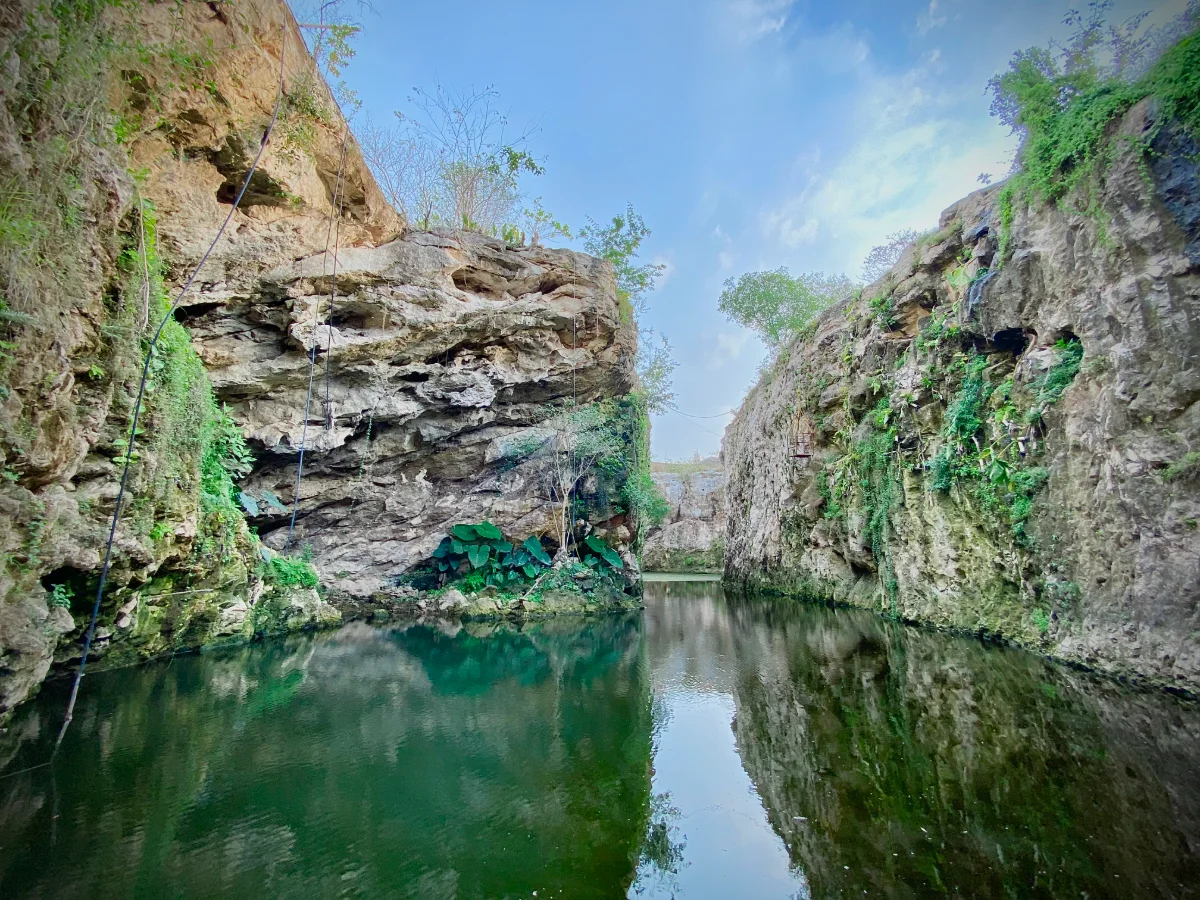
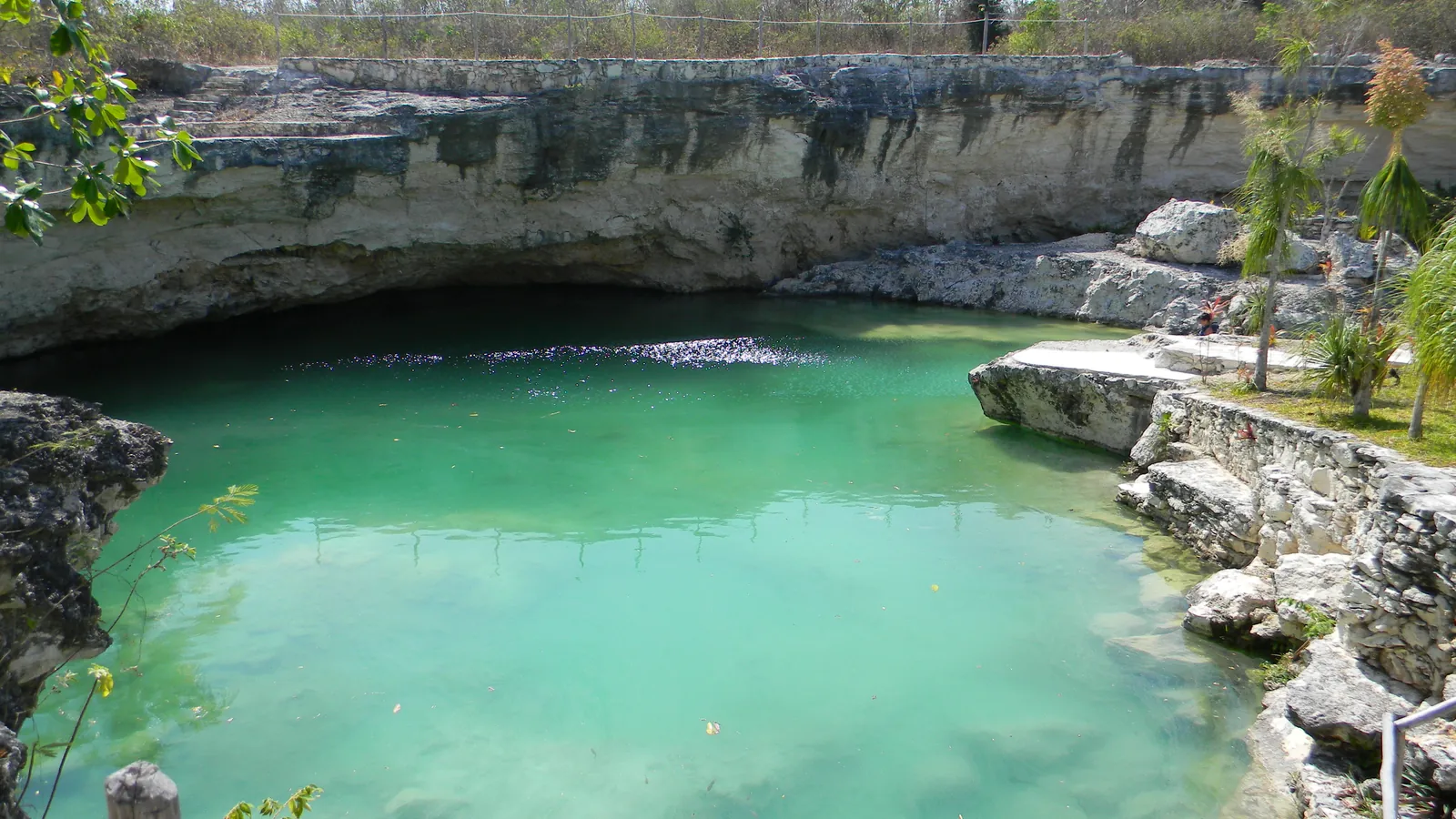
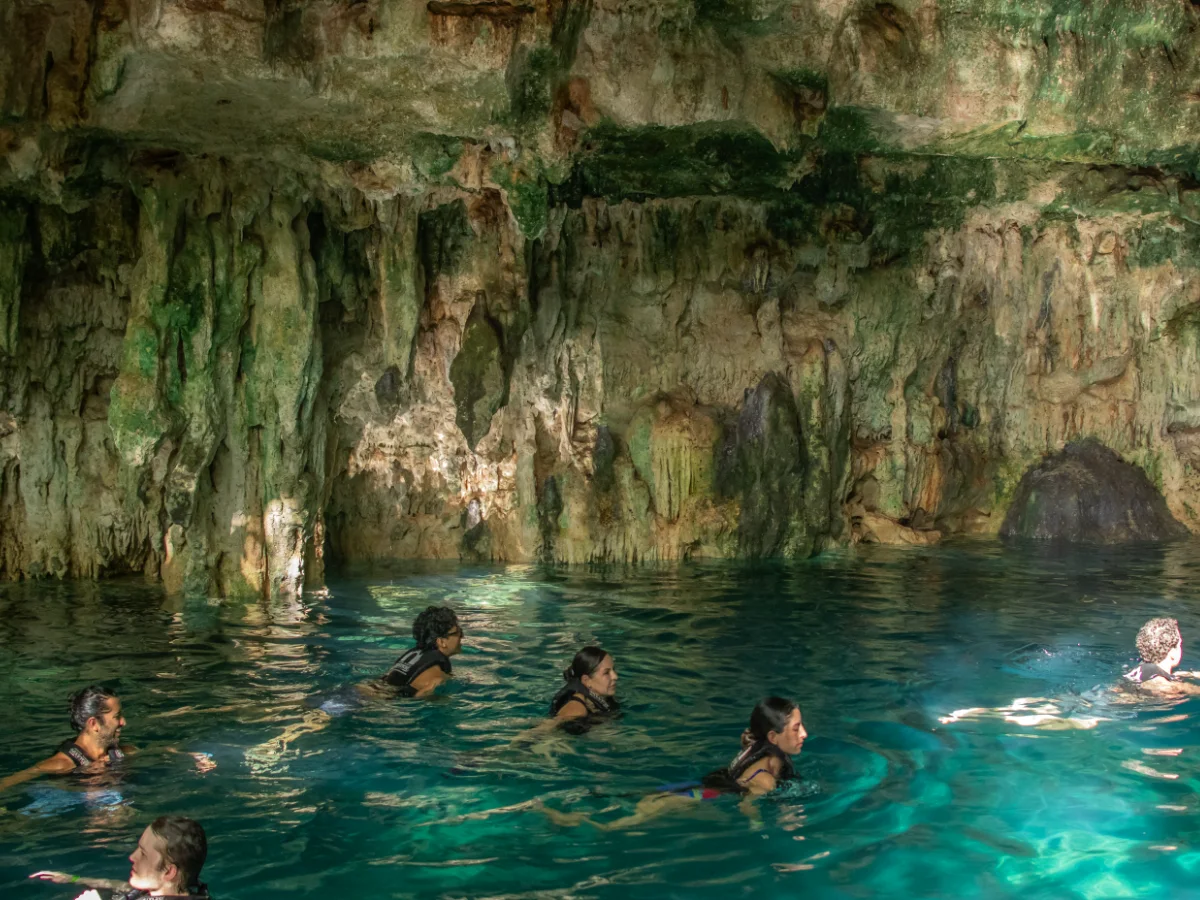
Mexico's protected-areas commission (CONANP) describes cenotes as bodies of water that form in karst limestone when the roof of a cave with underground rivers collapses. When the roof falls in, it leaves an opening where you can see, and touch, the groundwater.
The word comes from the Yucatec Maya ts'ono'ot, which the Spanish adapted as "cenote."
How a cenote forms, step by step
- Rainwater turns slightly acidic as it seeps through the soil.
- It dissolves the limestone very slowly, opening cracks, tunnels and caves.
- Water fills those caves and forms underground rivers.
- The roof weakens and eventually collapses.
- A cenote is born: a window onto the aquifer.
Depending on how much of the roof has fallen, a cenote is open, semi-open or closed, as explained in our guide to cenote types.
Why Yucatán has so many
The peninsula is a huge slab of very permeable limestone. A study in UNAM's journal Geofísica Internacional describes its aquifer as karstic and highly permeable, with networks of tunnels and caves. Rain doesn't form surface rivers; it soaks in and flows underground. The result is thousands of cenotes.
Near Mérida, cenotes also cluster in a semicircle that traces the rim of the Chicxulub crater, left by the asteroid that wiped out the dinosaurs. NASA describes this "necklace" of cenotes as marking the edge of the buried crater.
Life in cenotes
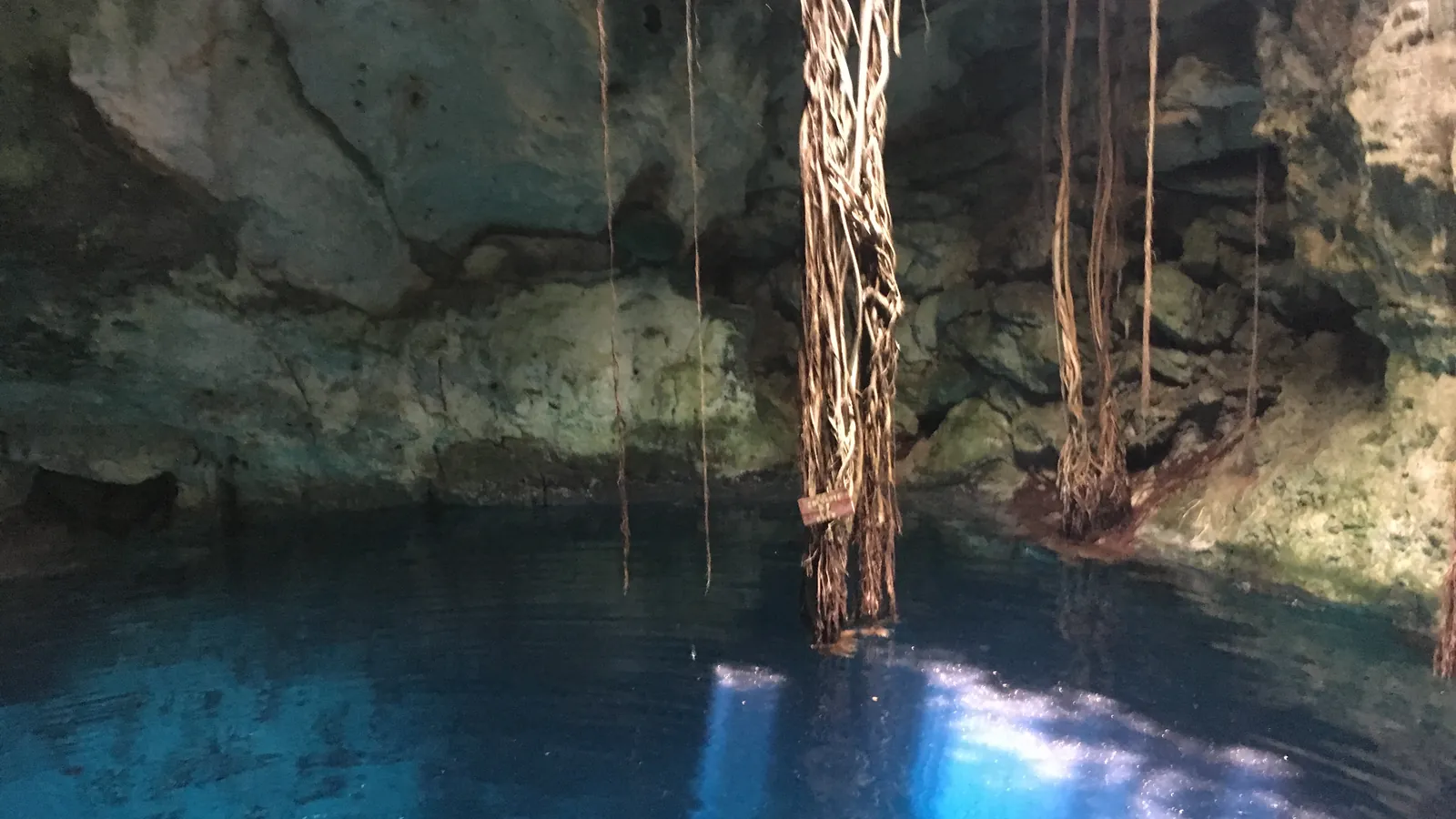
CONANP notes that cenotes can host plants and animals adapted to these environments, from tree roots reaching down for water to fish and tiny crustaceans. Though they're Yucatán's signature, cenotes also exist in other parts of Mexico.
Tips for your first cenote
- Shower first, with no lotion or repellent.
- Wear a life vest if you're not a confident swimmer: the water is usually deep.
- Non-slip shoes for wet stairs.
- Don't touch the rock formations.
Cenotes from Mérida
Mary Tours runs several cenote trips: Santa Bárbara cenotes in Homún, with four cenotes of different types; Hacienda Mucuyché, with two cenotes joined by a channel; Izamal and two cenotes; and Tulum and Casa Tortuga, with four cenotes on the Caribbean side. The office is on Calle 61 in Mérida's historic center; prices and schedules are in the booking section.
Fun facts
- Yucatán has no surface rivers; they all run underground.
- A semicircle of cenotes traces the rim of the Chicxulub crater.
- The word cenote comes from the Maya ts'ono'ot.
Related tours
Cenotes · 7 h
The four cenotes of Santa Bárbara
Four different cenotes and a lunch made by hand
from $1,450 MXN per person
See itinerary
10:00 AM – 5:00 PM · daily
- 10:00 AM Departure from the office — An hour on the road to Homún, through the ring of cenotes.
- 11:00 AM Cascabel cenote — Closed, cave type. You descend inside and the water sits in half-light: the most striking of the four.
- 11:30 AM Chaksikín cenote — Semi-open. You go down between limestone walls painted with Maya-themed murals.
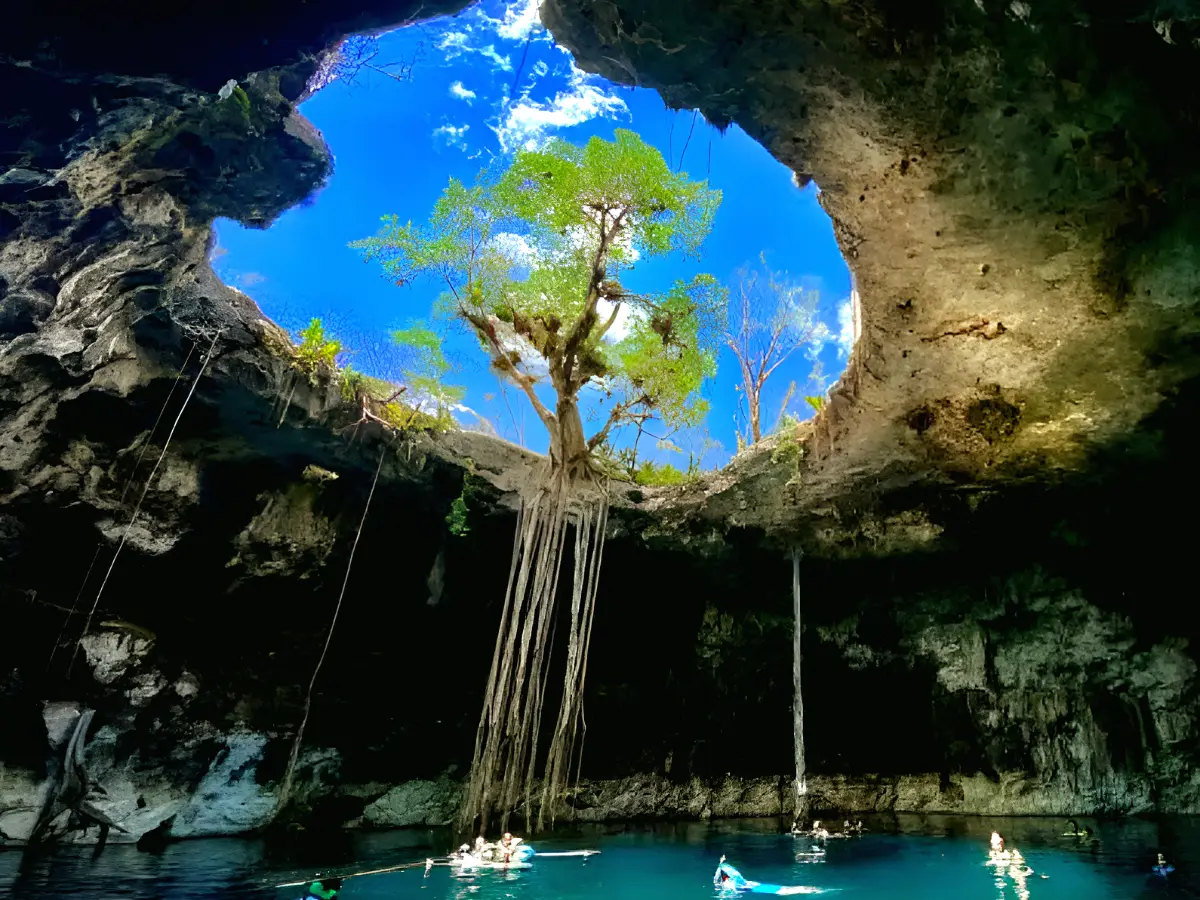
- 12:00 PM Xooch cenote — Semi-open, with a shaft of light that falls straight onto the water mid-morning.
- 12:30 PM Pool Cocom cenote — Open and surrounded by vegetation. You swim along a channel out to the wide part.
- 1:30 PM Regional lunch — Home cooking with hand-made tortillas. Plenty of time to eat without rushing.
- 4:00 PM Back to Mérida — An hour back, arriving around five.
Included: Transport, Certified guide, Entry to all four cenotes, Regional lunch
Not included: Drinks with lunch
Cenotes · 7 h
Hacienda Mucuyché
A stone channel joining two cenotes
from $1,800 MXN per person
See itinerary
9:30 AM – 4:00 PM · daily
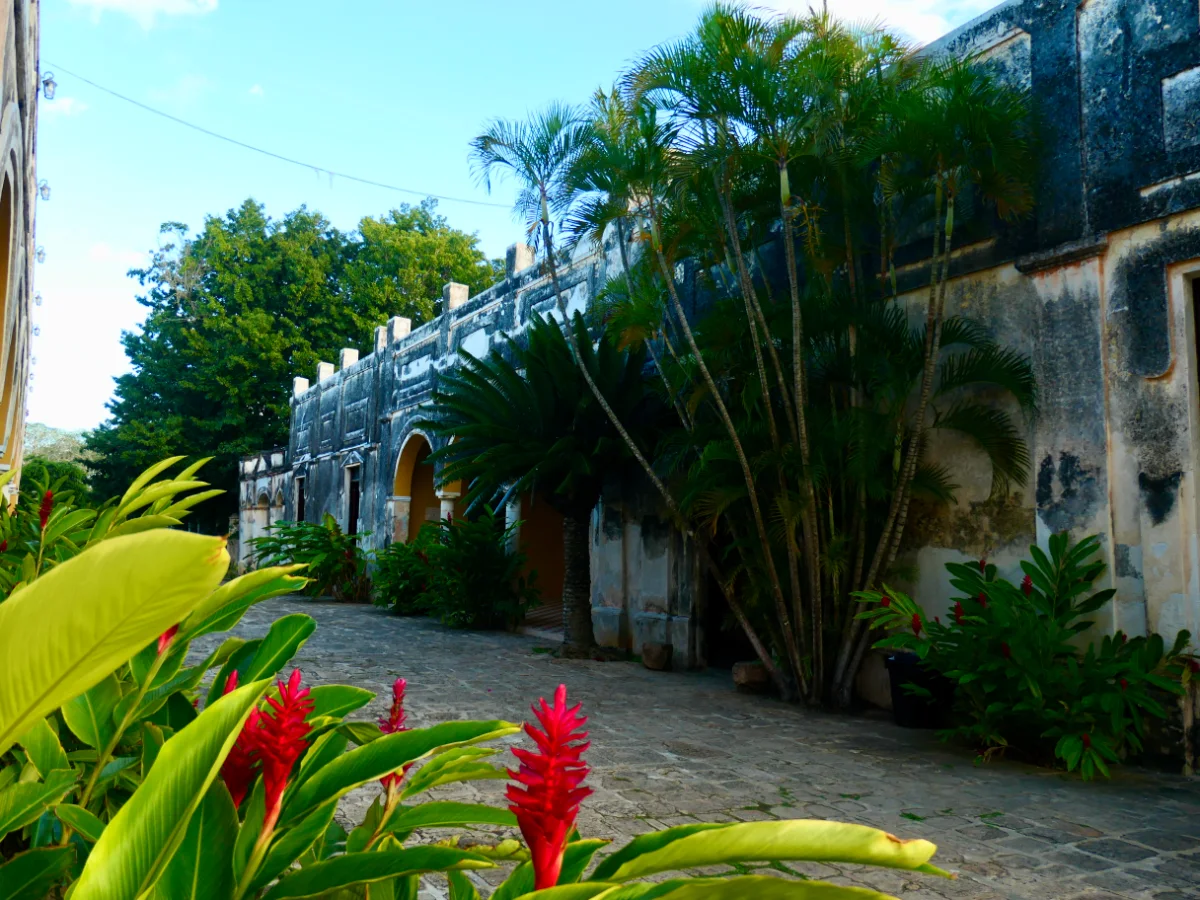
- 9:30 AM Departure from the office — An hour on the road to the estate, in the municipality of Abalá.
- 10:30 AM Check-in and historical tour — A guide from the estate itself explains how the henequen business worked and what survives of it.
- 11:00 AM Carlota and Azul Maya cenotes — Two hours in the water. To move between the cenotes you cross the channel, swimming or along the stone path.
- 1:00 PM Time for lunch — Yucatecan food at the estate restaurant, paid per order. There is a pool for anyone who wants to stay in the water.
- 3:00 PM Back to Mérida — An hour back.
Included: Transport, Guide, Entry to the hacienda and cenotes
Not included: Food, Drinks
Towns · 9 h
Izamal and two cenotes
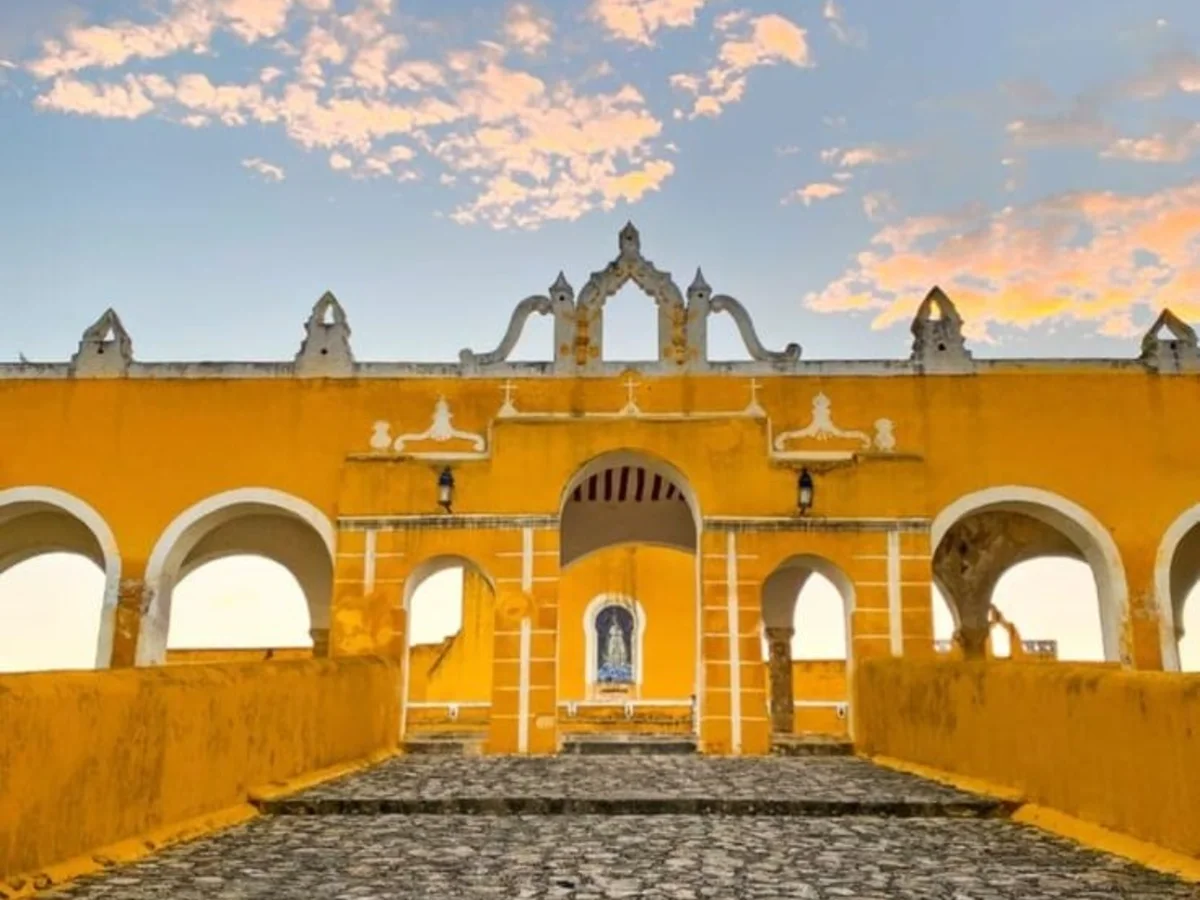
Izamal’s yellow first, then two cold cenotes
from $1,300 MXN per person
See itinerary
8:00 AM – 5:00 PM · daily
- 8:00 AM Departure from the office — An hour on the road. The guide uses it to explain where Izamal comes from before you arrive.
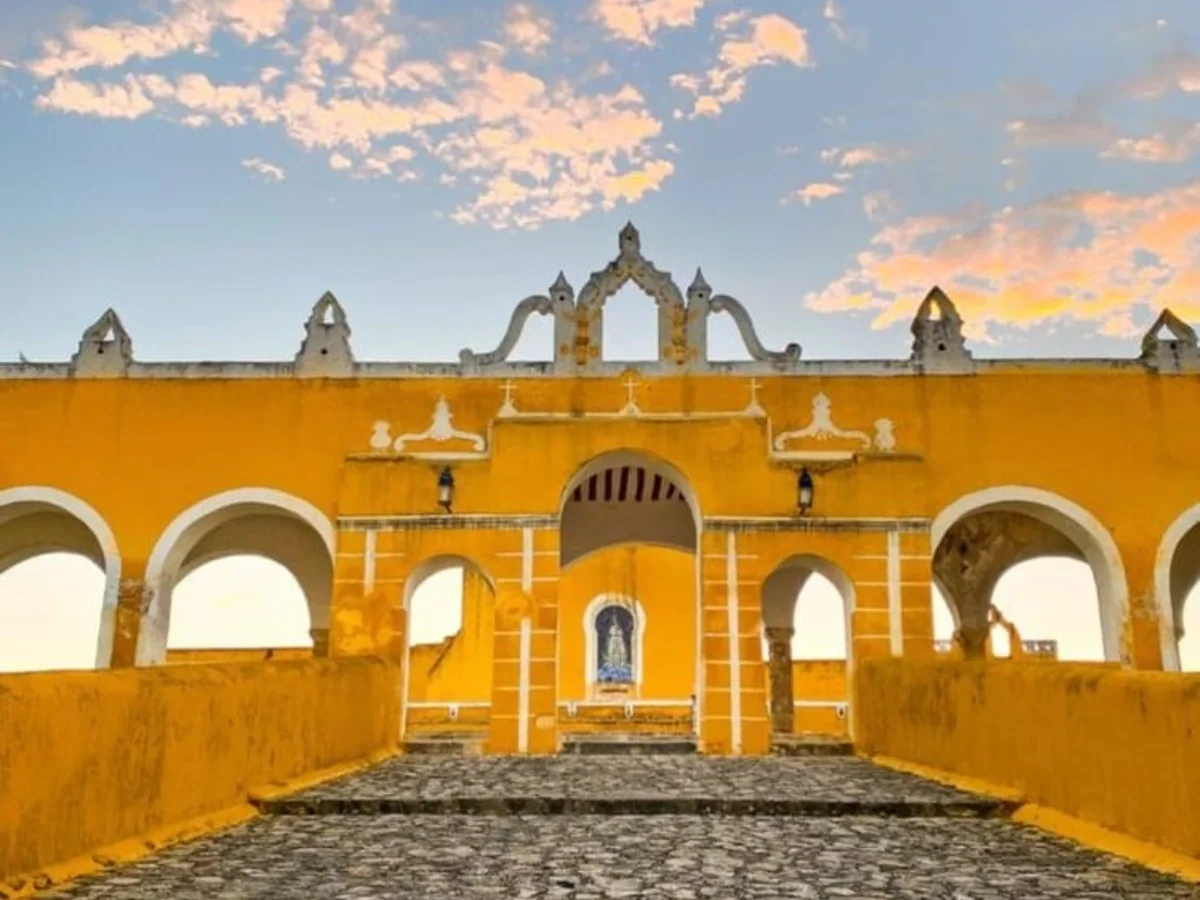
- 9:00 AM The yellow town — The convent and its atrium, among the largest on the continent, the baroque altarpiece, and then free time around the streets.
- 10:20 AM On to the Homún ring — Forty more minutes to the cenote area.
- 11:00 AM Yaxbacaltún cenote — The first swim, landing right after the morning’s walking.
- 12:15 PM San Antonio cenote and lunch — A semi-closed cenote that feels nothing like the first one, and lunch served right there.
- 3:15 PM Back to Mérida — Back to Mérida, arriving around five.
Included: Transport, Guide, Entry to both cenotes, Lunch
Not included: Drinks
 Coupon −$300 MXN per person
Caribbean · 14 h
Tulum and the Casa Tortuga cenotes
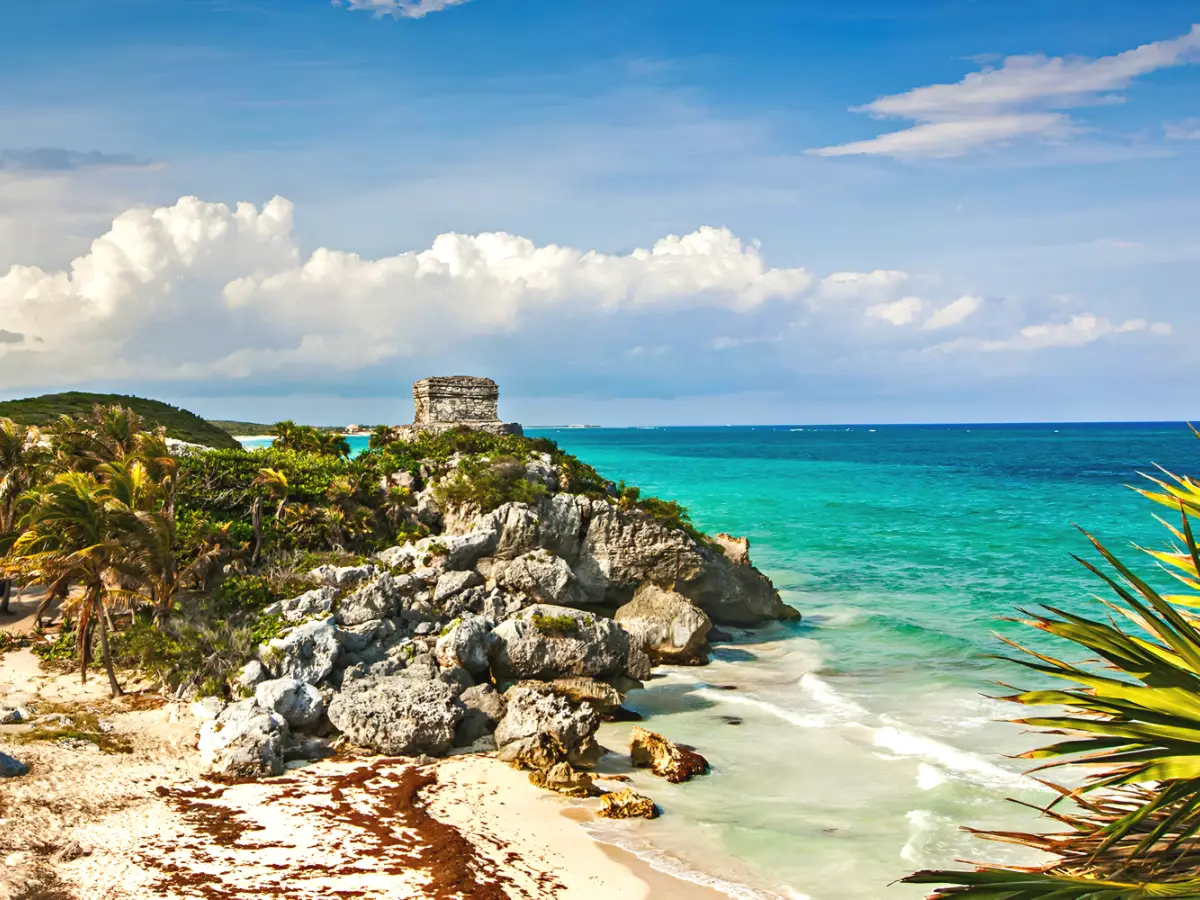
The only Maya city built facing the Caribbean
from $2,500 MXN per person
See itinerary
6:00 AM – 8:00 PM · daily
- 6:00 AM Boarding — We leave from the downtown office. If your accommodation is on the way, we collect you there — agreed beforehand on WhatsApp.
- 6:30 AM Motorway to the rest stop — An hour and three quarters, with fifteen minutes for toilets and something light.
- 8:30 AM On to Tulum — An hour and a half more to the Quintana Roo coast.
- 10:00 AM Tulum archaeological site — Guided visit to the walled city: El Castillo, the Temple of the Frescoes and the Temple of the Descending God, with the sea behind.
- 12:15 PM Casa Tortuga cenotes and lunch — Four cenotes of different kinds, with a guided route, trails and changing rooms. Lunch is on site.
- 4:00 PM Back to Mérida — Four hours back, with a stop halfway.
Included: Guide accredited by the Ministry of Tourism, Round-trip transport, Lunch, Cenote entry
Not included: Tulum archaeological site entrance, Drinks
Frequently asked questions
Where does the word cenote come from?
From the Yucatec Maya ts'ono'ot, adapted into Spanish as cenote.
How does a cenote form?
Water dissolves limestone, forming underground caves, and the roof of one collapses.
Why does Yucatán have so many cenotes?
It's a permeable limestone shelf with no surface rivers, so water flows underground.
Can you swim in a cenote?
In many, yes, at those set up for visitors. Always follow each site's rules.