A caveat first
Lists with "the meaning" of every Yucatecan town are everywhere. Mexico's INAH cautions that spellings vary with transcription and that literal translations without lexicographic support should be avoided. Even the origin of the name "Yucatán" needs specialized sources. Here we include only what's sourced.
Names with documented history
- T'Hó: the Maya name of the settlement on which Mérida was founded, according to the city government.
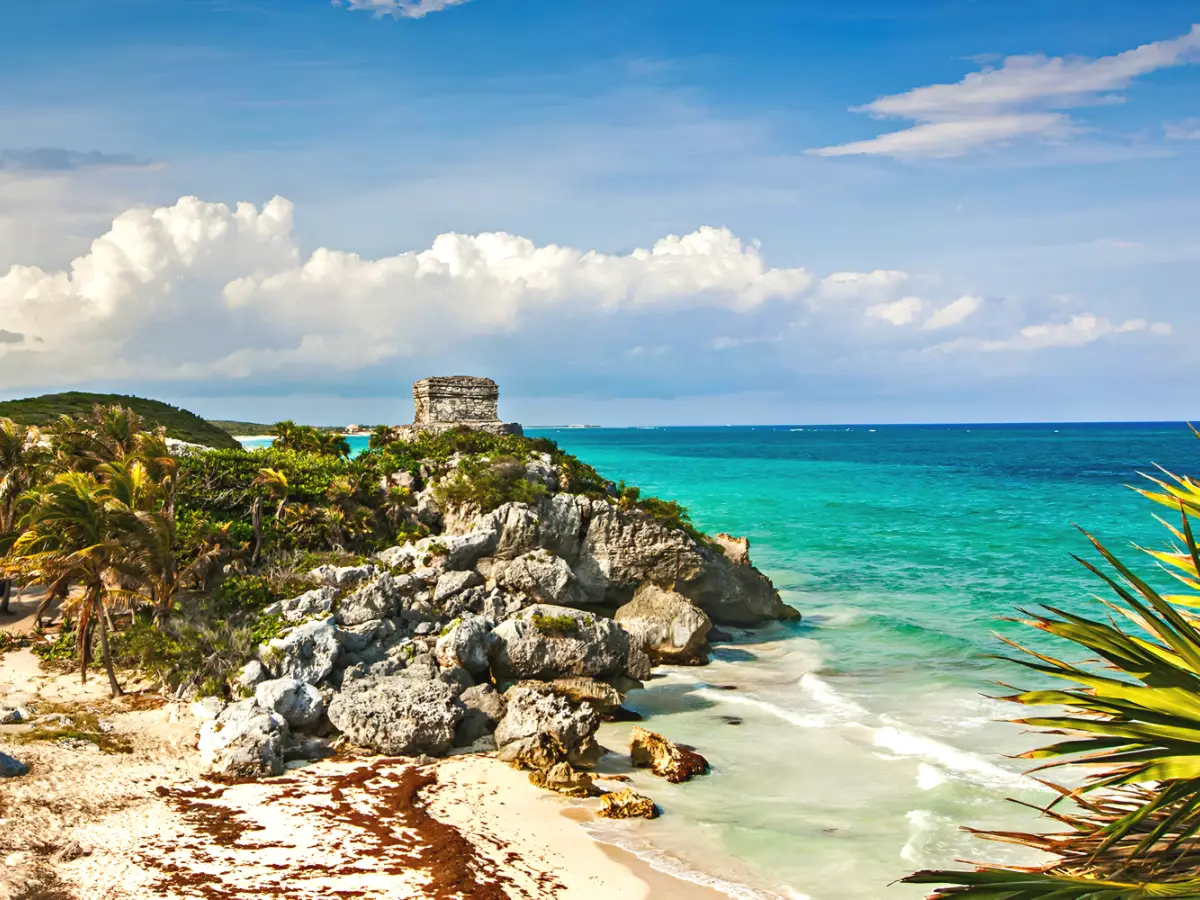
- Zamá: what 16th-century sources called Tulum, according to INAH; the current name came later and refers to its wall.
- Puuc: the name of a region and an architectural style in the Maya area.
- Sacbé (sacbeob): white stone roads linking Izamal with other cities.
Maya and colonial names side by side
Many place names keep an Indigenous name alongside a colonial one, and Maya toponyms refer to geography, plants or settlements. That's why one place may have had several names over its history.
Town nicknames
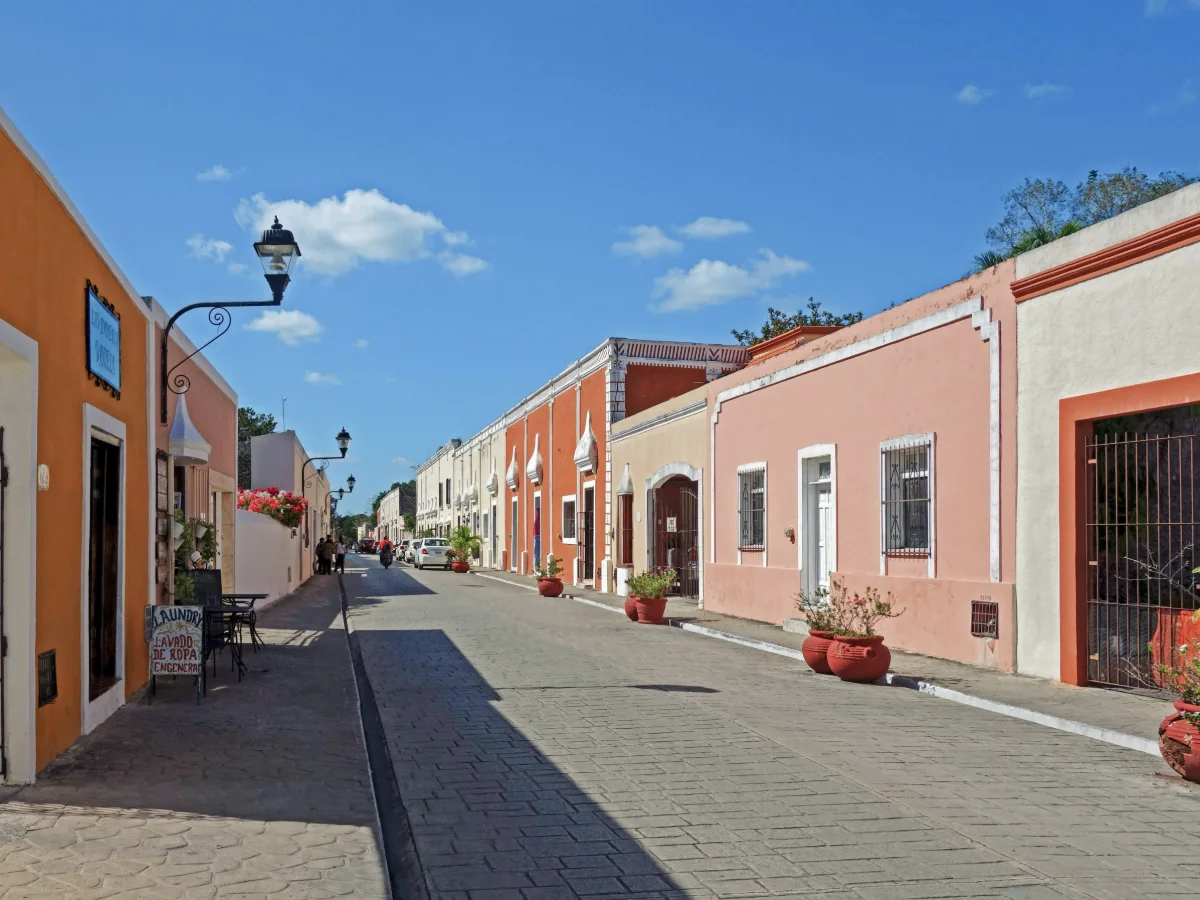
- Valladolid: "the Pearl of the East," according to the Yucatán government.
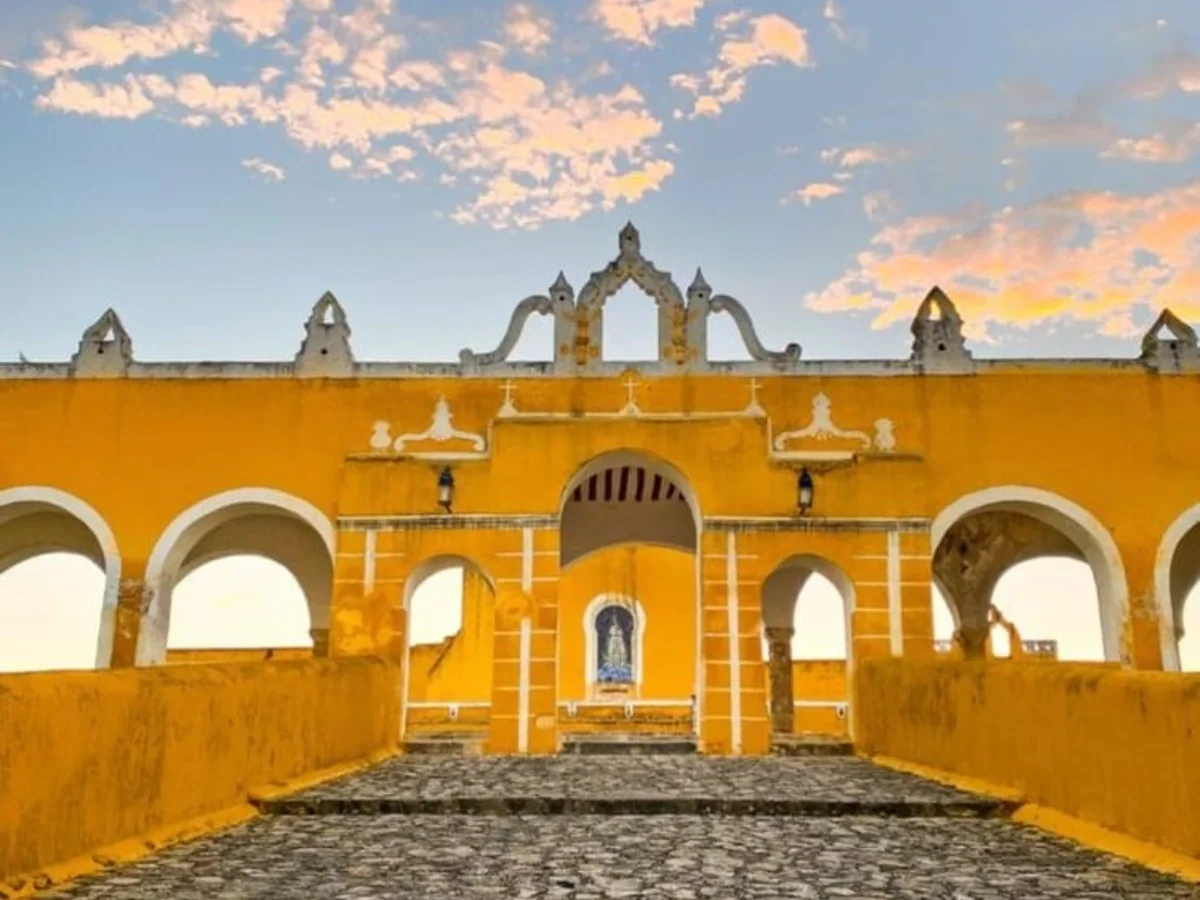
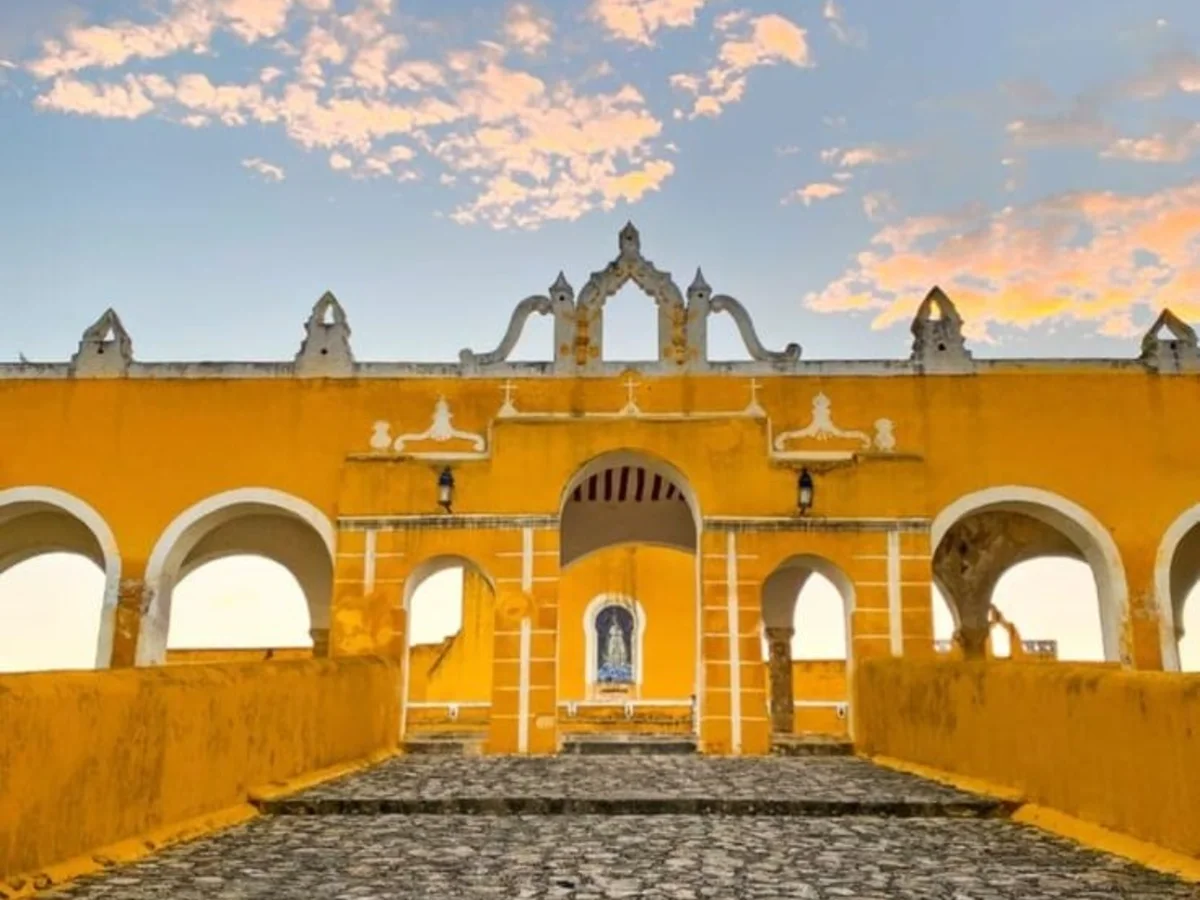
- Izamal: "the City of Three Cultures," for its Maya, colonial and modern heritage; also called "the Yellow City."
- Mérida: "the White City," a nickname with no single documented origin.
Tips
- If someone offers a translation, ask where it comes from.
- Respect local spelling on signs and maps.
Exploring the names from Mérida
Mary Tours trips visit Izamal, Valladolid, Tulum and other places whose names tell a story. They leave from Calle 61 in downtown Mérida.
| Place | Name or nickname | Source |
|---|---|---|
| Mérida | T'Hó (earlier settlement) | Mérida city government |
| Tulum | Zamá (16th century) | INAH |
| Valladolid | Pearl of the East | Yucatán government |
| Izamal | City of Three Cultures | Yucatán government |
Fun facts
- Tulum was called Zamá in the 16th century.
- Izamal is the City of Three Cultures.
- Many Maya place-name translations lack support.
Related tours
Archaeology · 11 h
Chichén Itzá, Izamal and Valladolid
Four stops in one day, and none of them rushed
from $1,200 MXN per person
See itinerary
8:00 AM – 8:00 PM · daily
- 8:00 AM Departure from the office — An hour on the road to Izamal. The guide uses the drive to set up what comes next.
- 9:00 AM San Antonio de Padua Convent — The story of the 16th-century Franciscan convent told in its atrium, then free time to walk the yellow town.
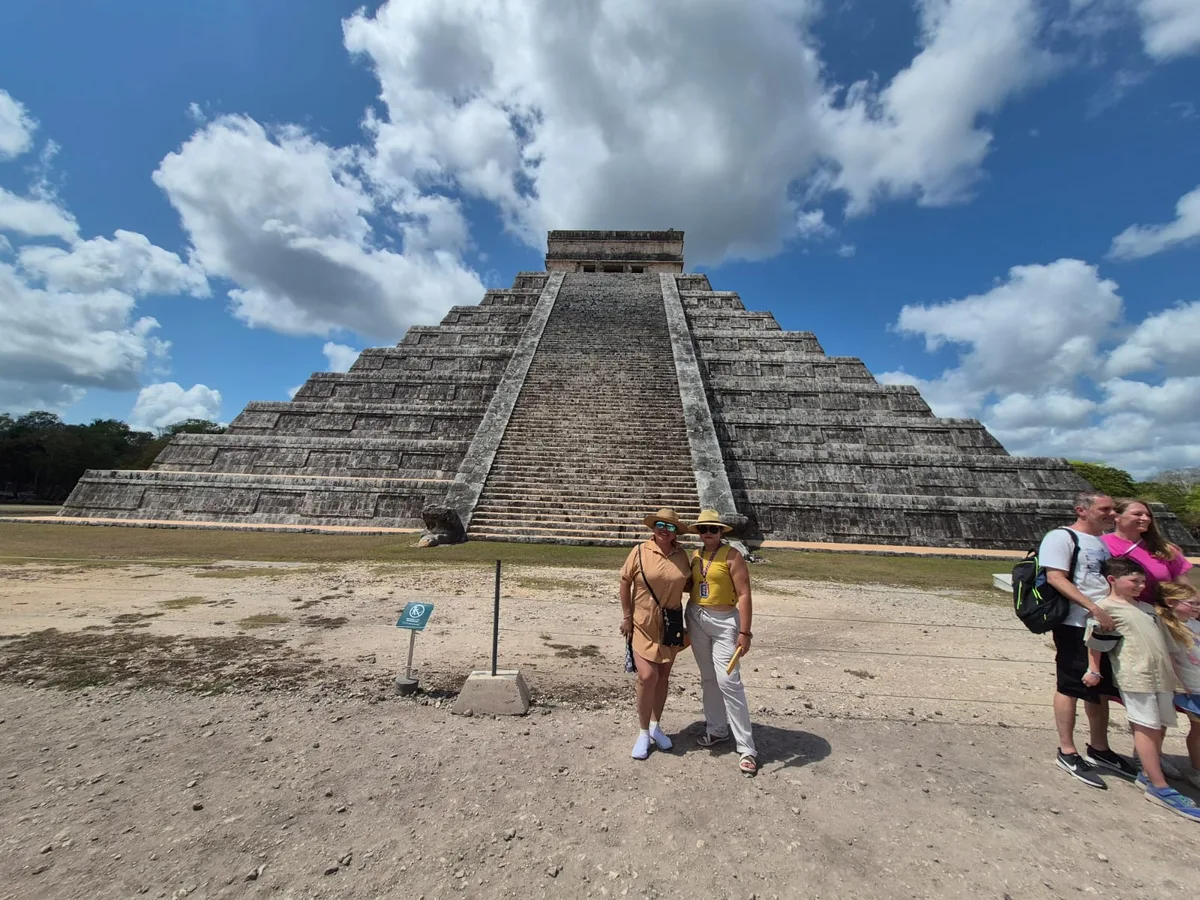
- 11:15 AM Chichén Itzá — Guided walk through the Temple of Kukulkán, the Sacred Cenote, the Ball Court, the Tzompantli and the Jaguars and Eagles platform.
- 1:45 PM Regional lunch in Kaua — Buffet of Yucatecan dishes: cochinita, relleno negro, lime soup and meat-free options.
- 3:00 PM Selva Maya cenote — The swim lands exactly when the sun is at its worst. Changing rooms and showers on site.
- 4:20 PM Valladolid — Francisco Cantón Rosado park with its original railings, the church of San Servacio and the murals in the town hall.
- 8:00 PM Back in Mérida — We drop you off where the day started.
Included: Air-conditioned transport, General culture guide, Regional buffet lunch
Not included: Chichén Itzá entrance, Cenote entrance, Drinks
Towns · 9 h
Izamal and two cenotes
Izamal’s yellow first, then two cold cenotes
from $1,300 MXN per person
See itinerary
8:00 AM – 5:00 PM · daily
- 8:00 AM Departure from the office — An hour on the road. The guide uses it to explain where Izamal comes from before you arrive.
- 9:00 AM The yellow town — The convent and its atrium, among the largest on the continent, the baroque altarpiece, and then free time around the streets.
- 10:20 AM On to the Homún ring — Forty more minutes to the cenote area.
- 11:00 AM Yaxbacaltún cenote — The first swim, landing right after the morning’s walking.
- 12:15 PM San Antonio cenote and lunch — A semi-closed cenote that feels nothing like the first one, and lunch served right there.
- 3:15 PM Back to Mérida — Back to Mérida, arriving around five.
Included: Transport, Guide, Entry to both cenotes, Lunch
Not included: Drinks
Cenotes · 7 h
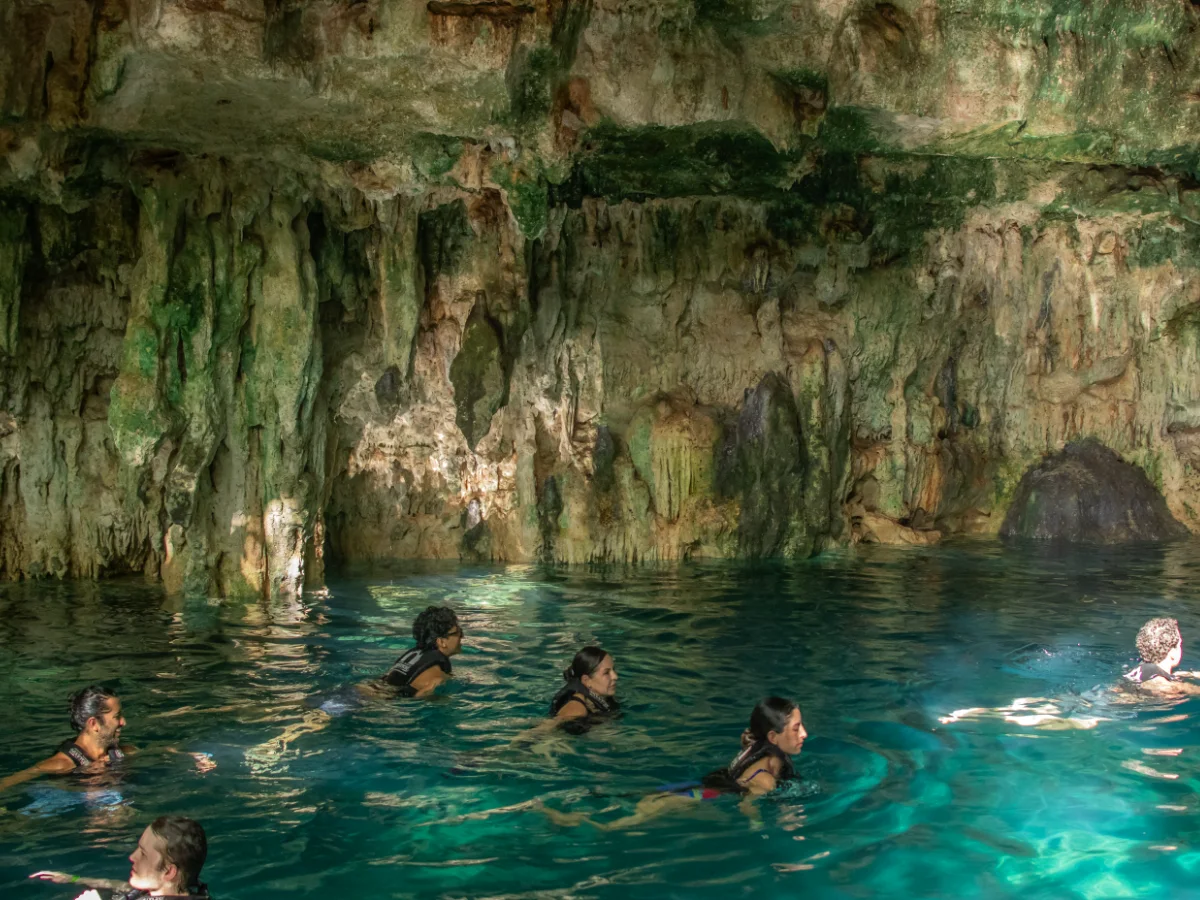
Hacienda Mucuyché
A stone channel joining two cenotes
from $1,800 MXN per person
See itinerary
9:30 AM – 4:00 PM · daily
- 9:30 AM Departure from the office — An hour on the road to the estate, in the municipality of Abalá.
- 10:30 AM Check-in and historical tour — A guide from the estate itself explains how the henequen business worked and what survives of it.
- 11:00 AM Carlota and Azul Maya cenotes — Two hours in the water. To move between the cenotes you cross the channel, swimming or along the stone path.
- 1:00 PM Time for lunch — Yucatecan food at the estate restaurant, paid per order. There is a pool for anyone who wants to stay in the water.
- 3:00 PM Back to Mérida — An hour back.
Included: Transport, Guide, Entry to the hacienda and cenotes
Not included: Food, Drinks
Cenotes · 7 h
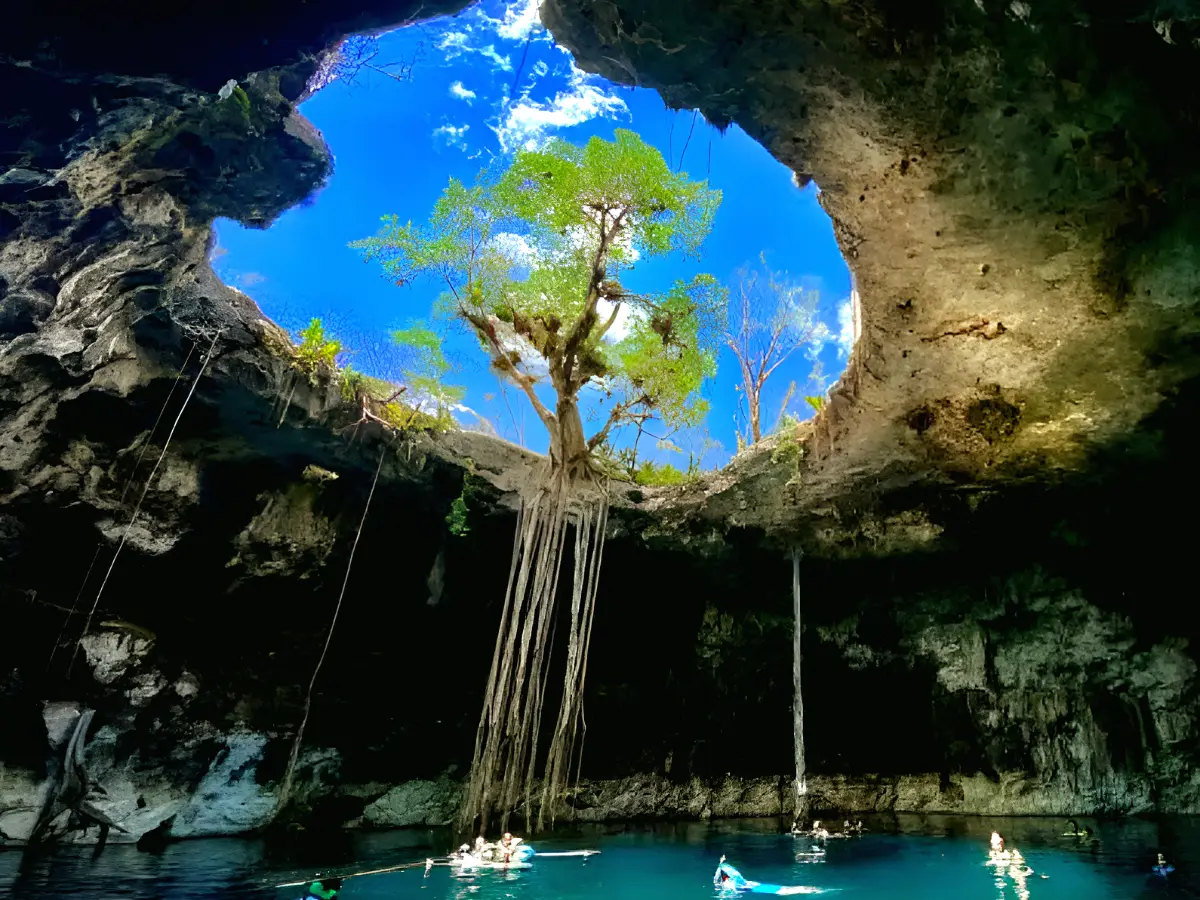
The four cenotes of Santa Bárbara
Four different cenotes and a lunch made by hand
from $1,450 MXN per person
See itinerary
10:00 AM – 5:00 PM · daily
- 10:00 AM Departure from the office — An hour on the road to Homún, through the ring of cenotes.
- 11:00 AM Cascabel cenote — Closed, cave type. You descend inside and the water sits in half-light: the most striking of the four.
- 11:30 AM Chaksikín cenote — Semi-open. You go down between limestone walls painted with Maya-themed murals.
- 12:00 PM Xooch cenote — Semi-open, with a shaft of light that falls straight onto the water mid-morning.
- 12:30 PM Pool Cocom cenote — Open and surrounded by vegetation. You swim along a channel out to the wide part.
- 1:30 PM Regional lunch — Home cooking with hand-made tortillas. Plenty of time to eat without rushing.
- 4:00 PM Back to Mérida — An hour back, arriving around five.
Included: Transport, Certified guide, Entry to all four cenotes, Regional lunch
Not included: Drinks with lunch
Frequently asked questions
What does Yucatán mean?
Its origin needs specialized sources; several explanations circulate without consensus.
What was Mérida called before?
The earlier Maya settlement was called T'Hó.
Why is Valladolid the Pearl of the East?
It's the nickname the Yucatán government uses for the city in the east of the state.
What is a sacbé?
A white stone road built by the Maya.