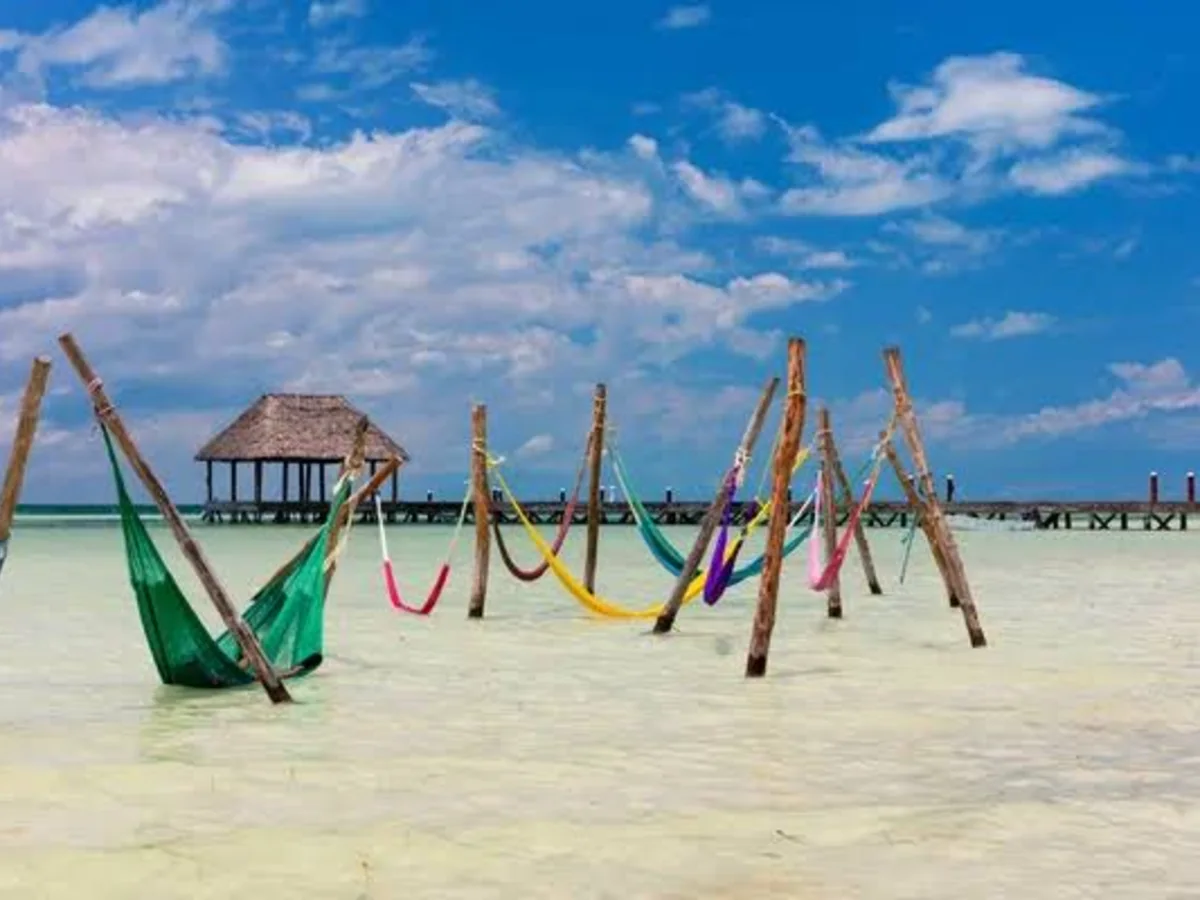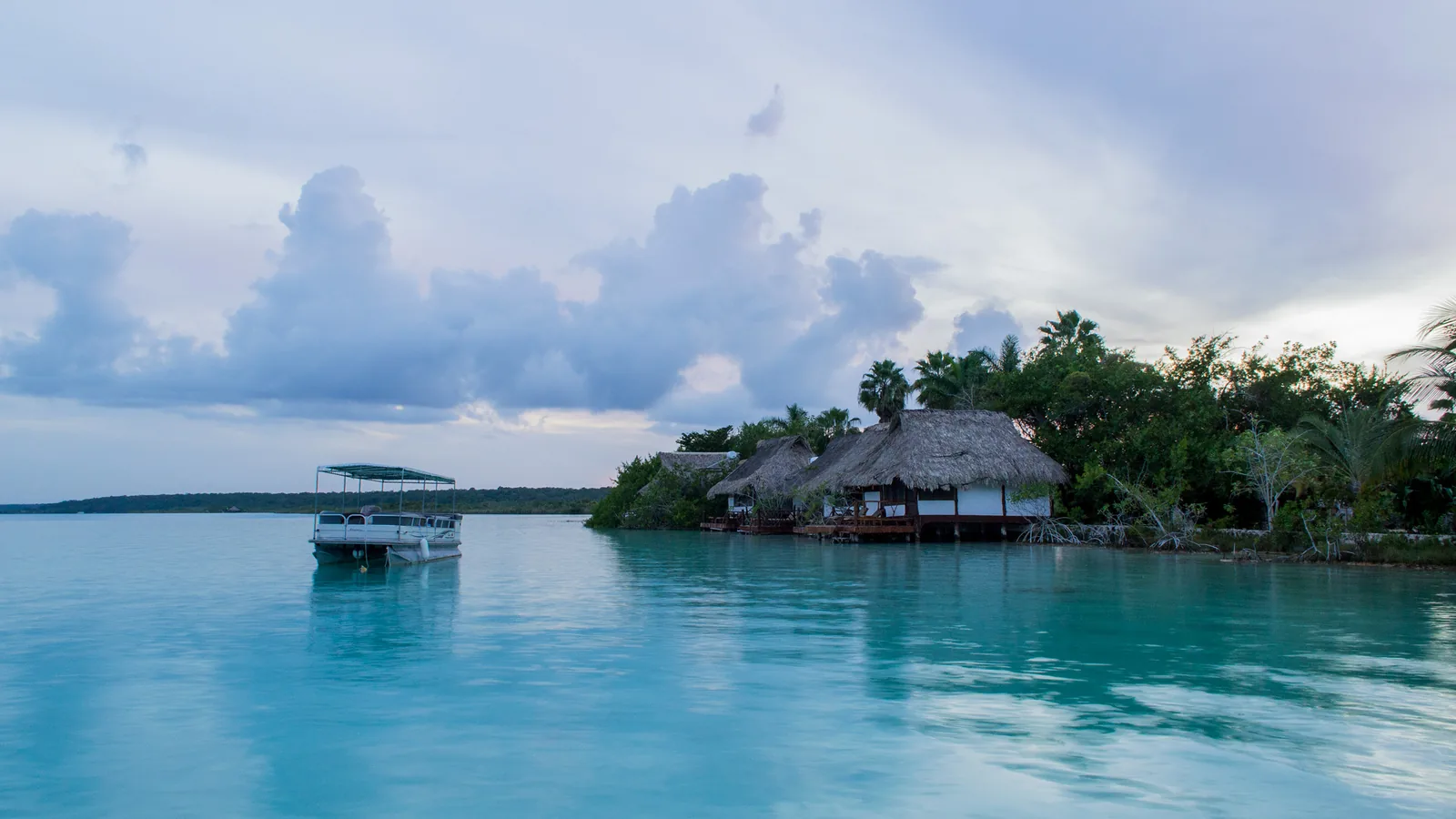
The short answer: light, depth and a white floor
"Seven colors" is a nickname, not a measurement. Nobody counted exactly seven; what you see is a continuous range from greenish white to near-black blue. Still, the name has stuck so firmly that even academic papers from Mexico's National Institute of Anthropology and History (INAH) call Bacalar the "Lagoon of Seven Colors."
Three things work together:
- Water filters light. It absorbs the red end of the spectrum and lets more blue through, as NOAA explains. The more water light travels through, the bluer it looks.
- Depth changes abruptly. Very shallow sandbanks sit a short distance from cenotes (natural sinkholes) that drop much deeper.
- The floor is pale. The sand and the structures along the shore are almost entirely calcite, a white mineral that reflects whatever light reaches the bottom.
How the colors are distributed
Picture the lagoon as a white mirror covered by layers of water of different thickness:
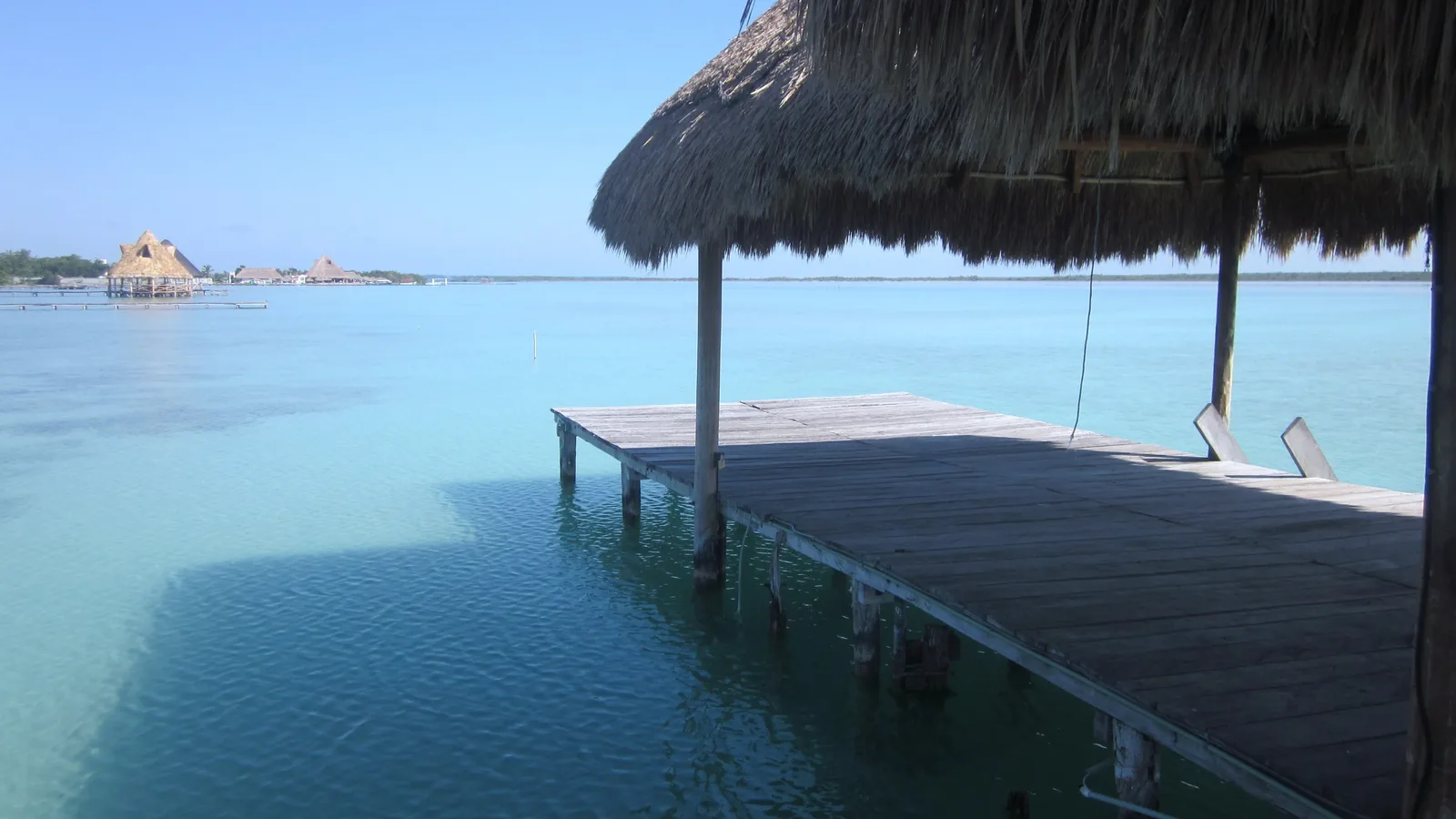
- Shoreline and sandbanks: a thin layer of water over a white floor. Light reaches the bottom, bounces and comes back with little loss. It looks clear, cream or very pale turquoise.
- Medium depth: much of the red and yellow has already been absorbed, so you get vivid turquoise and teal.
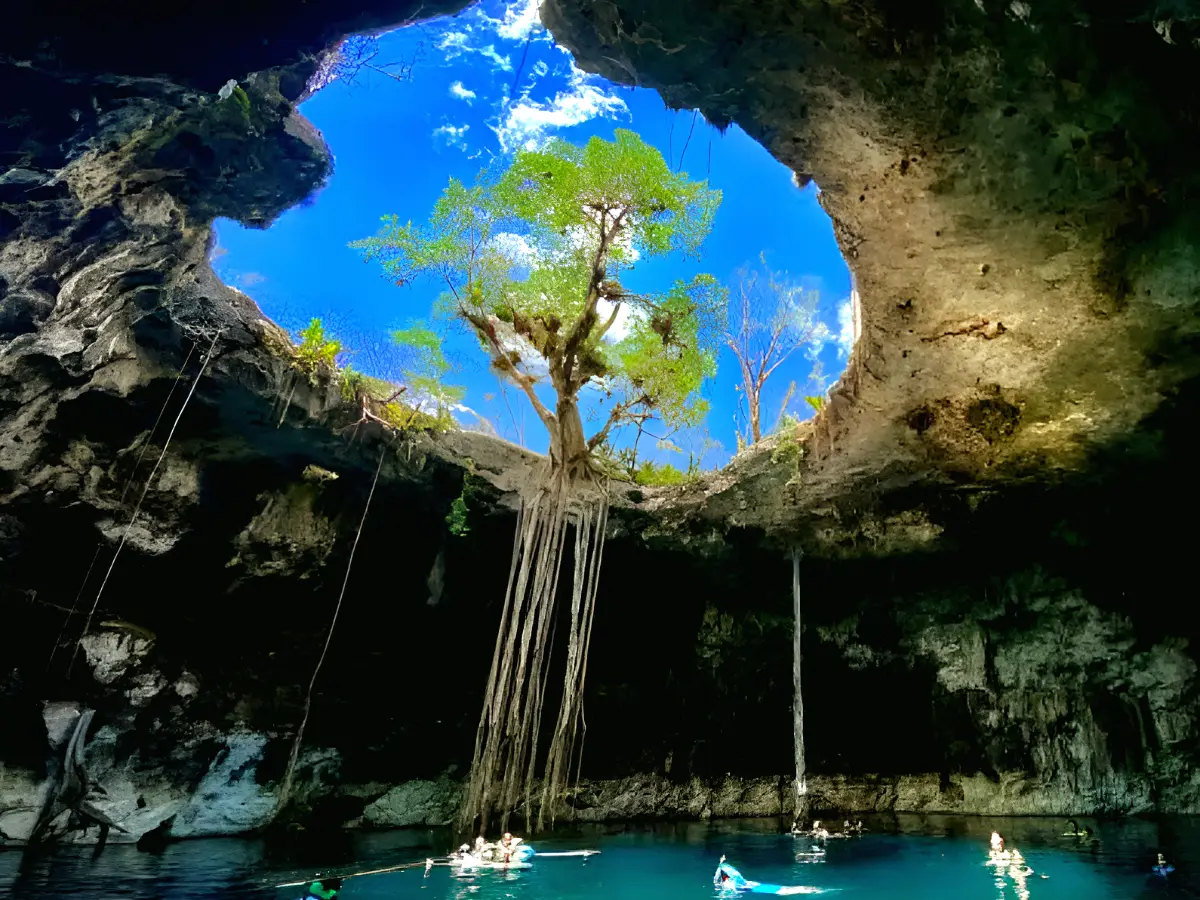
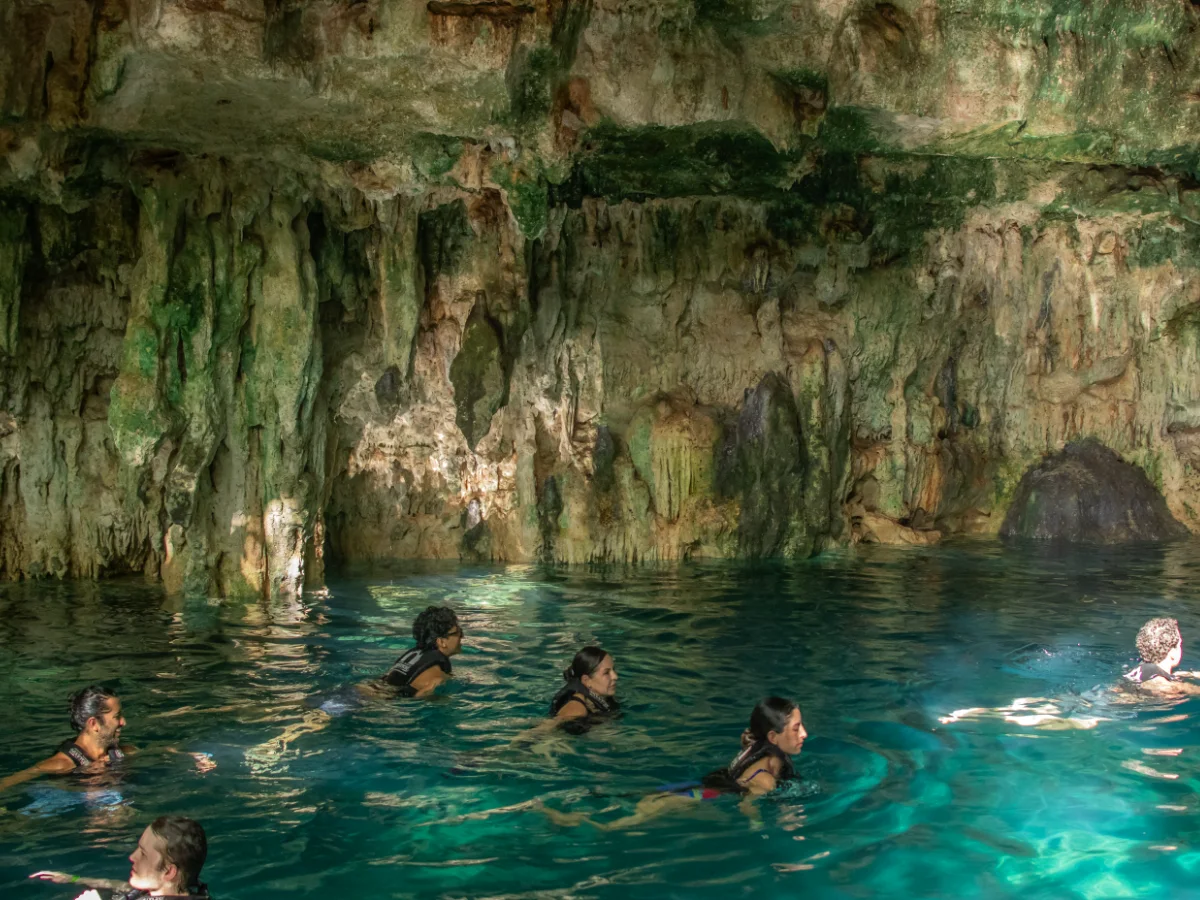
- Deep areas and cenotes: very little light returns from the bottom. The water turns royal blue, navy and, in the deepest cenotes, nearly black. Hence names like Cenote Negro, the "Black Cenote."
The sun matters too. Under clear skies with the sun high, contrasts are strongest; on cloudy days the lagoon looks more uniform.
Why the water is so clear
For the white floor to show through, the water has to be transparent. In Bacalar that comes down to chemistry. According to a 2020 study by researchers at Mexico's National Autonomous University (UNAM), it's a karst lagoon fed by groundwater flowing in through several cenotes. That water is rich in carbonate and low in phosphorus, a nutrient algae need.
Little phosphorus means few floating algae, so the water stays crystal clear. The same carbonate is what the lagoon's stromatolites use to grow, and what gives the floor its pale tone.
When the colors fade
Bacalar's colors depend on a fragile balance. UNAM has documented rising nutrient levels in parts of the lagoon, carried in by wastewater and farm runoff. When there are too many nutrients and temperatures rise, algae multiply and the water loses its clarity, turning greenish or brown.
That's why visitors in some years have noticed the lagoon looking duller in certain areas. It isn't a trick of the light; it's an environmental warning sign. Protecting the water literally protects the colors.
Tips for seeing (and photographing) the colors
- Get some height. A dock or the boat gives a better view of the color bands than the shoreline.
- Wear polarized sunglasses. They cut surface glare so you can see the bottom.
- Keep the sun behind or beside you. Colors come out stronger in photos that way.
- Cover up instead of slathering on sunscreen. A hat, a light long-sleeve shirt and plenty of water. Use as little sunscreen as possible before getting in.
- Don't step on the stromatolites near the shore: they're alive.
Seeing the Lagoon of Seven Colors from Mérida
The Mary Tours Bacalar day trip leaves from Mérida and includes a boat ride through the Pirates' Channel and past lagoon cenotes such as Cenote Negro and Cenote Esmeralda, exactly where the color changes are most striking. Lunch and free time in town follow.
Mary Tours' office is on Calle 61 in Mérida's historic center. Price, schedule and tour details are in the booking section on this page.
| Shade | Where you'll usually see it | Why |
|---|---|---|
| Clear or cream | Shoreline and sandbanks | Very little water over a white calcite floor |
| Pale turquoise | Shallow flats | Water begins absorbing red light |
| Vivid turquoise and teal | Medium depth | Most red and yellow light already absorbed |
| Royal blue and navy | Deeper areas | Little light makes it back from the bottom |
| Near-black blue | Cenotes inside the lagoon | Light barely reaches the bottom or returns |
Fun facts
- INAH academic papers also refer to Bacalar as the "Lagoon of Seven Colors."
- The lagoon's pale floor is made of nearly the same mineral the stromatolites build: calcite.
- The town of Bacalar was founded in 1544, largely because of its location on the lagoon, according to INAH's Glifos journal.
Related tours
 Coupon −$300 MXN per person
Caribbean · 17 h
Bacalar, the lagoon of seven colours
Seventeen hours for water that changes colour every metre
from $2,800 MXN per person
See itinerary
5:00 AM – 10:00 PM · daily
- 4:45 AM Boarding — We leave from the downtown office. If your accommodation is on the way, we collect you there — agreed beforehand on WhatsApp.
- 5:30 AM Drive to José María Morelos — Two hours. Fifteen minutes there for toilets and to stretch your legs.
- 7:30 AM Drive to Bacalar — Two and a half hours more, now crossing into Quintana Roo.
- 10:15 AM Boat trip on the lagoon — Pirates’ Channel, Cenote Negro, Cenote Esmeralda and Bird Island, with an explanation of the stromatolites and the ecosystem.
- 12:15 PM Lunch — Lunch in the town, beside the lagoon.
- 1:30 PM Bacalar magic town — Three and a half hours free: the San Felipe fort, the square, the piers, the cafés and the crafts.
- 5:00 PM Back to Mérida — Five hours back, with a stop halfway. Arriving around ten.
Included: Transport, Guide, Boat trip, Lunch
Not included: Drinks
 Coupon −$300 MXN per person
Caribbean · 14 h
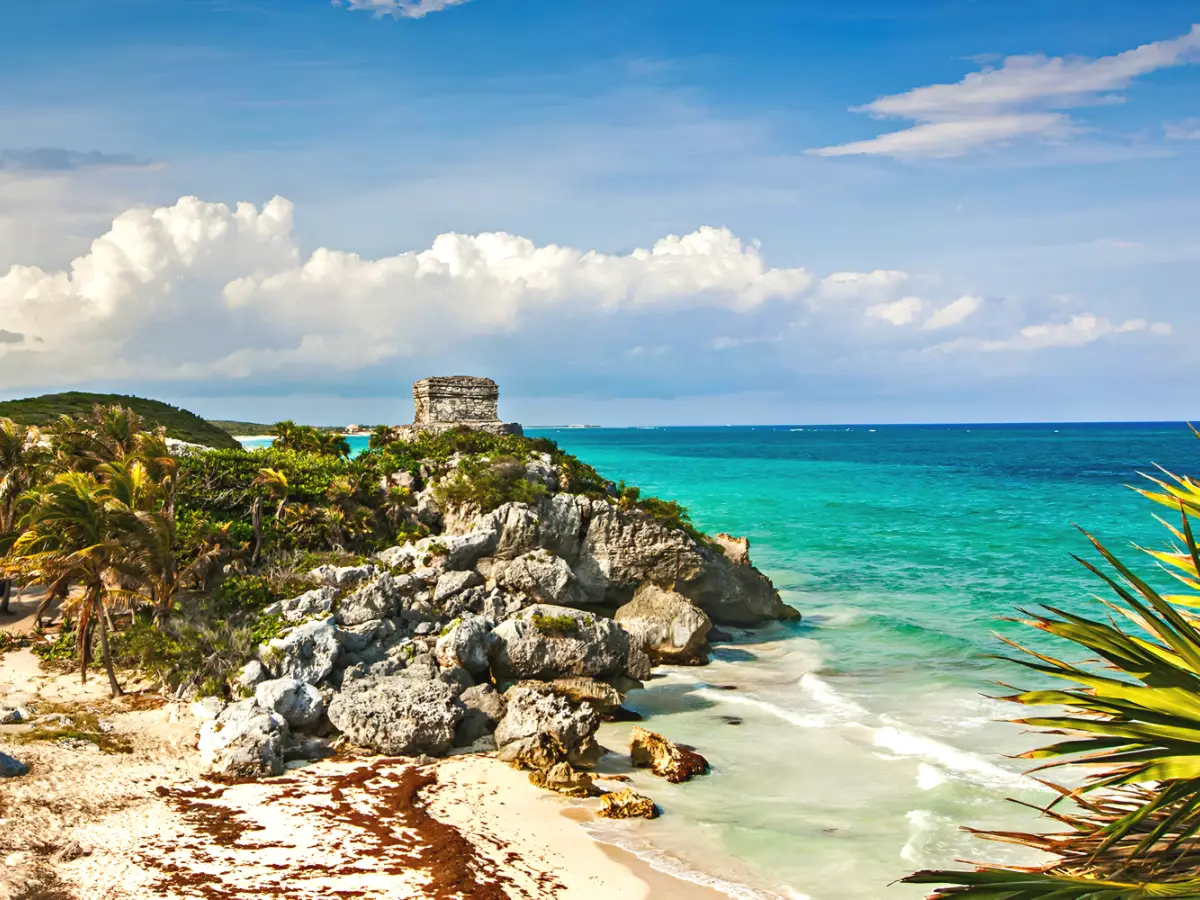
Tulum and the Casa Tortuga cenotes
The only Maya city built facing the Caribbean
from $2,500 MXN per person
See itinerary
6:00 AM – 8:00 PM · daily
- 6:00 AM Boarding — We leave from the downtown office. If your accommodation is on the way, we collect you there — agreed beforehand on WhatsApp.
- 6:30 AM Motorway to the rest stop — An hour and three quarters, with fifteen minutes for toilets and something light.
- 8:30 AM On to Tulum — An hour and a half more to the Quintana Roo coast.
- 10:00 AM Tulum archaeological site — Guided visit to the walled city: El Castillo, the Temple of the Frescoes and the Temple of the Descending God, with the sea behind.
- 12:15 PM Casa Tortuga cenotes and lunch — Four cenotes of different kinds, with a guided route, trails and changing rooms. Lunch is on site.
- 4:00 PM Back to Mérida — Four hours back, with a stop halfway.
Included: Guide accredited by the Ministry of Tourism, Round-trip transport, Lunch, Cenote entry
Not included: Tulum archaeological site entrance, Drinks
 Coupon −$300 MXN per person
Caribbean · 17 h
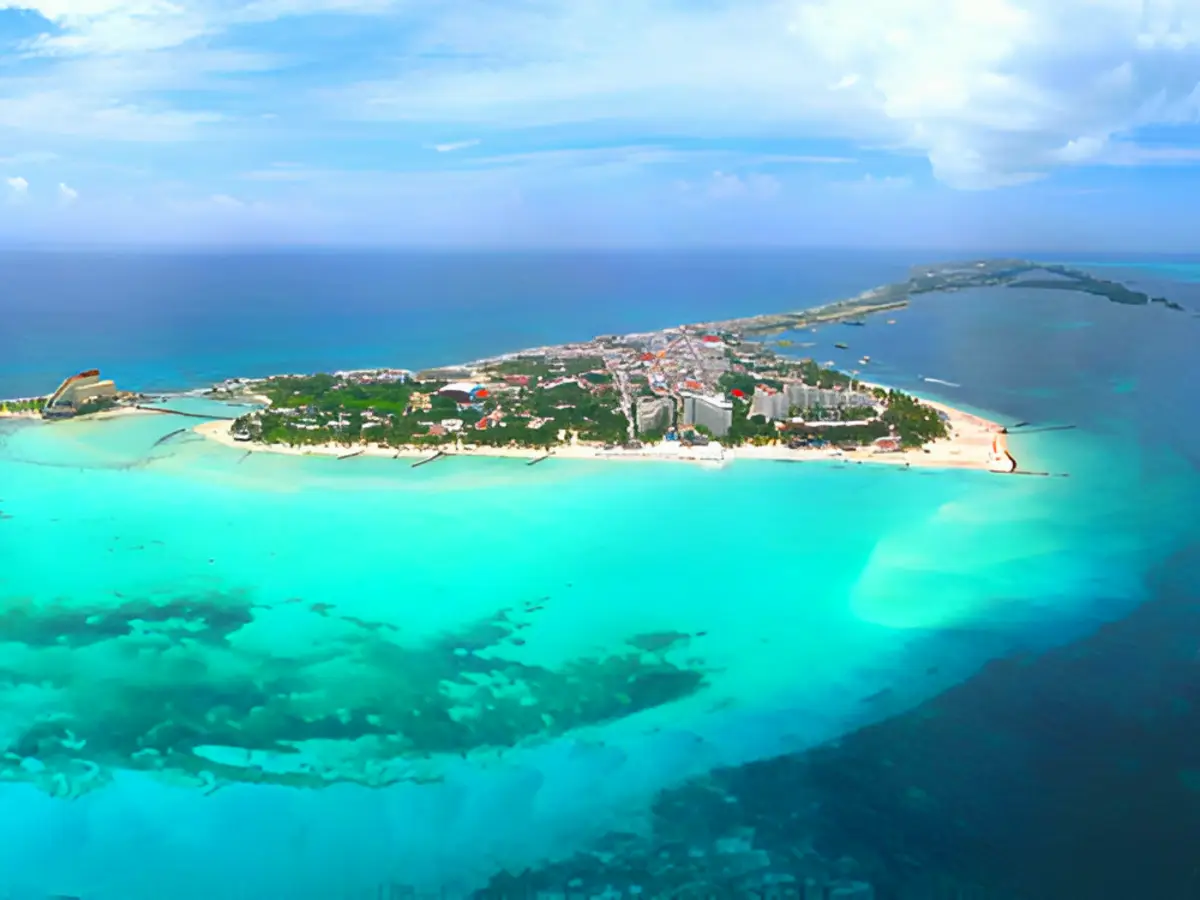
Isla Mujeres
Playa Norte, which makes every list for a reason
from $2,500 MXN per person
See itinerary
5:00 AM – 10:00 PM · daily
- 4:45 AM Boarding — We leave from the downtown office. If your accommodation is on the way, we collect you there — agreed beforehand on WhatsApp.
- 5:30 AM Drive to Valladolid — Two hours on the motorway, with a fifteen-minute stop.
- 7:45 AM Drive to Puerto Juárez — Two more hours to the pier in Cancún.
- 10:00 AM Isla Mujeres — Sailing the Caribbean, snorkelling at the reef with gear included, a stop at Playa Norte, buffet lunch at the beach club and free time in town.
- 6:00 PM Back to Mérida — Four hours back, with a stop halfway.
Included: Transport, Guide, Boat transfer, Snorkelling gear, Lunch
Not included: Environmental tax, Shopping on the island, Extra drinks
Frequently asked questions
Does the lagoon really have seven colors?
It's a nickname. You actually see a continuous range of shades, from white to near-black blue, depending on depth and light.
Why is Bacalar's water so clear?
It comes from underground through cenotes and is low in phosphorus, so there are few algae to cloud it.
Why does the lagoon sometimes look green or brown?
When too many nutrients arrive from wastewater or runoff and the weather is hot, algae grow and reduce clarity. UNAM researchers have documented the problem.
When are the colors at their best?
Clear skies and a high sun give the strongest contrasts. On cloudy days the lagoon looks more uniform.
Does the day trip from Mérida visit the colorful areas?
Yes. The Mary Tours Bacalar trip includes a boat ride through the Pirates' Channel, Cenote Negro, Cenote Esmeralda and Bird Island.