What they are, in plain terms
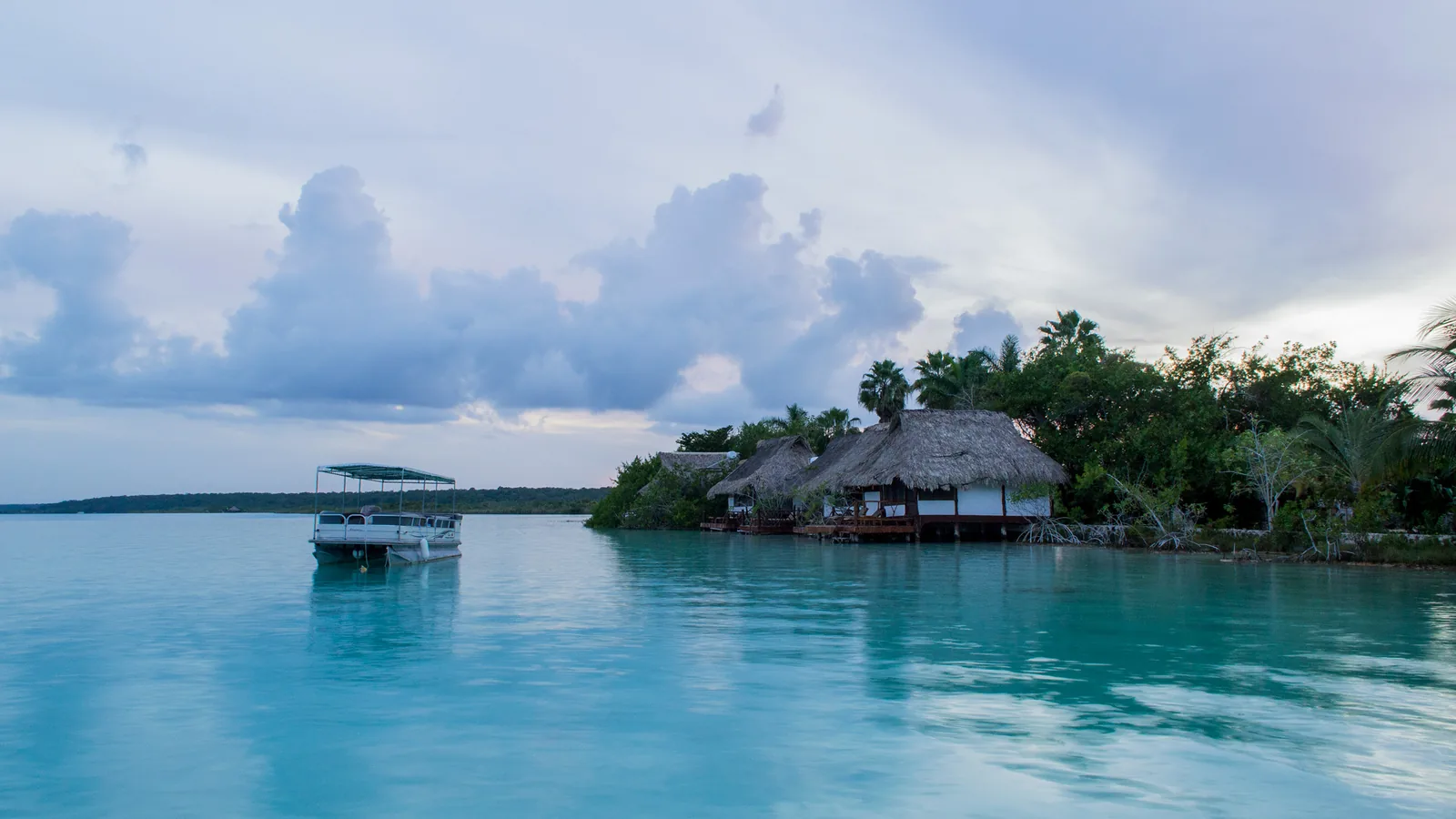
Along the shore of Bacalar Lagoon you'll see pale, rounded shapes that look like submerged boulders. They're actually built by a community of bacteria, mostly cyanobacteria, living in the outermost layer.
As these bacteria photosynthesize, they cause calcium carbonate dissolved in the water to come out of solution. The mineral gets caught in the community's sticky film, hardens and becomes a layer. A new living film grows on top, then another layer forms, and so on for hundreds or thousands of years.
Scientists use two terms. Microbialite covers any rock built by microbes. A stromatolite is a microbialite with fine, clearly visible layers. Locals call them all stromatolites; researchers at Mexico's National Autonomous University (UNAM) usually say microbialites.
Why Bacalar is such a special place
A 2020 study in PLoS One, led by researchers at UNAM's Institute of Ecology, describes Bacalar as the largest known freshwater microbialite occurrence in the world. The team found them all along the western shore they sampled, from north to south.
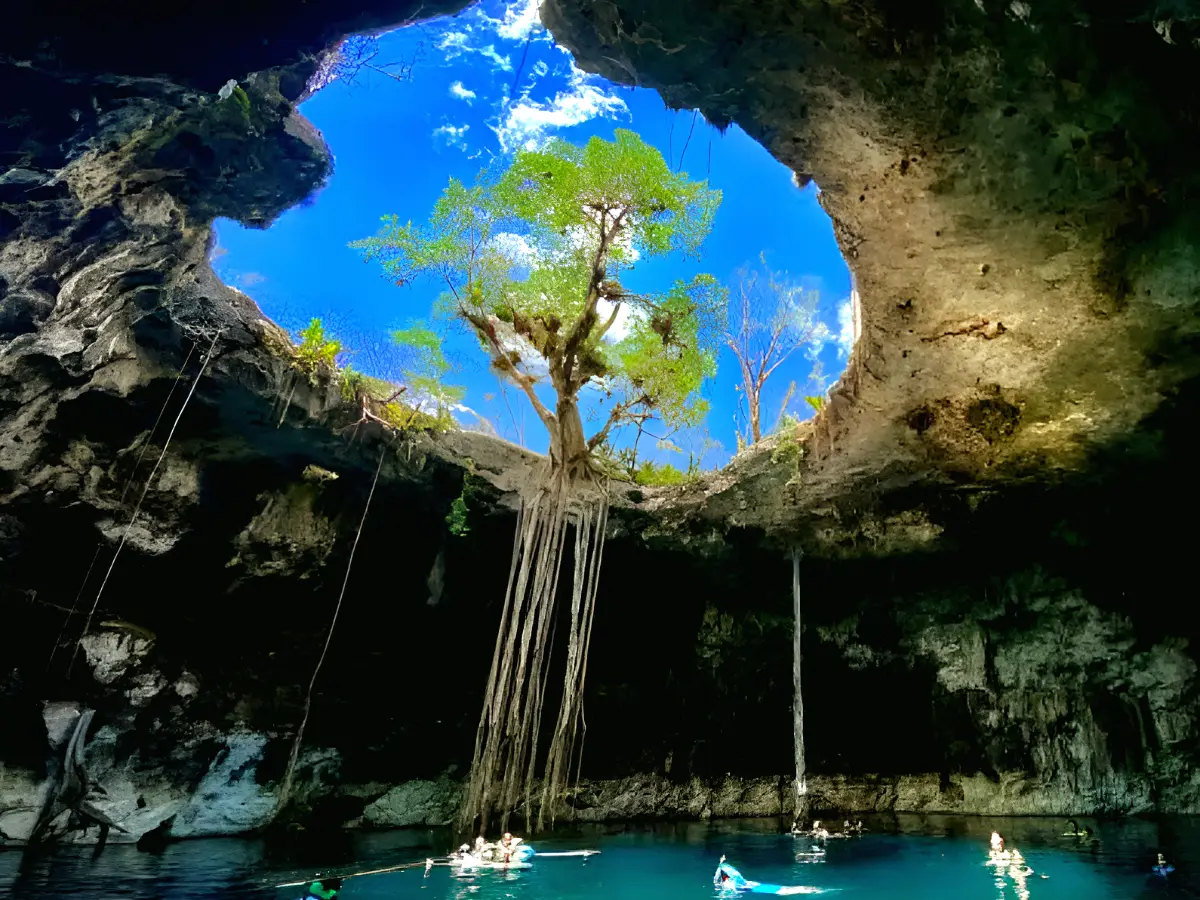
Conditions are ideal. Bacalar is a karst lagoon fed by groundwater that flows in through several cenotes (natural sinkholes). The water is rich in carbonate and poor in phosphorus. Low phosphorus keeps algae in check and the water clear; plenty of carbonate gives the bacteria building material.
The same study found that Bacalar's microbialites are about 97% calcite, the same mineral that makes the lagoon's sandy bottom so white.
A life form with billions of years of history
Fossil stromatolites are among the oldest evidence of life on Earth, with records going back more than 3.5 billion years. For a long stretch of that time, communities much like Bacalar's were among the planet's main oxygen producers.
That's why living examples matter so much to science: they offer a window into how early Earth worked and how its atmosphere changed.
Bacalar's are younger but extremely slow-growing. According to UNAM's science outreach (2025), they grow around a millimeter a year and range from a few decades to more than 9,000 years old. A structure a meter tall can represent about a thousand years.
What threatens them today
UNAM research points to several pressures at once:
- Wastewater and nutrients. In the southern part of the lagoon, ammonium and nitrate rose roughly a hundredfold between 2008 and 2018, according to the 2020 study. More nutrients mean more algae, which grow faster than microbialites and smother them.
- Tourism outpacing infrastructure. The study notes visitor numbers doubled from 2017 to 2018. Without adequate sewage treatment, that waste reaches the water.
- Deforestation and farming. Rain washes soil, fertilizer and pesticides into the lagoon.
- Footsteps and boat strikes. Something that took centuries to form can break in seconds.
In recent years, parts of the lagoon have looked cloudier or brownish. UNAM links this to algal blooms driven by excess nutrients and high temperatures.
How to see them without harming them
- Don't stand, sit or step on them. The living layer is right on the surface.
- View them from the boat or a dock. Signs along the shore ask for the same.
- Skip sunscreen in the water. A long-sleeve shirt, a hat and sunglasses work better. If you need sunscreen on your face, let it absorb before getting in.
- Leave nothing behind, not even food scraps.
- Choose tours that stay within marked areas and explain the ecosystem.
Mexico marks July 15 as National Stromatolite Day, a date Bacalar has celebrated since 2014.
Seeing the stromatolites on a day trip from Mérida
Bacalar is in southern Quintana Roo, a long way from Mérida, so organized transportation makes sense. The Mary Tours Bacalar trip includes a boat ride on the lagoon with an explanation of the stromatolites and the ecosystem, plus free time in the Pueblo Mágico (Mexico's official "magical town" designation).
Mary Tours has its office on Calle 61 in Mérida's historic center. Current times, stops and prices appear in the booking section on this page.
| Stromatolite / microbialite | Coral | |
|---|---|---|
| Built by | Bacterial communities (mainly cyanobacteria) | Animals (polyps) with algae living inside them |
| Where on the peninsula | Fresh water in Bacalar and other Quintana Roo lagoons | The Caribbean Sea, such as the reef off Isla Mujeres |
| How to protect it | Don't step on it, avoid boat strikes, keep the water clean | Don't touch or stand on it, keep sunscreen out of the water |
Fun facts
- A structure one meter tall can represent about a thousand years of growth.
- Bacalar's microbialites are almost entirely calcite, the same mineral that whitens the lagoon floor.
- Mexico also has microbialites in Cuatro Ciénegas, Coahuila, and in the crater lakes of Puebla.
Related tours
 Coupon −$300 MXN per person
Caribbean · 17 h
Bacalar, the lagoon of seven colours
Seventeen hours for water that changes colour every metre
from $2,800 MXN per person
See itinerary
5:00 AM – 10:00 PM · daily
- 4:45 AM Boarding — We leave from the downtown office. If your accommodation is on the way, we collect you there — agreed beforehand on WhatsApp.
- 5:30 AM Drive to José María Morelos — Two hours. Fifteen minutes there for toilets and to stretch your legs.
- 7:30 AM Drive to Bacalar — Two and a half hours more, now crossing into Quintana Roo.
- 10:15 AM Boat trip on the lagoon — Pirates’ Channel, Cenote Negro, Cenote Esmeralda and Bird Island, with an explanation of the stromatolites and the ecosystem.
- 12:15 PM Lunch — Lunch in the town, beside the lagoon.
- 1:30 PM Bacalar magic town — Three and a half hours free: the San Felipe fort, the square, the piers, the cafés and the crafts.
- 5:00 PM Back to Mérida — Five hours back, with a stop halfway. Arriving around ten.
Included: Transport, Guide, Boat trip, Lunch
Not included: Drinks
 Coupon −$300 MXN per person
Caribbean · 14 h
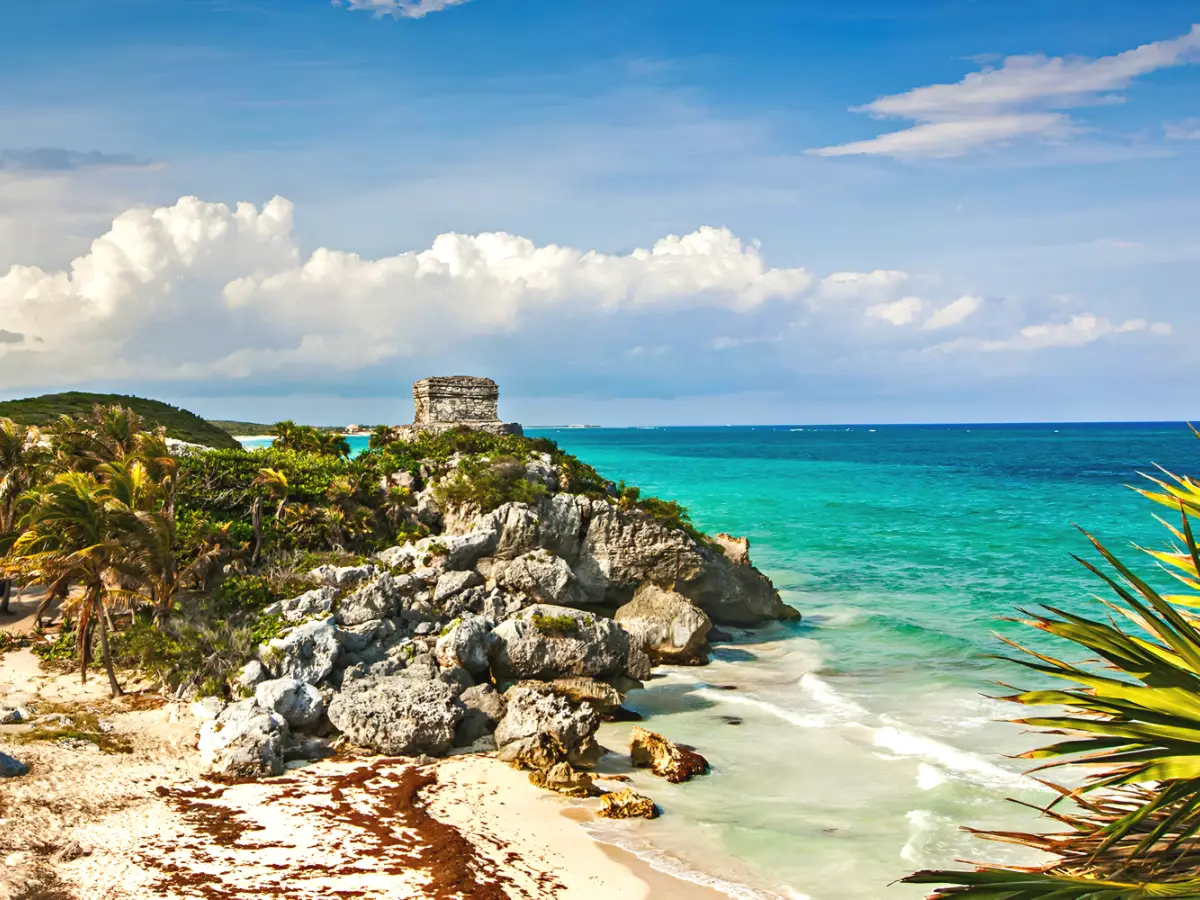
Tulum and the Casa Tortuga cenotes
The only Maya city built facing the Caribbean
from $2,500 MXN per person
See itinerary
6:00 AM – 8:00 PM · daily
- 6:00 AM Boarding — We leave from the downtown office. If your accommodation is on the way, we collect you there — agreed beforehand on WhatsApp.
- 6:30 AM Motorway to the rest stop — An hour and three quarters, with fifteen minutes for toilets and something light.
- 8:30 AM On to Tulum — An hour and a half more to the Quintana Roo coast.
- 10:00 AM Tulum archaeological site — Guided visit to the walled city: El Castillo, the Temple of the Frescoes and the Temple of the Descending God, with the sea behind.
- 12:15 PM Casa Tortuga cenotes and lunch — Four cenotes of different kinds, with a guided route, trails and changing rooms. Lunch is on site.
- 4:00 PM Back to Mérida — Four hours back, with a stop halfway.
Included: Guide accredited by the Ministry of Tourism, Round-trip transport, Lunch, Cenote entry
Not included: Tulum archaeological site entrance, Drinks
 Coupon −$300 MXN per person
Caribbean · 17 h
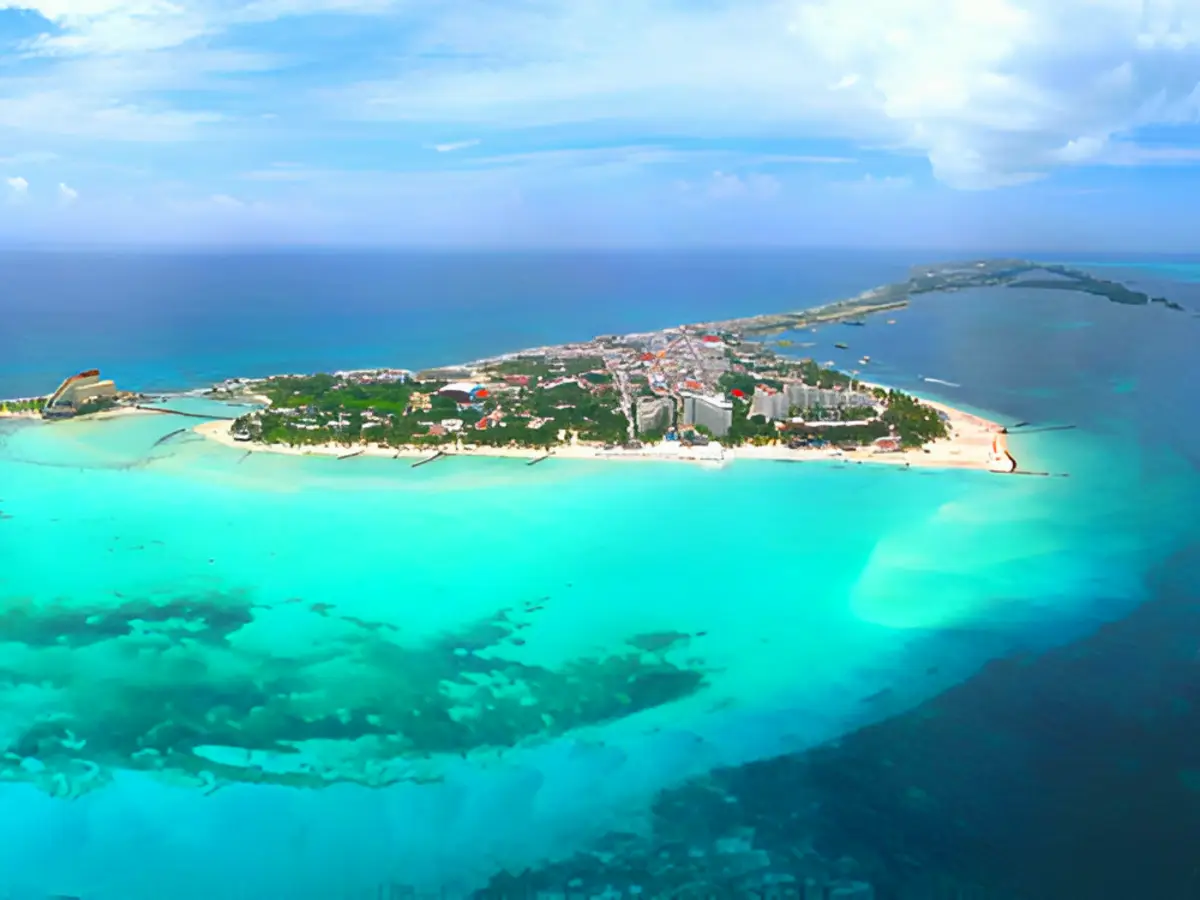
Isla Mujeres
Playa Norte, which makes every list for a reason
from $2,500 MXN per person
See itinerary
5:00 AM – 10:00 PM · daily
- 4:45 AM Boarding — We leave from the downtown office. If your accommodation is on the way, we collect you there — agreed beforehand on WhatsApp.
- 5:30 AM Drive to Valladolid — Two hours on the motorway, with a fifteen-minute stop.
- 7:45 AM Drive to Puerto Juárez — Two more hours to the pier in Cancún.
- 10:00 AM Isla Mujeres — Sailing the Caribbean, snorkelling at the reef with gear included, a stop at Playa Norte, buffet lunch at the beach club and free time in town.
- 6:00 PM Back to Mérida — Four hours back, with a stop halfway.
Included: Transport, Guide, Boat transfer, Snorkelling gear, Lunch
Not included: Environmental tax, Shopping on the island, Extra drinks
Frequently asked questions
Are Bacalar's stromatolites alive?
Yes. The outer layer is a living, photosynthesizing community of bacteria. Beneath it are the mineral layers it has left behind over centuries.
How old are Bacalar's stromatolites?
UNAM researchers say they range from a few decades to more than 9,000 years old. At about a millimeter of growth a year, the large ones are very old.
Can I swim near the stromatolites?
You can swim in the lagoon, but don't stand, sit or lean on them. Follow posted signs and your guide's or boat captain's instructions.
Why should I avoid sunscreen in the lagoon?
Sunscreen ingredients wash into the water. The general advice in natural areas is to protect your skin with clothing and a hat and keep sunscreen to a minimum.
Does the Mary Tours trip explain the stromatolites?
Yes. The boat ride on the Bacalar trip includes an explanation of the stromatolites and the lagoon's ecosystem.