Same origin
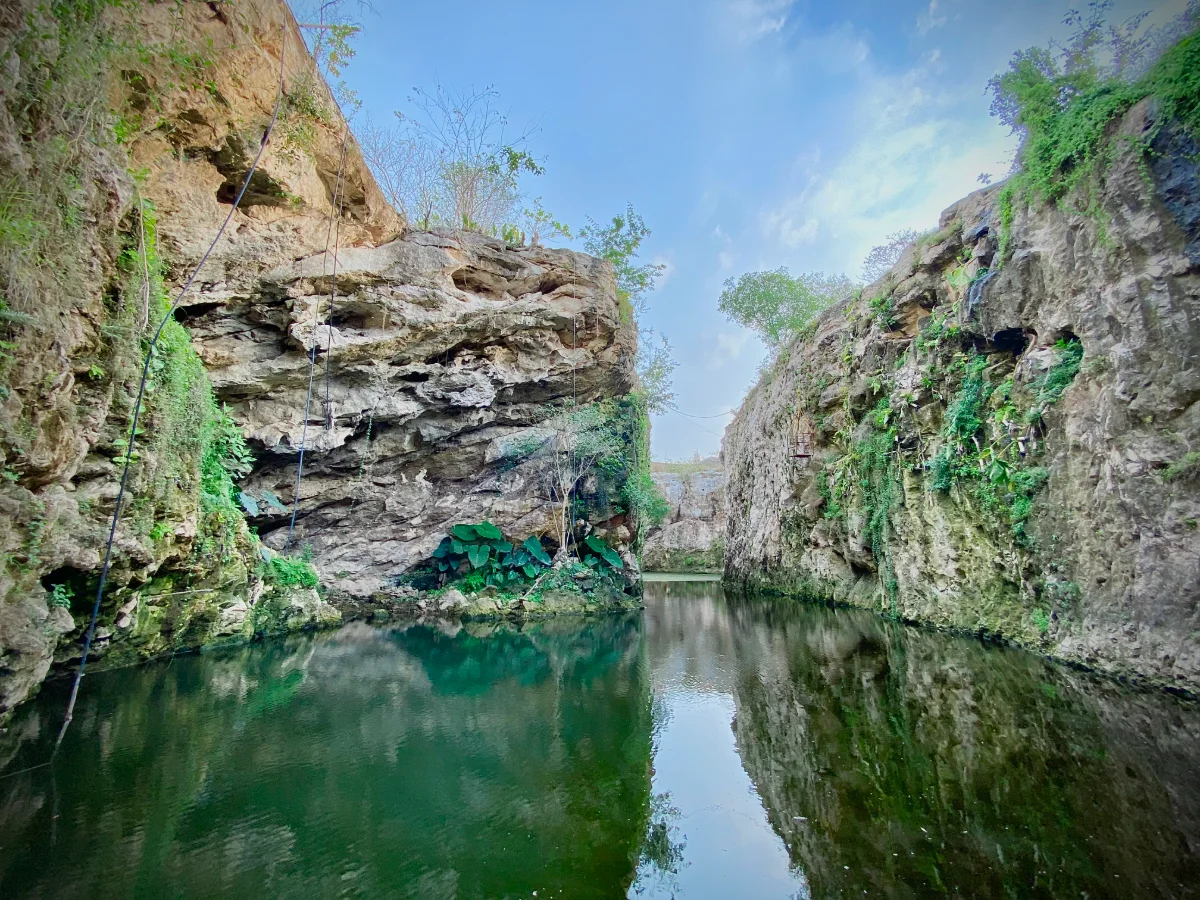
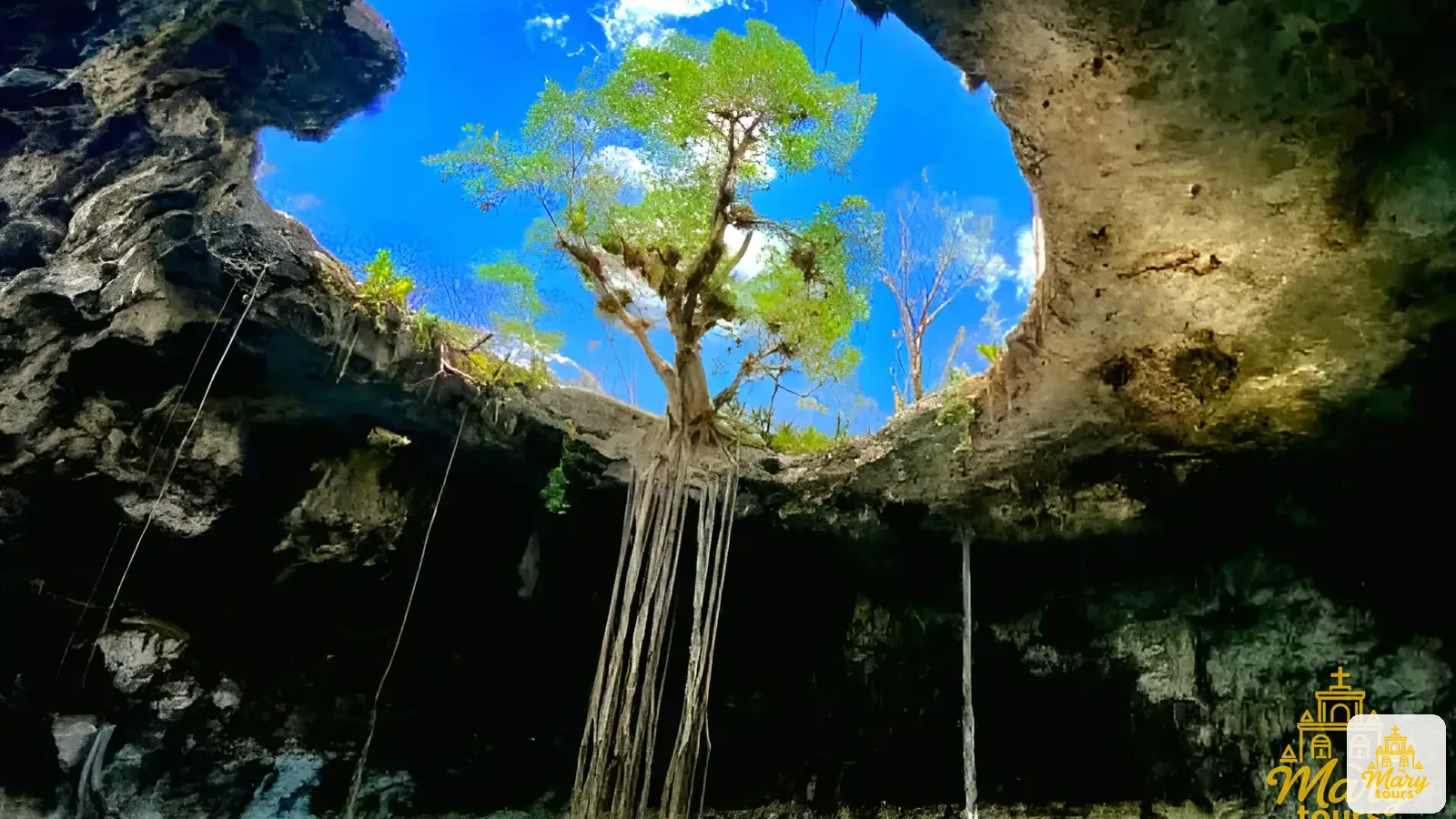
Cenotes and caves begin the same way: slightly acidic rain dissolves limestone and opens tunnels and caverns. Mexico's protected-areas commission (CONANP) explains that a cenote appears when the roof of one of those caverns collapses and exposes the groundwater.
How they differ
- Cenote: the star is the water. You go to swim.
- Cave (gruta): the star is the cave itself. You walk through chambers and passages, often with rock formations.
The classic 1936 study The Cenotes of Yucatan even called cenotes with a horizontal entrance and dry sections "caves," so the line between them isn't always sharp.
Examples in Yucatán
One of Yucatán's best-known caves is Loltún, in Oxkutzcab, listed by Mexico's National Institute of Anthropology and History (INAH) as an archaeological site. It has been closed since 2020, and reopening depends on new lighting and INAH approval, so check before planning a visit.
Among cenotes, Homún's Cascabel shows how a closed cenote can feel like a cave with water.
Which to visit?
The table on this page sums up what to expect. For most travelers, a cenote is the most refreshing experience in Yucatán's heat; a cave appeals more to those after formations and archaeology.
Tips
- Non-slip shoes in both: floors are usually wet.
- Don't touch formations: they take thousands of years to grow.
- Always follow the guide or marked route.
From Mérida
Mary Tours' Santa Bárbara cenotes trips include Cascabel, a closed cave cenote, and Hacienda Mucuyché has two connected cenotes. The Uxmal transfer includes Cenote Peba. The office is on Calle 61 in Mérida's historic center.
| Cenote | Cave (gruta) | |
|---|---|---|
| What it is | Cavern with collapsed roof and exposed water | Cave with chambers and tunnels |
| Main activity | Swimming | Walking |
| Water | Always | Little or in parts |
| Example in Yucatán | Homún cenotes | Loltún (check reopening) |
Fun facts
- Cenotes and caves come from the same limestone-dissolving process.
- The 1936 classification counted "caves" among cenote types.
- Loltún is an archaeological site inside a cave system.
Related tours
Cenotes · 7 h
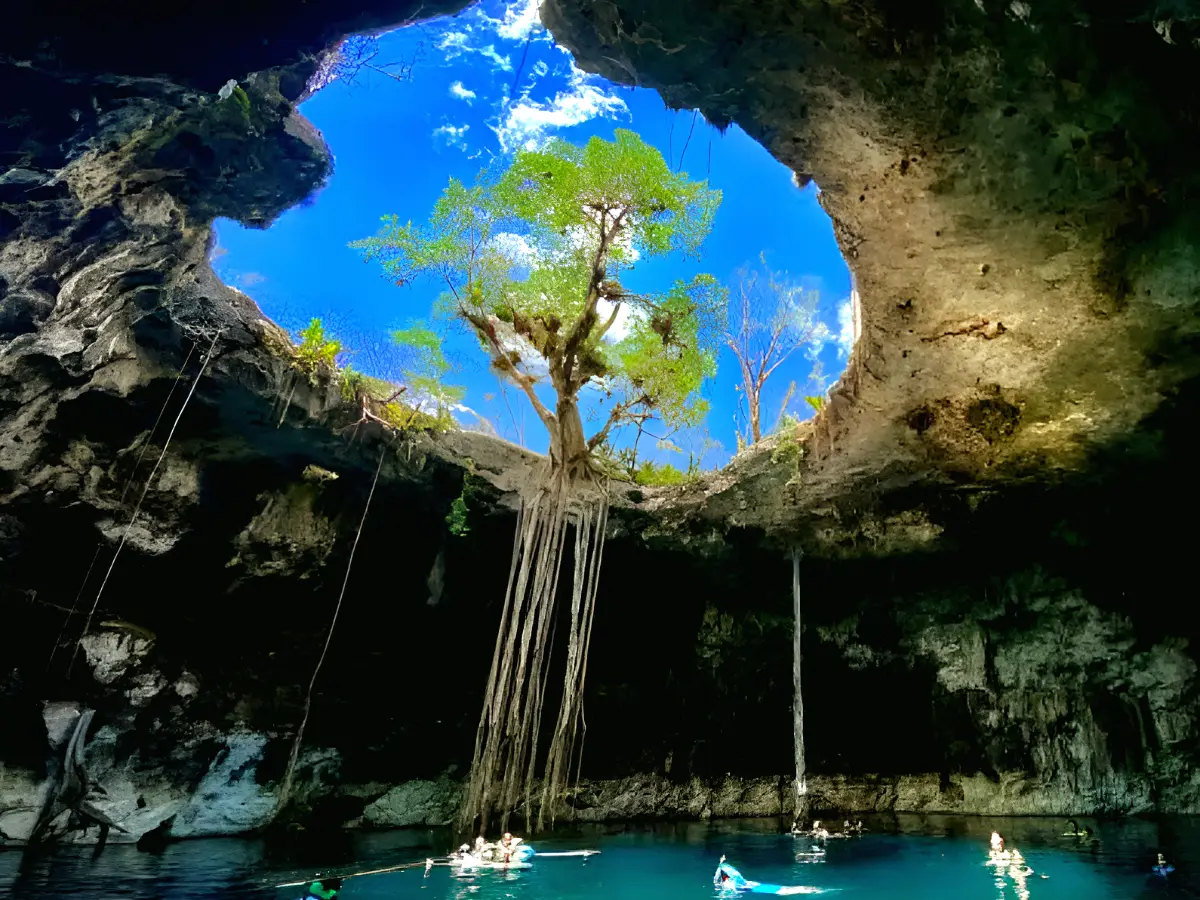
The four cenotes of Santa Bárbara
Four different cenotes and a lunch made by hand
from $1,450 MXN per person
See itinerary
10:00 AM – 5:00 PM · daily
- 10:00 AM Departure from the office — An hour on the road to Homún, through the ring of cenotes.
- 11:00 AM Cascabel cenote — Closed, cave type. You descend inside and the water sits in half-light: the most striking of the four.
- 11:30 AM Chaksikín cenote — Semi-open. You go down between limestone walls painted with Maya-themed murals.
- 12:00 PM Xooch cenote — Semi-open, with a shaft of light that falls straight onto the water mid-morning.
- 12:30 PM Pool Cocom cenote — Open and surrounded by vegetation. You swim along a channel out to the wide part.
- 1:30 PM Regional lunch — Home cooking with hand-made tortillas. Plenty of time to eat without rushing.
- 4:00 PM Back to Mérida — An hour back, arriving around five.
Included: Transport, Certified guide, Entry to all four cenotes, Regional lunch
Not included: Drinks with lunch
Cenotes · 7 h
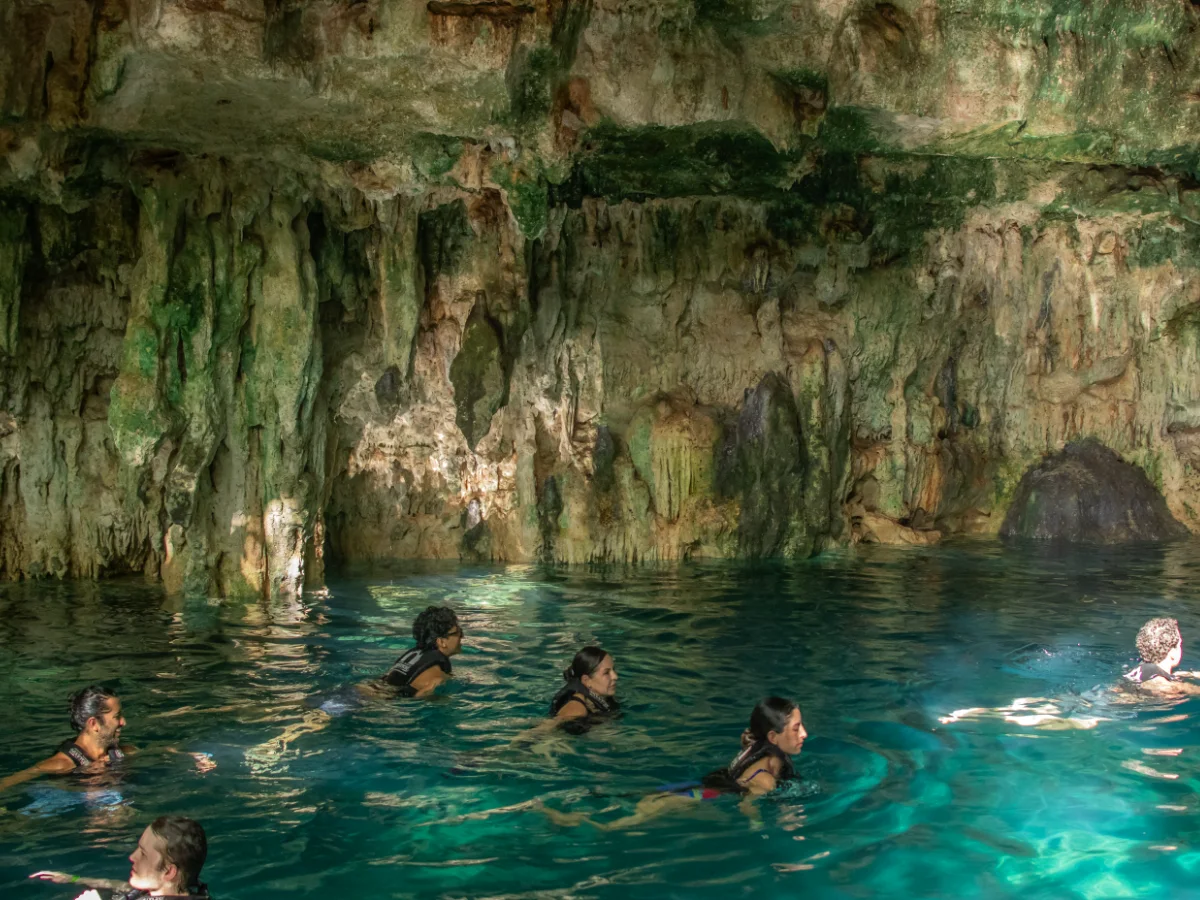
Hacienda Mucuyché
A stone channel joining two cenotes
from $1,800 MXN per person
See itinerary
9:30 AM – 4:00 PM · daily
- 9:30 AM Departure from the office — An hour on the road to the estate, in the municipality of Abalá.
- 10:30 AM Check-in and historical tour — A guide from the estate itself explains how the henequen business worked and what survives of it.
- 11:00 AM Carlota and Azul Maya cenotes — Two hours in the water. To move between the cenotes you cross the channel, swimming or along the stone path.
- 1:00 PM Time for lunch — Yucatecan food at the estate restaurant, paid per order. There is a pool for anyone who wants to stay in the water.
- 3:00 PM Back to Mérida — An hour back.
Included: Transport, Guide, Entry to the hacienda and cenotes
Not included: Food, Drinks
Transfers · 10.5 h
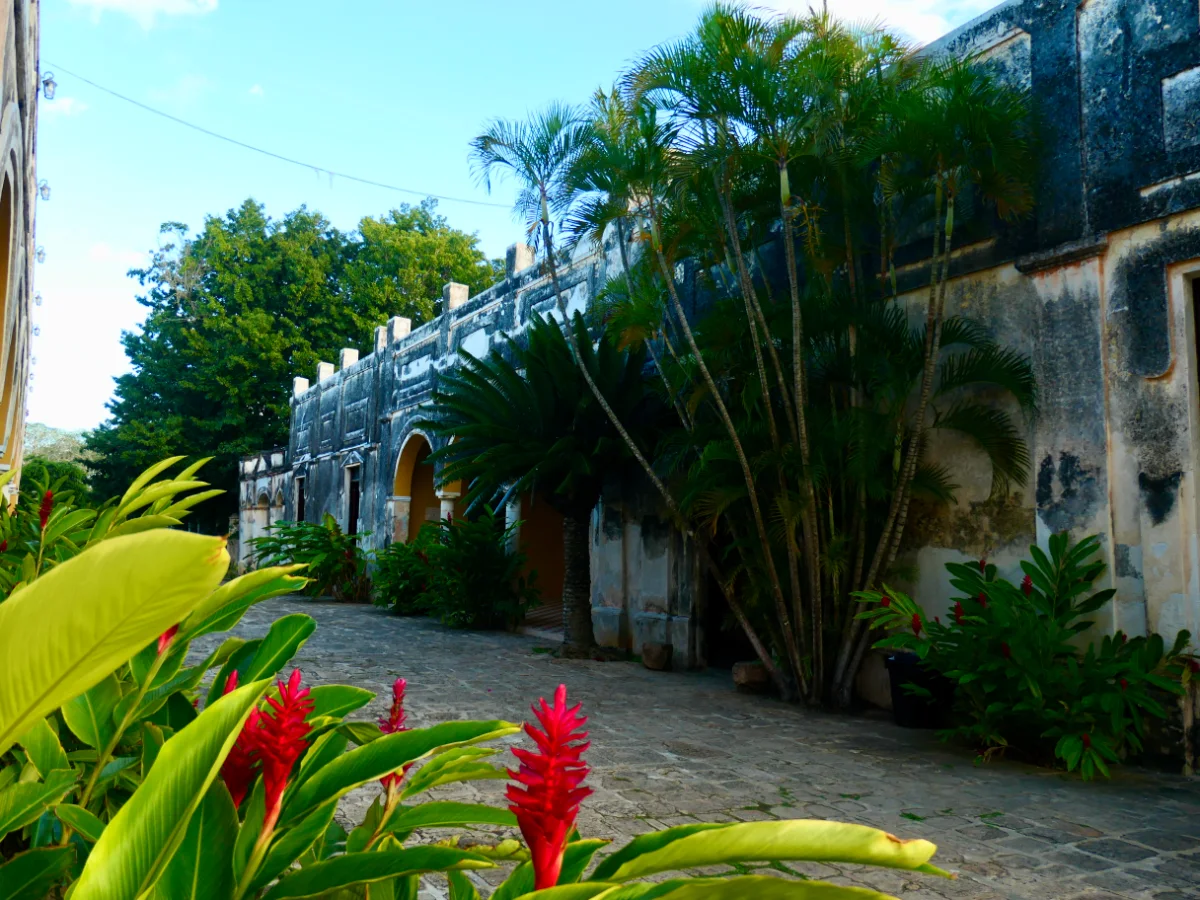
Transfer to Uxmal and Yaxcopoil
The Puuc route at your own pace, with the van waiting
from $2,550 MXN per vehicle
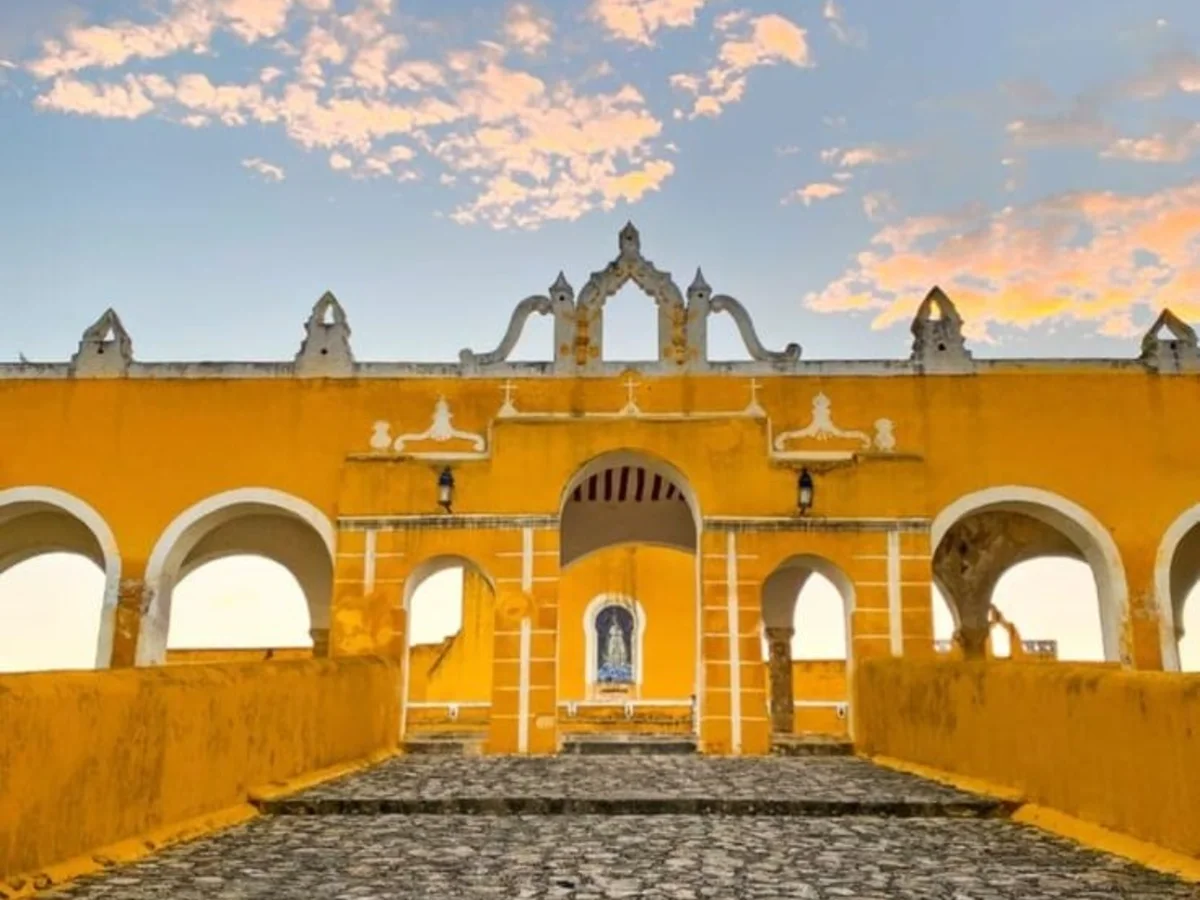
Towns · 9 h
Izamal and two cenotes
Izamal’s yellow first, then two cold cenotes
from $1,300 MXN per person
See itinerary
8:00 AM – 5:00 PM · daily
- 8:00 AM Departure from the office — An hour on the road. The guide uses it to explain where Izamal comes from before you arrive.
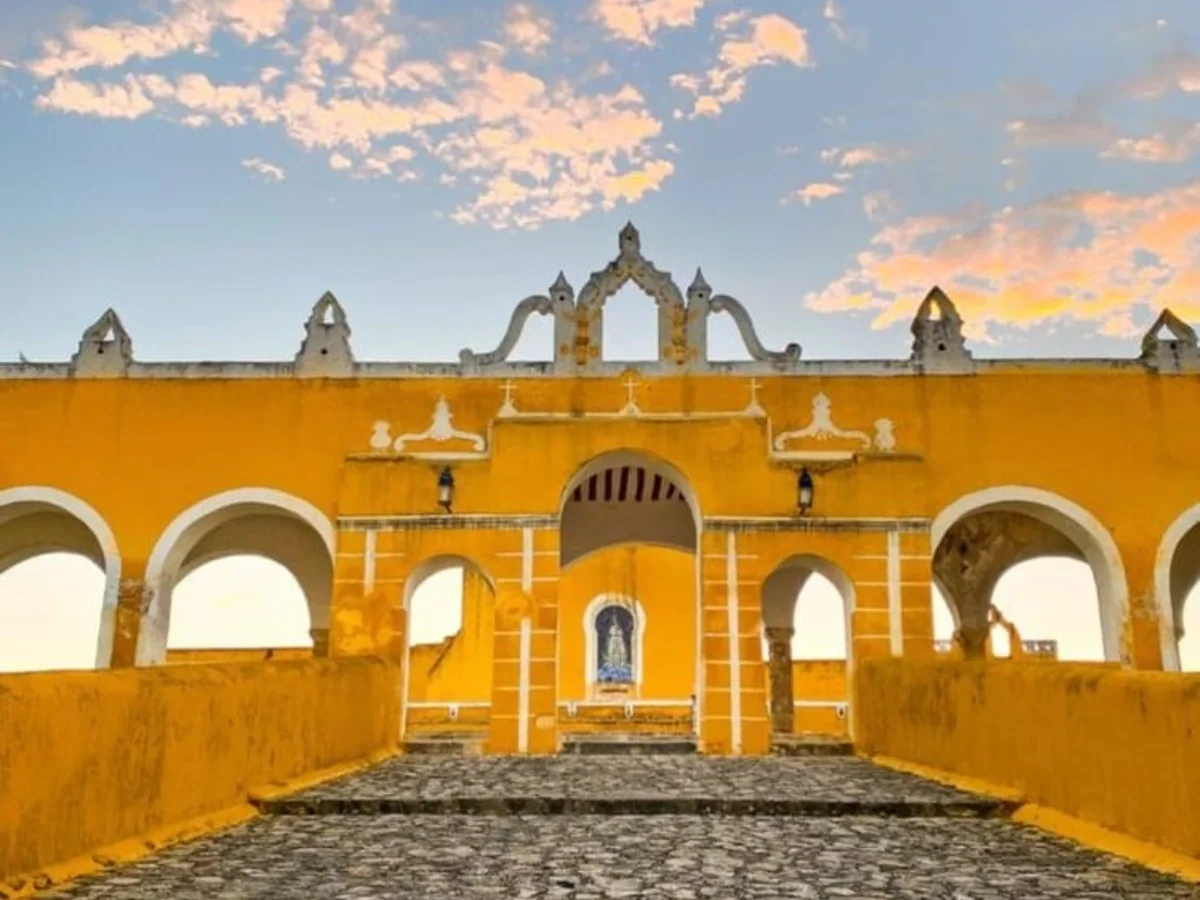
- 9:00 AM The yellow town — The convent and its atrium, among the largest on the continent, the baroque altarpiece, and then free time around the streets.
- 10:20 AM On to the Homún ring — Forty more minutes to the cenote area.
- 11:00 AM Yaxbacaltún cenote — The first swim, landing right after the morning’s walking.
- 12:15 PM San Antonio cenote and lunch — A semi-closed cenote that feels nothing like the first one, and lunch served right there.
- 3:15 PM Back to Mérida — Back to Mérida, arriving around five.
Included: Transport, Guide, Entry to both cenotes, Lunch
Not included: Drinks
Frequently asked questions
Is a cenote a cave?
Both are part of the same cave system. A cenote has exposed water; a cave is mostly explored dry.
Can I swim in a cave?
Usually not; caves are explored on foot.
Are the Loltún caves open?
They've been closed since 2020; confirm reopening with INAH before you go.
Which cenote feels most like a cave?
Closed cenotes such as Cascabel in Homún, where you descend into a dim vault.