An estuary named for a reptile
The name Río Lagartos says it all: the lagartos ("lizards") in the name are the crocodiles living in its waters. Mexico's protected-areas commission (CONANP) describes the reserve as a habitat of mangroves, estuary, beaches and crocodiles, and lists Morelet's crocodile (Crocodylus moreletii) among its representative species. It's also a representative species of Ría Celestún.
What Morelet's crocodile is like
It's a medium-sized crocodile of the wetlands of southeastern Mexico and Central America. It spends much of the day motionless in the sun or floating with only its eyes and nostrils above water, which is why it's often mistaken for a log.
A study by UNAM's Institute of Biology found that its breeding season runs from February to September, nesting coincides with the start of the rains, and females lay 6 to 50 eggs per nest.
A protected species
In Mexico, Morelet's crocodile is listed under special protection in the national endangered-species standard (NOM-059), and internationally it's on CITES Appendix II with a zero quota for wild specimens: crocodiles captured in the wild can't be traded.
How to watch them safely
- Stay in the boat and keep your hands inside.
- Never feed them: it makes them lose their fear of people.
- Distance: let the boat captain decide how close to get.
- Stay quiet and don't throw anything into the water.
- Don't swim outside the spots your guide points out.
Crocodiles on day trips from Mérida
Mary Tours' Las Coloradas and Río Lagartos trip includes a boat ride through the mangrove channels where crocodiles can be seen in their habitat, along with flamingos and a mud bath. There's also a private transfer to Las Coloradas and Río Lagartos. The office is on Calle 61 in Mérida's historic center; schedules and prices are in the booking section.
| Details | |
|---|---|
| Scientific name | Crocodylus moreletii |
| Where to see it in Yucatán | Ría Lagartos and Ría Celestún |
| Protection in Mexico | Special protection (NOM-059) |
| CITES | Appendix II, zero wild quota |
| Breeding | February to September |
| Eggs per nest | 6 to 50 |
Fun facts
- The "lagartos" of Río Lagartos are actually crocodiles.
- A Morelet's crocodile nest can hold up to 50 eggs.
- Trading wild Morelet's crocodiles is prohibited.
Related tours
Nature · 12 h
Las Coloradas and Río Lagartos
Genuinely pink lagoons, and flamingos in the estuary
from $1,400 MXN per person
See itinerary
7:00 AM – 8:00 PM · daily
- 7:00 AM Departure from the office — Almost three hours to the north coast, with a stop halfway.
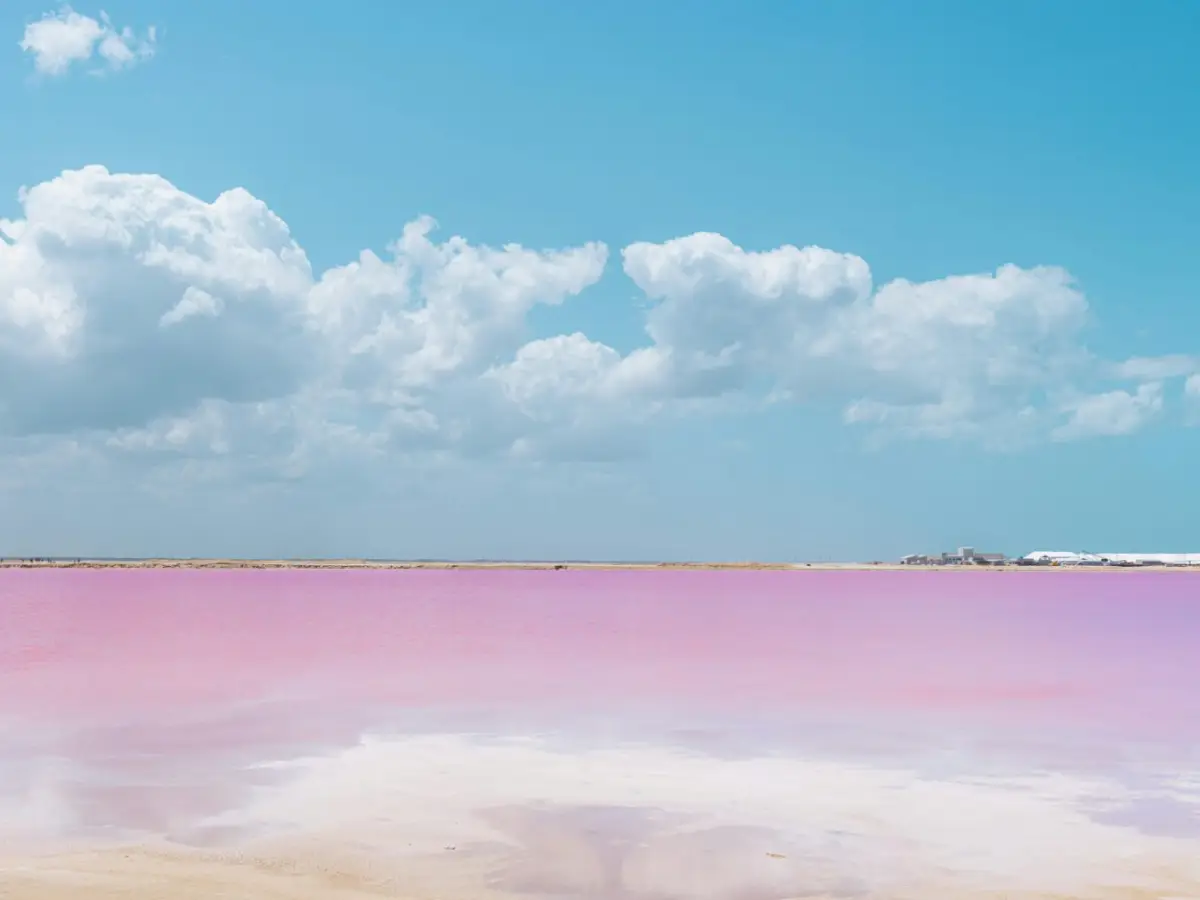
- 9:50 AM Las Coloradas — A guided walk beside the pink, white and orange pools of the salt works. No swimming: it is a protected area.
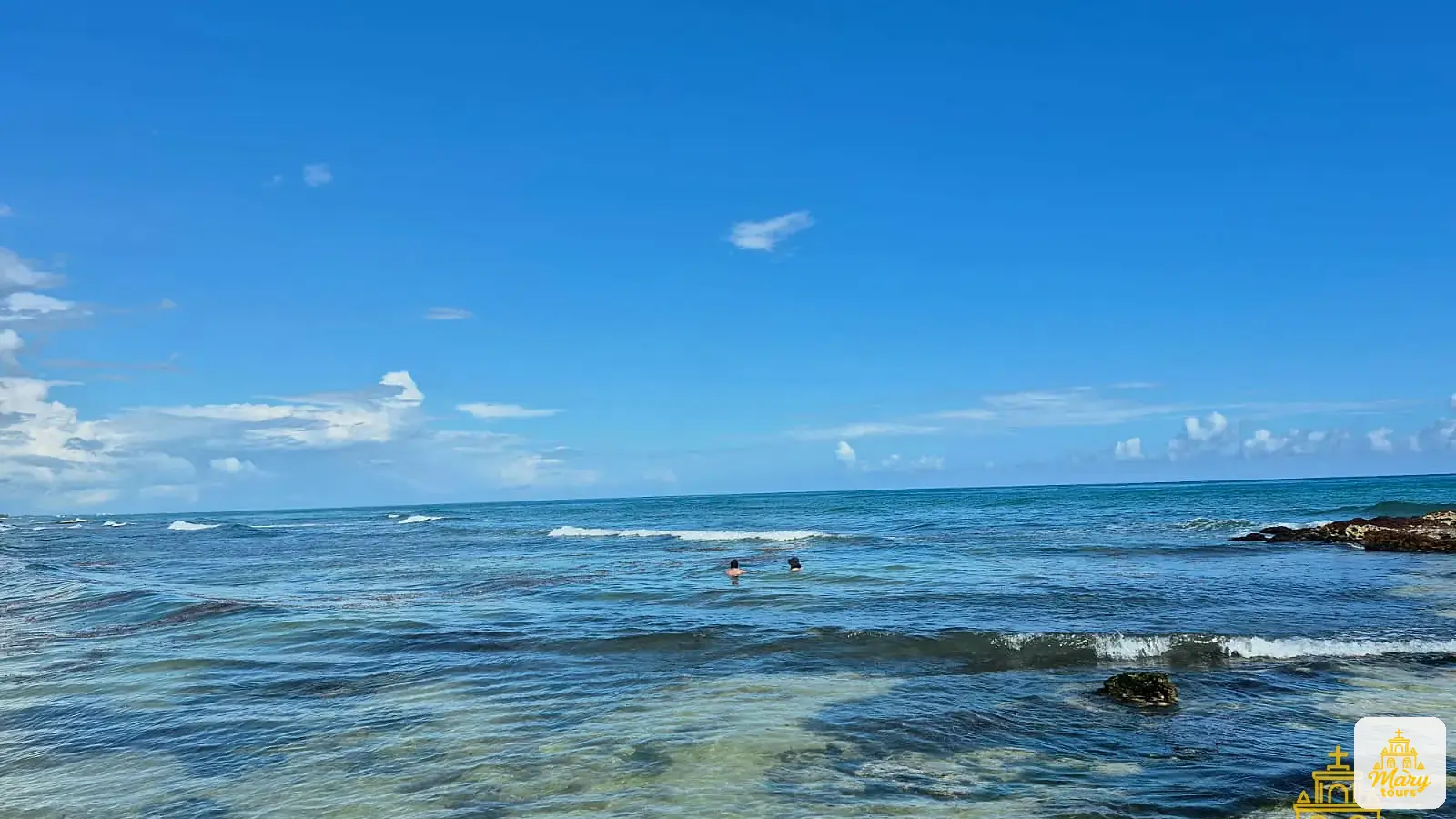
- 11:00 AM Cancunito beach — A rustic beach inside the reserve, calm water and hardly anyone around.
- 12:30 PM Boat ride through the estuary — Channels through the mangroves, flamingo watching areas, crocodiles in their habitat and the mineral mud bath.
- 2:15 PM Lunch in Río Lagartos — Fresh fish, ceviche, octopus or tikin xic on the waterfront of the fishing village.
- 4:15 PM Back to Mérida — Nearly four hours back, arriving around eight.
Included: Transport, Guide, Boat ride, Lunch from a set menu
Not included: Las Coloradas entrance, Drinks
Transfers · 11 h
Transfer to Las Coloradas and Río Lagartos
The pink lagoons and the beach, with the van at your disposal
from $2,850 MXN per vehicle
Nature · 9 h
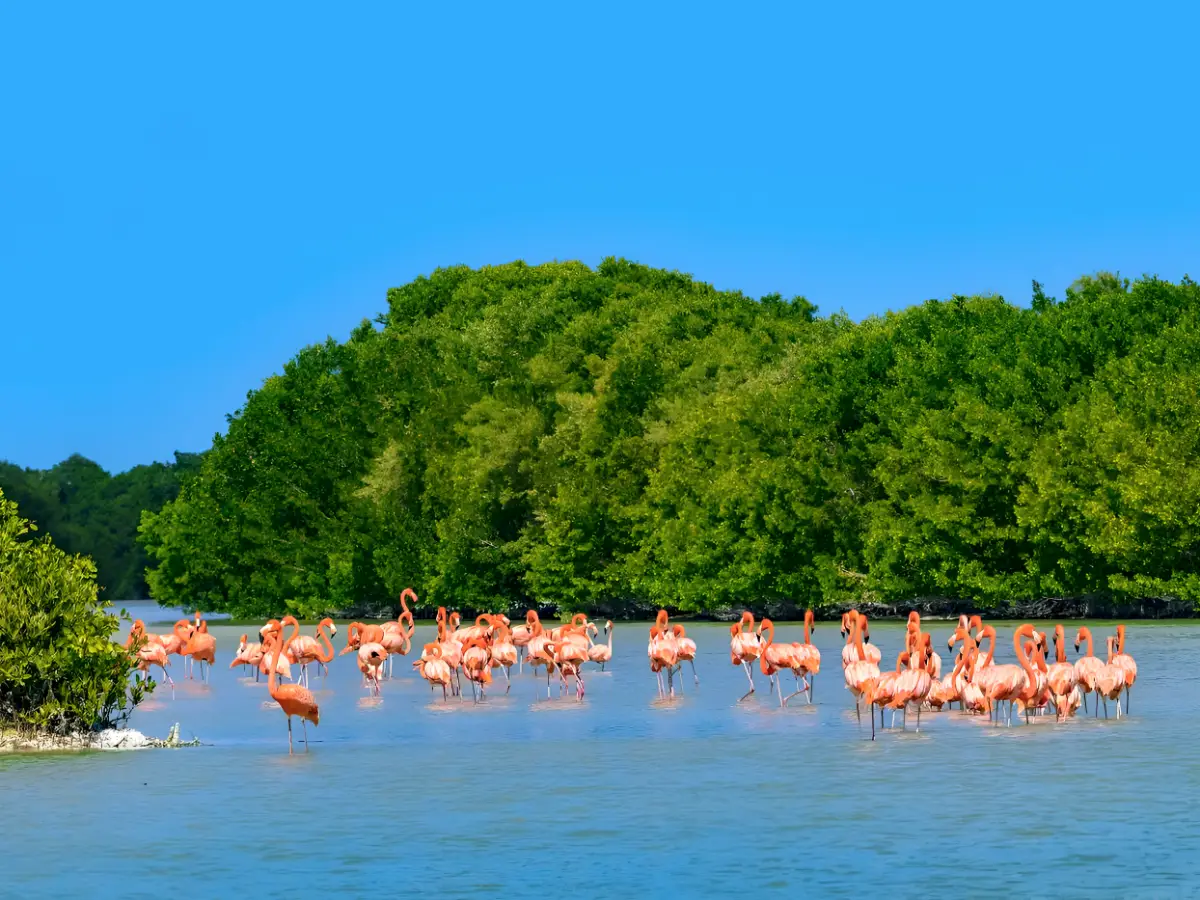
Celestún and the pink flamingos
The largest flamingo colony in North America
from $1,600 MXN per person
See itinerary
8:00 AM – 5:00 PM · daily
- 8:00 AM Departure from the office — An hour and a half west, out to the port.
- 9:30 AM Boat ride — Flamingo and bird watching, the mangrove tunnel, the freshwater spring and the Maya bath on the sandbar.
- 11:00 AM Lunch by the beach — Fish, octopus or shrimp from the gulf, at a table facing the sea.
- 1:00 PM Free time on the beach — Almost three hours to swim, walk the shore or do nothing at all.
- 4:00 PM Back to Mérida — Arriving around five.
Included: Transport, Guide, Boat ride, Lunch from a set menu
Not included: Drinks
Frequently asked questions
Are there crocodiles in Río Lagartos?
Yes. Morelet's crocodile is a representative species of the reserve and is often seen from boats.
Are they dangerous?
They're wild animals and deserve respect. Watching from the boat at a distance is safe.
Why is it called Río Lagartos?
After the crocodiles in its estuary, which locals traditionally called lagartos.
Can you swim in the estuary?
Only where your guide indicates, such as the tour's mud-bath stop.