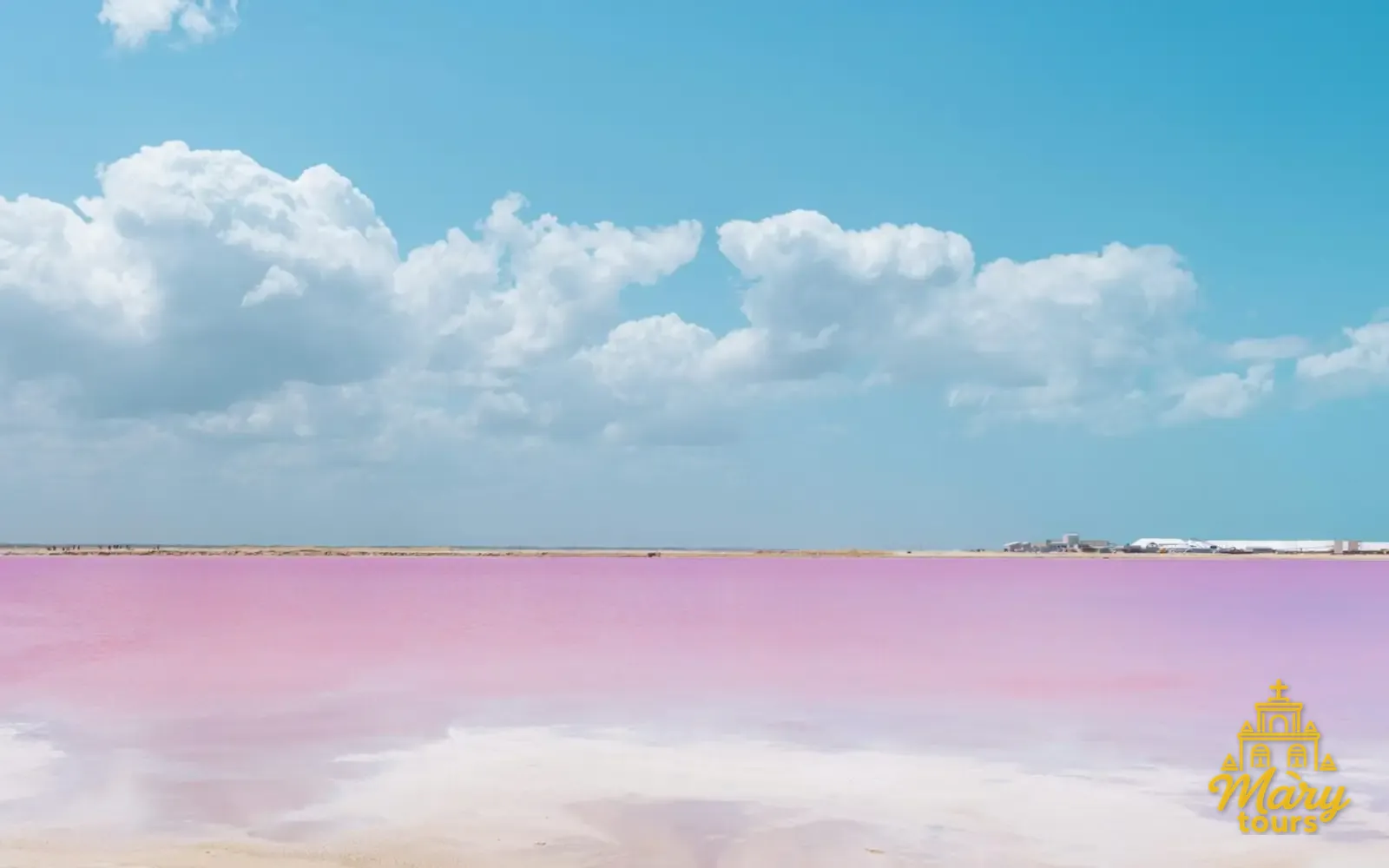
What the Las Coloradas ponds are
Las Coloradas is a small village on Yucatán's eastern coast, near Río Lagartos, known for its salt works: a series of shallow ponds where seawater evaporates in the sun to produce salt. As the water evaporates, the salt concentration climbs dramatically, and the saltiest ponds are where the pink shows up.
It isn't a natural lake or a beach. It's a working industrial site within a protected setting, so you walk along the edges and don't swim in the ponds.
The science of the color
Very few living things can handle water that salty. One that can is Dunaliella salina, a green microalga that, according to EarthDate, tolerates salt concentrations up to 35%, about ten times that of seawater.
To protect itself from intense ultraviolet light, the alga produces beta-carotene, a red-orange pigment (the same one that colors carrots). When millions of these algae are packed with beta-carotene, the water turns pink. Halobacteria, microbes that also live in brine, produce reddish pigments that add to the effect.
Why the shade changes
Not every pond is the same color: you'll see deep pink, pale pink, white and orange. The shade depends on each pond's salt content, how many microorganisms live in it, and the light. That's why Las Coloradas doesn't always look the same: under a high sun and clear skies the pink pops; on cloudy days it fades.
The flamingo connection
The salty water is also home to brine shrimp, tiny crustaceans whose favorite food is Dunaliella salina. Flamingos eat brine shrimp, so the pigment passes from alga to shrimp to bird. As EarthDate puts it, young flamingos are gray and turn pink as they eat more and more brine shrimp.
It's no coincidence that Las Coloradas sits next to the Ría Lagartos Biosphere Reserve, one of the Caribbean flamingo's nesting sites.
Tips for visiting
- No swimming or walking in the ponds. It's a protected, working area; stay within the marked limits.
- The sun is fierce: glare off the salt is intense. Bring dark sunglasses, a hat, light clothing and water.
- Sunny days are best: the pink shows up most under clear skies.
- Follow local guides' instructions on where to take photos.
Las Coloradas from Mérida
Mary Tours' Las Coloradas and Río Lagartos day trip includes a guided walk beside the salt works' pink, white and orange ponds, a quiet beach inside the reserve, a boat ride on the estuary and lunch in the fishing town. There's also a private transfer to Las Coloradas and Río Lagartos for your own group.
Mary Tours has its office on Calle 61 in Mérida's historic center. Check schedule and price in the booking section.
| Organism | What it is | What it contributes |
|---|---|---|
| Dunaliella salina | Green microalga of very salty water | Beta-carotene, a red-orange pigment |
| Halobacteria | Brine-dwelling microbes | Reddish pigments that add to the color |
| Brine shrimp | Tiny crustacean | Eats the alga and is food for flamingos |
| Flamingo | Bird | Turns pink by eating brine shrimp |
Fun facts
- Dunaliella salina can handle up to ten times the salinity of seawater.
- The pigment that colors the ponds is the same beta-carotene found in carrots.
- Flamingos and the ponds share one color chain: alga, brine shrimp, bird.
Related tours
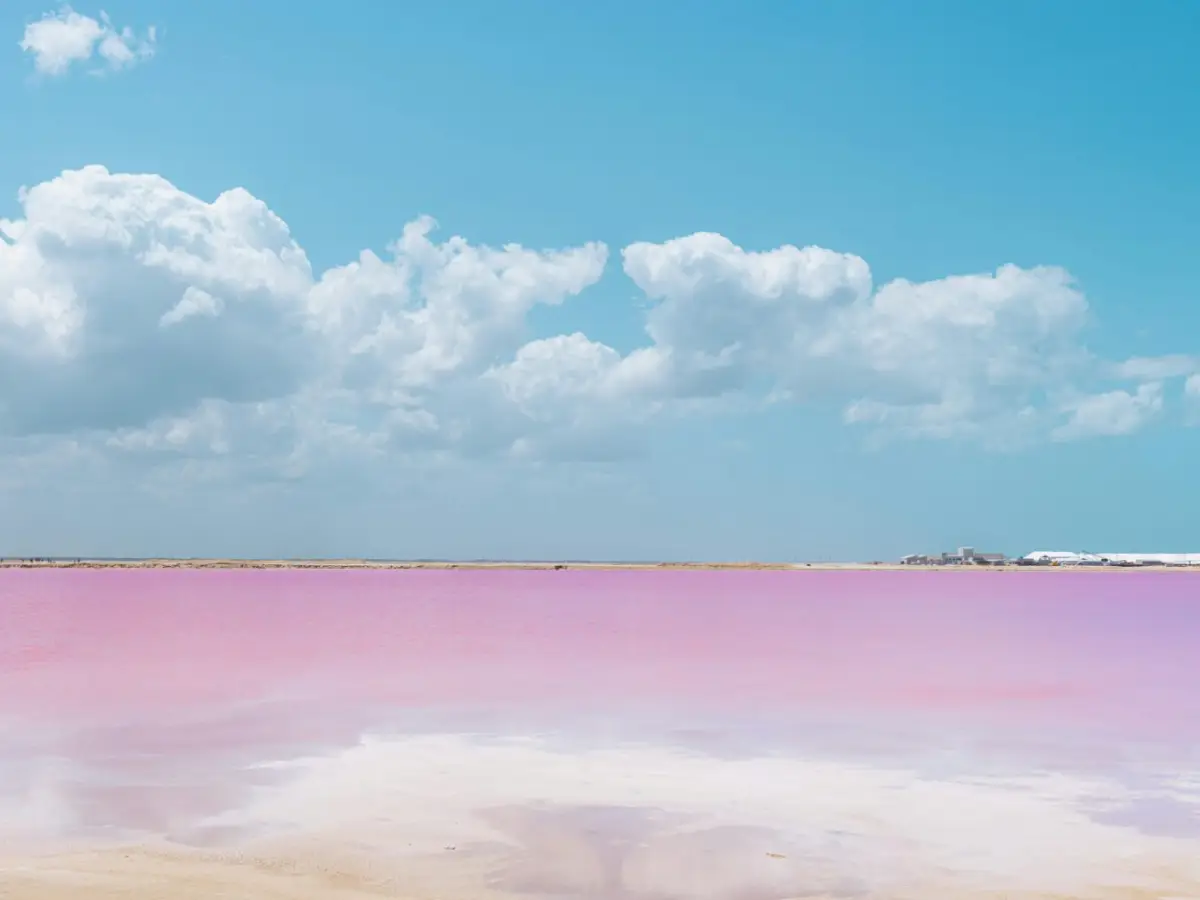
Nature · 12 h
Las Coloradas and Río Lagartos
Genuinely pink lagoons, and flamingos in the estuary
from $1,400 MXN per person
See itinerary
7:00 AM – 8:00 PM · daily
- 7:00 AM Departure from the office — Almost three hours to the north coast, with a stop halfway.
- 9:50 AM Las Coloradas — A guided walk beside the pink, white and orange pools of the salt works. No swimming: it is a protected area.
- 11:00 AM Cancunito beach — A rustic beach inside the reserve, calm water and hardly anyone around.
- 12:30 PM Boat ride through the estuary — Channels through the mangroves, flamingo watching areas, crocodiles in their habitat and the mineral mud bath.
- 2:15 PM Lunch in Río Lagartos — Fresh fish, ceviche, octopus or tikin xic on the waterfront of the fishing village.
- 4:15 PM Back to Mérida — Nearly four hours back, arriving around eight.
Included: Transport, Guide, Boat ride, Lunch from a set menu
Not included: Las Coloradas entrance, Drinks
Transfers · 11 h
Transfer to Las Coloradas and Río Lagartos
The pink lagoons and the beach, with the van at your disposal
from $2,850 MXN per vehicle
Nature · 9 h
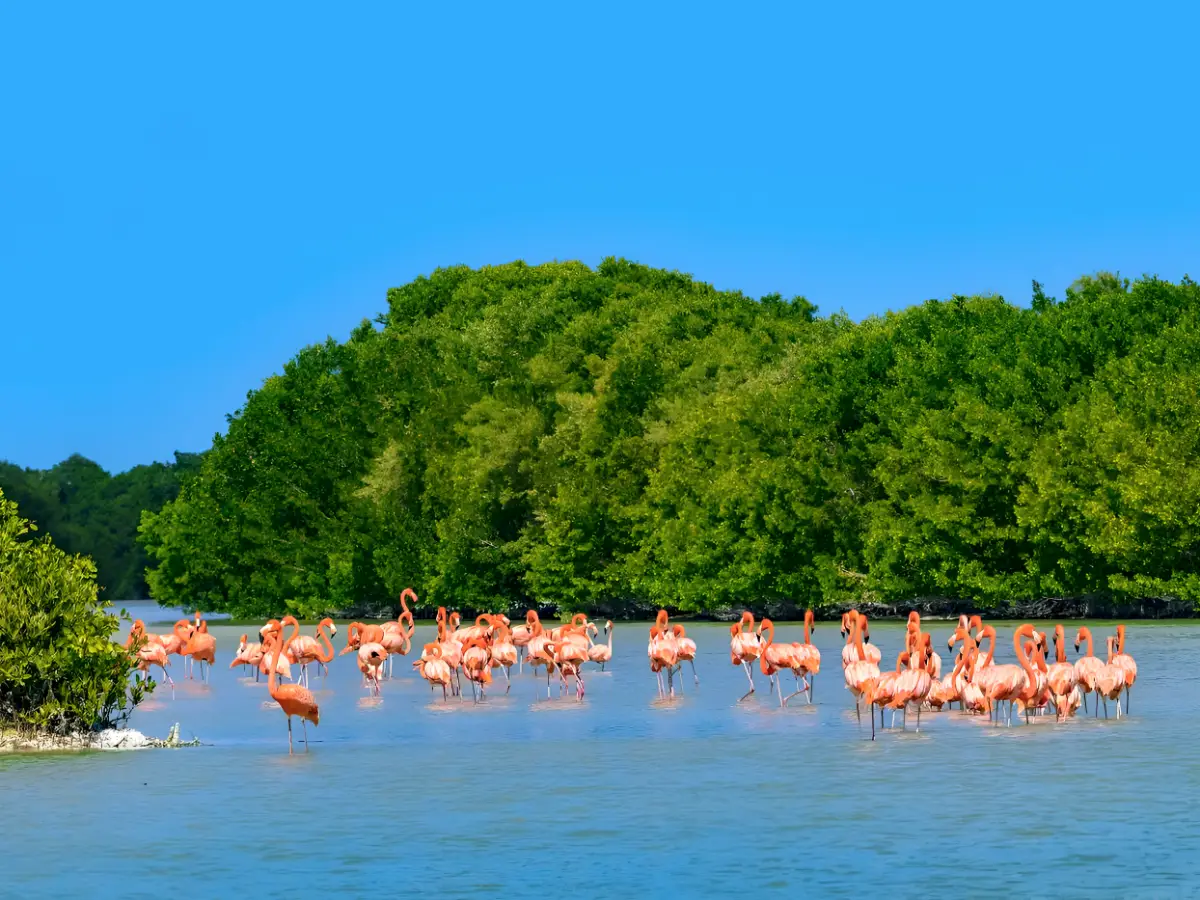
Celestún and the pink flamingos
The largest flamingo colony in North America
from $1,600 MXN per person
See itinerary
8:00 AM – 5:00 PM · daily
- 8:00 AM Departure from the office — An hour and a half west, out to the port.
- 9:30 AM Boat ride — Flamingo and bird watching, the mangrove tunnel, the freshwater spring and the Maya bath on the sandbar.
- 11:00 AM Lunch by the beach — Fish, octopus or shrimp from the gulf, at a table facing the sea.
- 1:00 PM Free time on the beach — Almost three hours to swim, walk the shore or do nothing at all.
- 4:00 PM Back to Mérida — Arriving around five.
Included: Transport, Guide, Boat ride, Lunch from a set menu
Not included: Drinks
Frequently asked questions
Is Las Coloradas pink all year?
The ponds keep pinkish tones, but the intensity changes with salinity, light and weather.
Can you swim at Las Coloradas?
No. It's a protected area and working salt works; you tour the edges without entering the ponds.
Is the color artificial?
No. It comes from natural microorganisms that live in extremely salty water.
What do flamingos have to do with it?
They eat brine shrimp, which feed on the pink alga, so the pigment ends up in their feathers.