Mexico's biggest jaguar stronghold
The Third National Jaguar Census, covering data through 2024, was coordinated by Mexico's National Alliance for Jaguar Conservation with the protected-areas commission (CONANP), 49 researchers, local communities and academics. It places 1,699 jaguars on the Yucatán Peninsula, the largest regional population in the country.
Nationwide, the census counted 5,326 jaguars, up from 4,800 in 2018 and 4,100 in 2010, an upward trend that's good news for the species.
Where they live
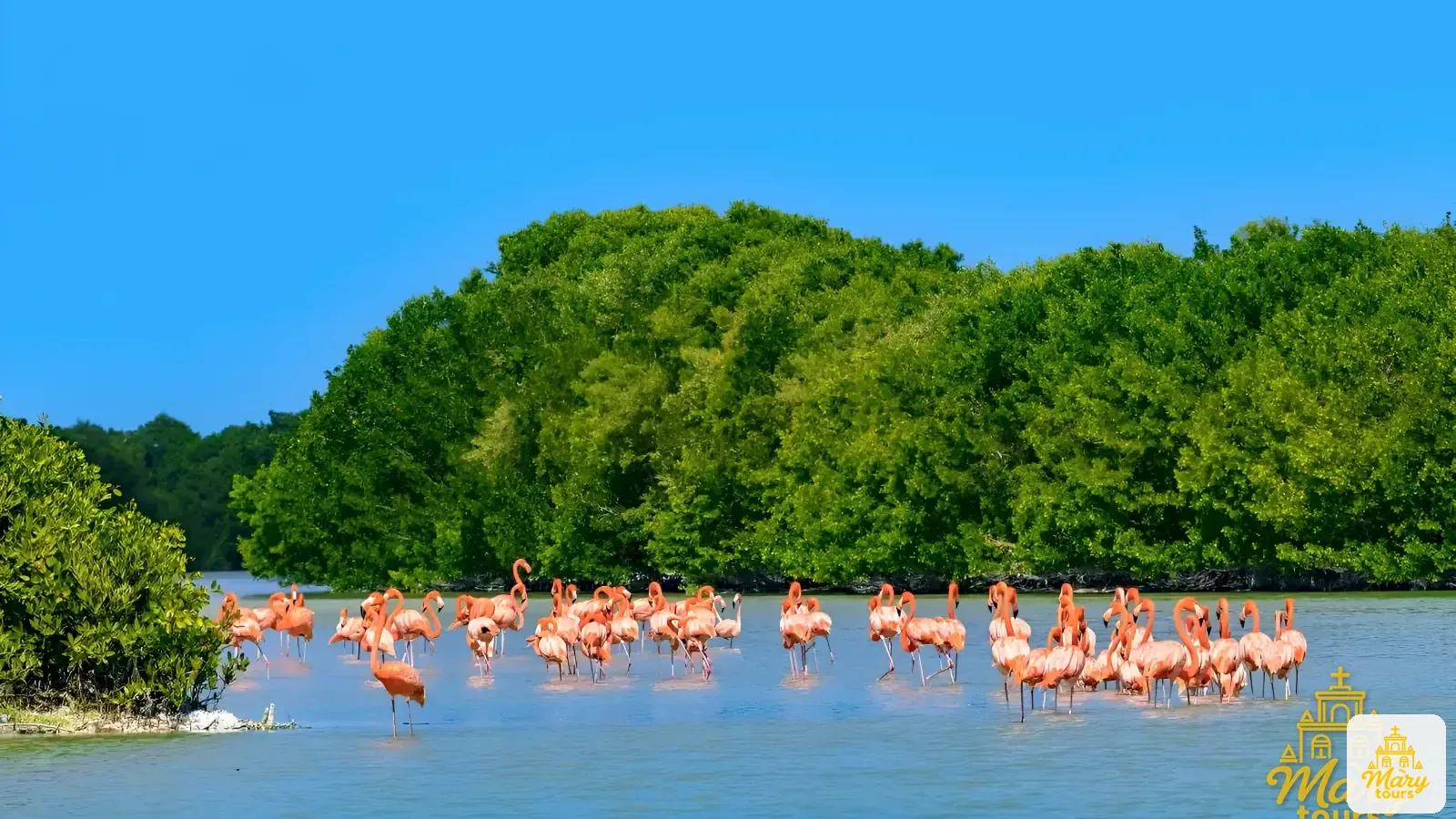
Jaguars need large stretches of connected forest with water and prey. On the peninsula those conditions survive mainly in the southern and eastern forests and in protected areas. At the Ría Lagartos Biosphere Reserve, for example, CONANP records jaguars, ocelots and margays.
Why you'll rarely see one
The jaguar is solitary, mostly active at night and around dusk, and avoids people. Researchers study it with camera traps, not direct sightings. That's why no tour can promise a jaguar: if one ever crosses your path, consider it extraordinary luck.
What threatens them
- Habitat loss from deforestation and land-use change.
- Illegal trafficking of skins, claws and fangs, including on online platforms.
- Logging and poaching inside protected areas.
- Collisions on highways and railways.
Buying souvenirs made from jaguar parts fuels that trade, so always avoid them.
The jaguar in Maya culture
The jaguar holds an important place in Maya art. At Chichén Itzá, for example, one of the structures you visit is the Platform of the Jaguars and Eagles. Seeing it carved in stone is, for most travelers, the most realistic way to "meet" one.
From Mérida
On Mary Tours' Chichén Itzá trips, the guided walk passes the Platform of the Jaguars and Eagles. The Las Coloradas and Río Lagartos trip explores a reserve where jaguars live, though seeing one is very unlikely. The office is on Calle 61 in Mérida's historic center; see prices in the booking section.
| Year | Estimated jaguars |
|---|---|
| 2010 | 4,100 |
| 2018 | 4,800 |
| 2024 | 5,326 |
| 2024, Yucatán Peninsula | 1,699 |
Fun facts
- The Yucatán Peninsula holds roughly a third of Mexico's jaguars.
- Jaguar censuses rely on camera traps.
- Chichén Itzá has a platform dedicated to jaguars and eagles.
Related tours
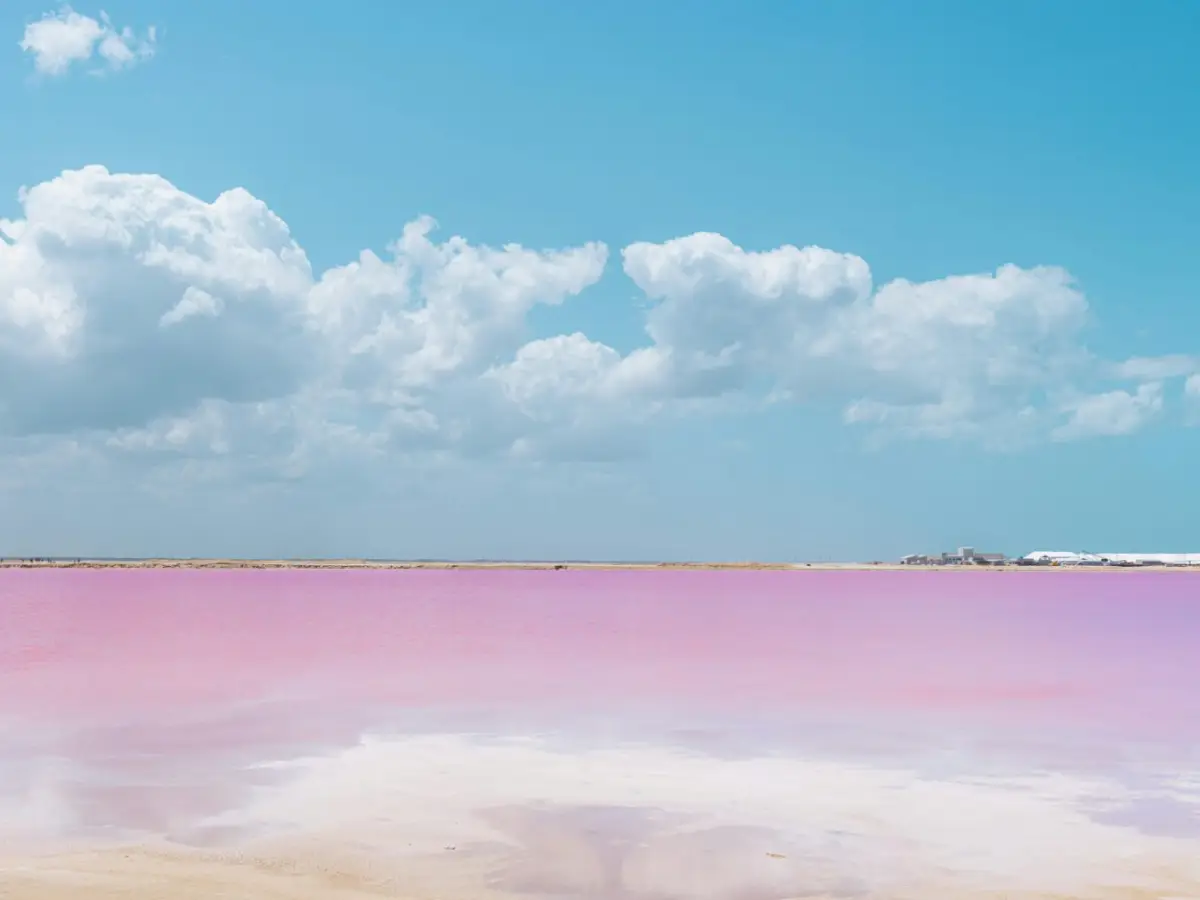
Nature · 12 h
Las Coloradas and Río Lagartos
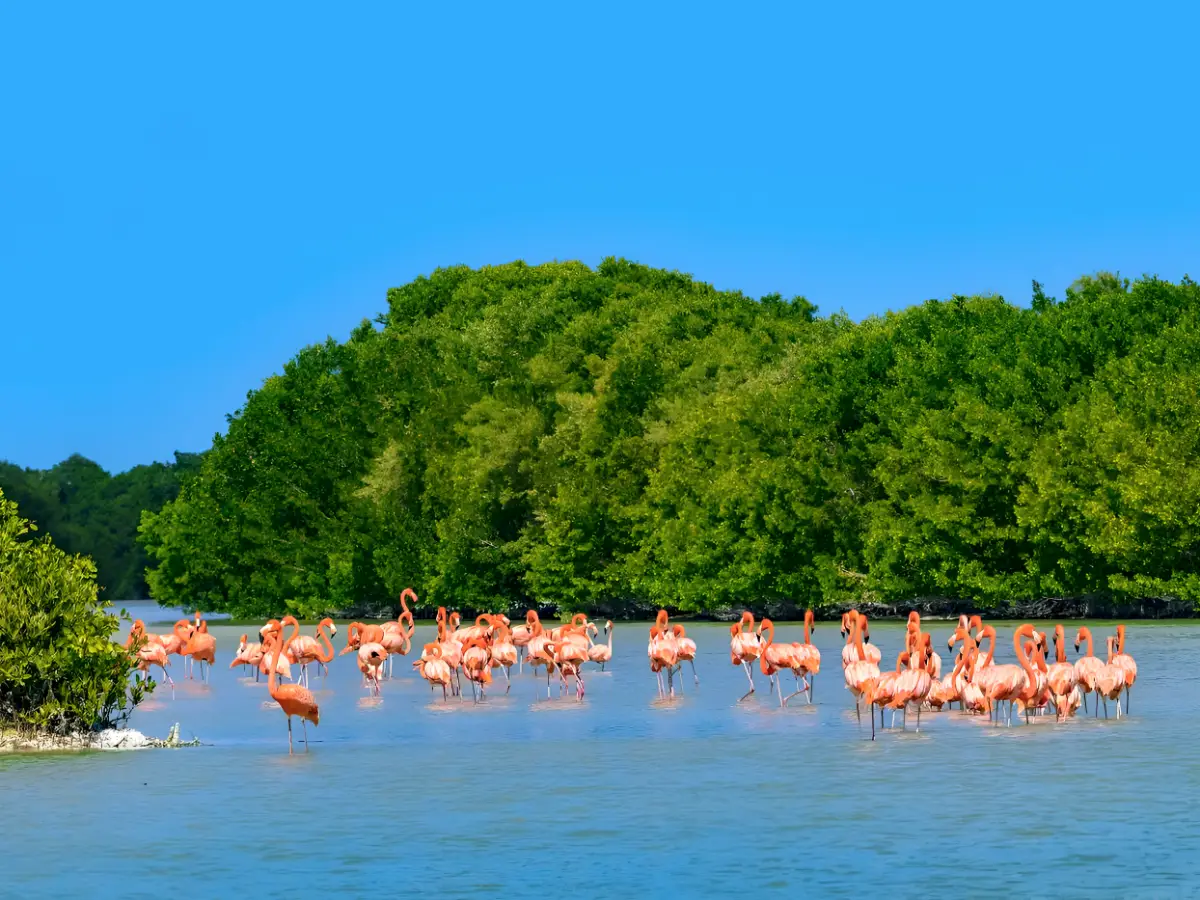
Genuinely pink lagoons, and flamingos in the estuary
from $1,400 MXN per person
See itinerary
7:00 AM – 8:00 PM · daily
- 7:00 AM Departure from the office — Almost three hours to the north coast, with a stop halfway.
- 9:50 AM Las Coloradas — A guided walk beside the pink, white and orange pools of the salt works. No swimming: it is a protected area.
- 11:00 AM Cancunito beach — A rustic beach inside the reserve, calm water and hardly anyone around.
- 12:30 PM Boat ride through the estuary — Channels through the mangroves, flamingo watching areas, crocodiles in their habitat and the mineral mud bath.
- 2:15 PM Lunch in Río Lagartos — Fresh fish, ceviche, octopus or tikin xic on the waterfront of the fishing village.
- 4:15 PM Back to Mérida — Nearly four hours back, arriving around eight.
Included: Transport, Guide, Boat ride, Lunch from a set menu
Not included: Las Coloradas entrance, Drinks
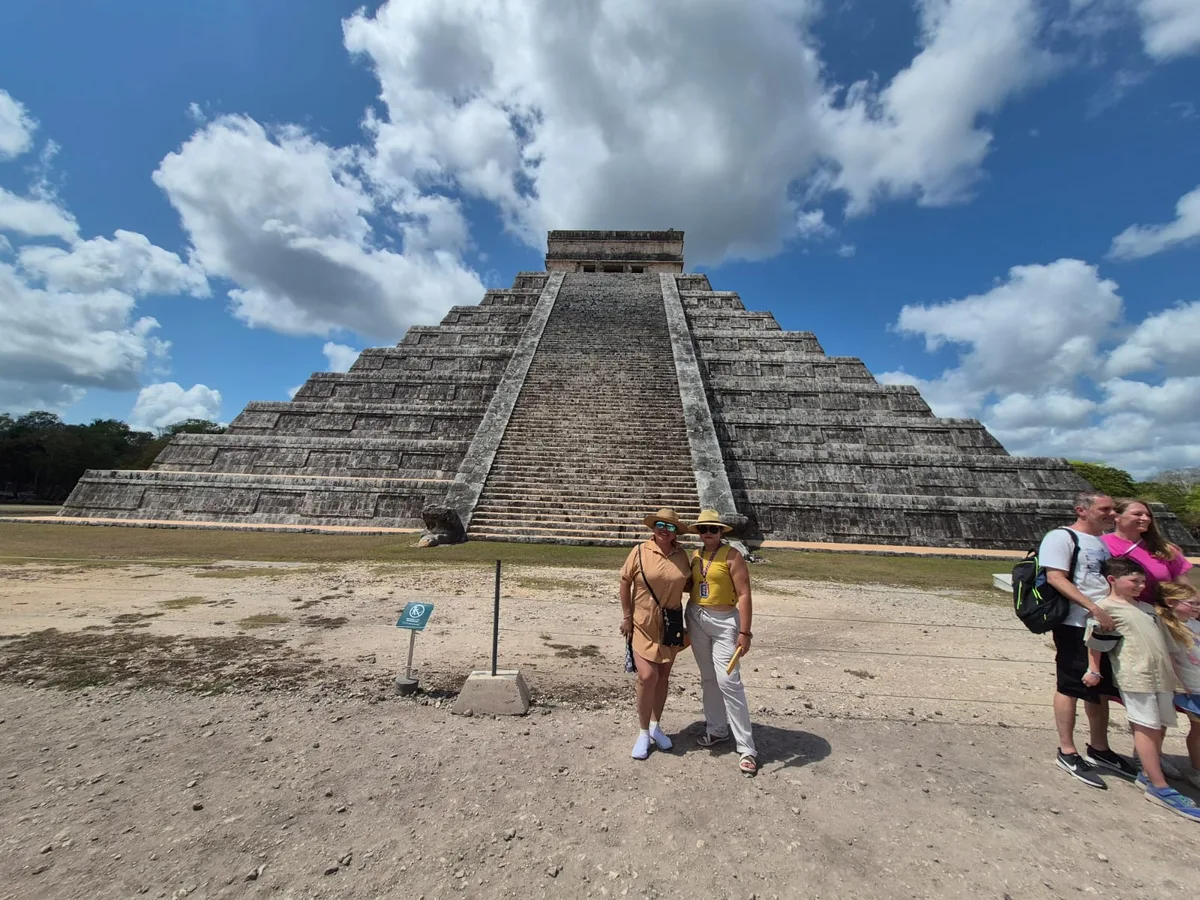
Archaeology · 11 h
Chichén Itzá, Izamal and Valladolid
Four stops in one day, and none of them rushed
from $1,200 MXN per person
See itinerary
8:00 AM – 8:00 PM · daily
- 8:00 AM Departure from the office — An hour on the road to Izamal. The guide uses the drive to set up what comes next.
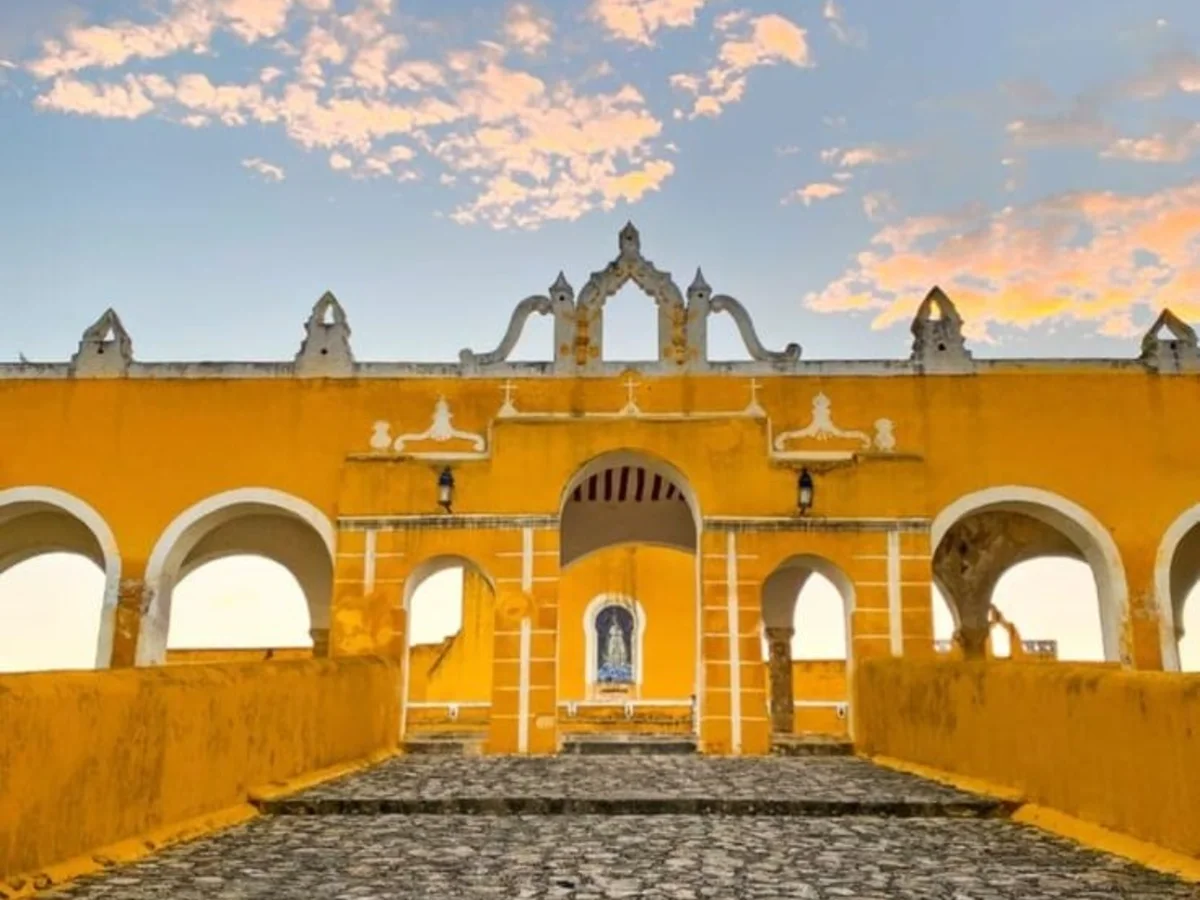
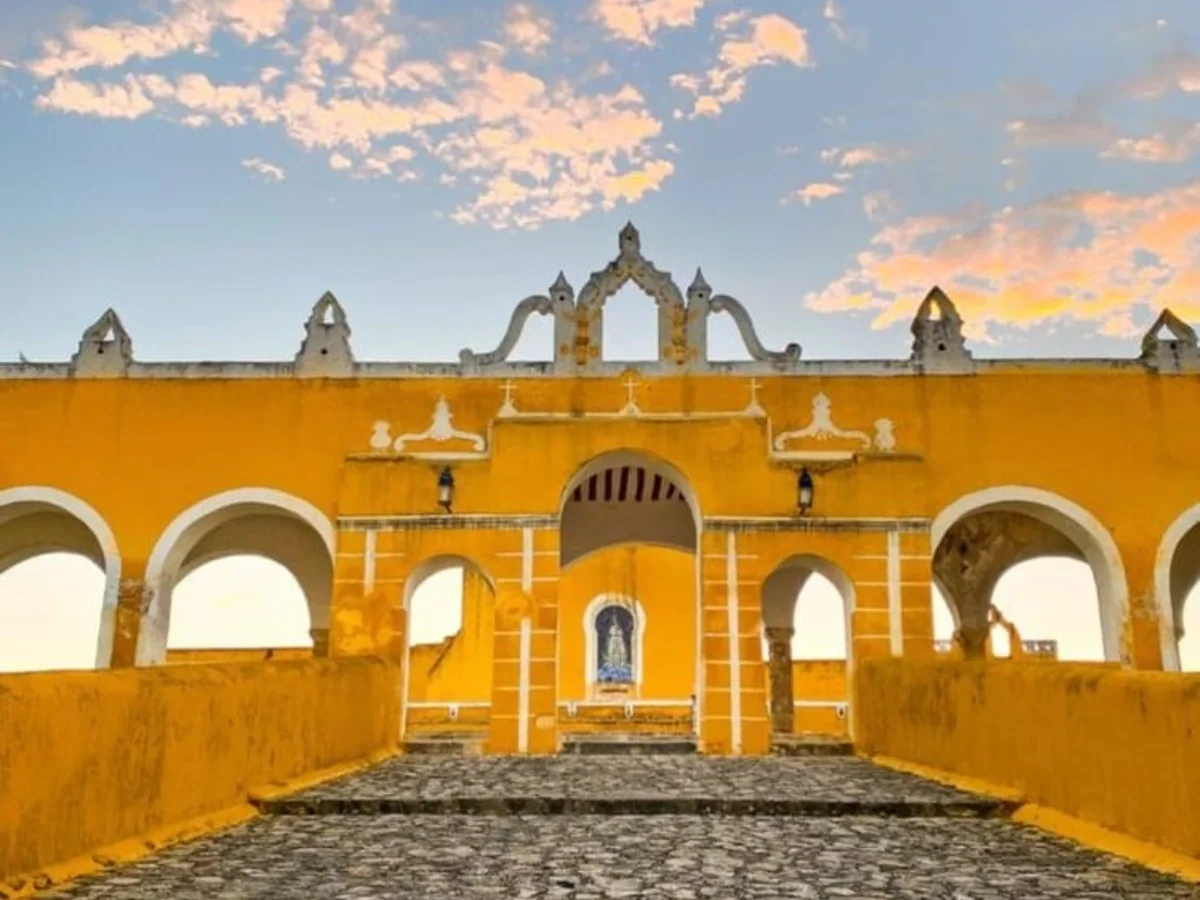
- 9:00 AM San Antonio de Padua Convent — The story of the 16th-century Franciscan convent told in its atrium, then free time to walk the yellow town.
- 11:15 AM Chichén Itzá — Guided walk through the Temple of Kukulkán, the Sacred Cenote, the Ball Court, the Tzompantli and the Jaguars and Eagles platform.
- 1:45 PM Regional lunch in Kaua — Buffet of Yucatecan dishes: cochinita, relleno negro, lime soup and meat-free options.
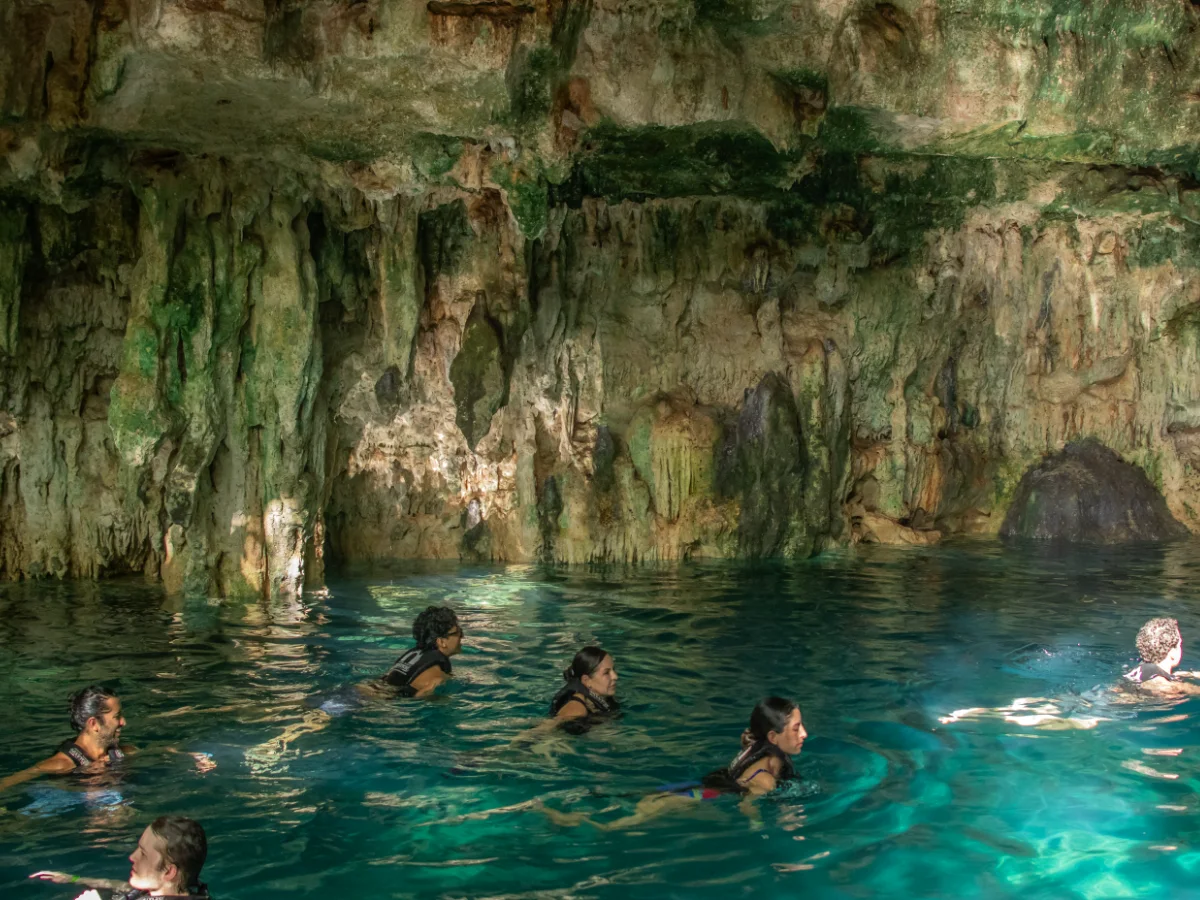
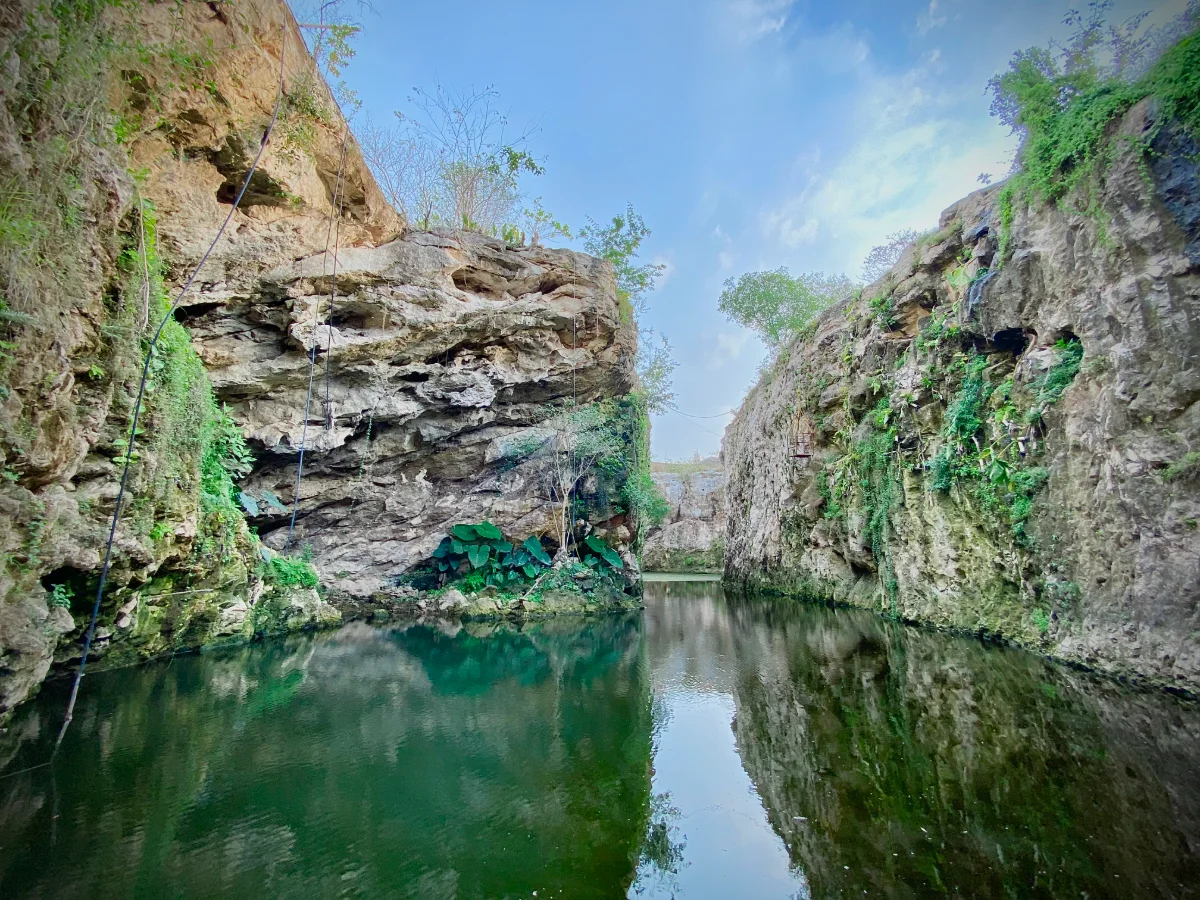
- 3:00 PM Selva Maya cenote — The swim lands exactly when the sun is at its worst. Changing rooms and showers on site.
- 4:20 PM Valladolid — Francisco Cantón Rosado park with its original railings, the church of San Servacio and the murals in the town hall.
- 8:00 PM Back in Mérida — We drop you off where the day started.
Included: Air-conditioned transport, General culture guide, Regional buffet lunch
Not included: Chichén Itzá entrance, Cenote entrance, Drinks
 Coupon −$300 MXN per person
Caribbean · 14 h
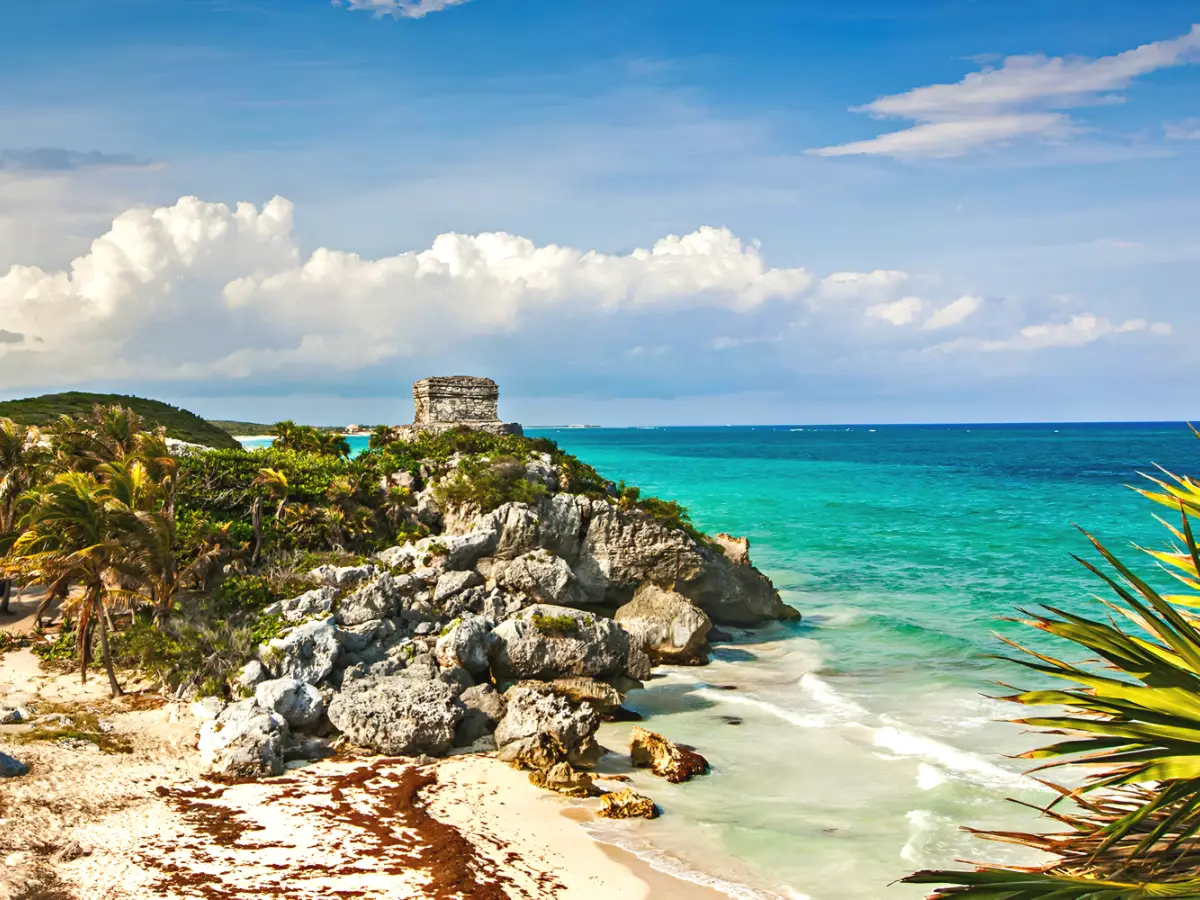
Tulum and the Casa Tortuga cenotes
The only Maya city built facing the Caribbean
from $2,500 MXN per person
See itinerary
6:00 AM – 8:00 PM · daily
- 6:00 AM Boarding — We leave from the downtown office. If your accommodation is on the way, we collect you there — agreed beforehand on WhatsApp.
- 6:30 AM Motorway to the rest stop — An hour and three quarters, with fifteen minutes for toilets and something light.
- 8:30 AM On to Tulum — An hour and a half more to the Quintana Roo coast.
- 10:00 AM Tulum archaeological site — Guided visit to the walled city: El Castillo, the Temple of the Frescoes and the Temple of the Descending God, with the sea behind.
- 12:15 PM Casa Tortuga cenotes and lunch — Four cenotes of different kinds, with a guided route, trails and changing rooms. Lunch is on site.
- 4:00 PM Back to Mérida — Four hours back, with a stop halfway.
Included: Guide accredited by the Ministry of Tourism, Round-trip transport, Lunch, Cenote entry
Not included: Tulum archaeological site entrance, Drinks
Frequently asked questions
How many jaguars live on the Yucatán Peninsula?
1,699, according to the Third National Jaguar Census (2024).
Can I see a jaguar on a tour?
It's very unlikely. They're elusive and nocturnal, and are studied with camera traps.
Is the jaguar population growing?
Nationally, censuses show an increase: from 4,100 in 2010 to 5,326 in 2024.
What threatens jaguars?
Habitat loss, trafficking in their body parts, poaching and road collisions.