Where it hit
The crater's center lies in the northern Yucatán Peninsula, near the fishing village of Chicxulub (cheek-shoo-LOOB), which gives it its name. According to UNAM's science magazine ¿Cómo ves?, the northern half of the crater lies under the Gulf of Mexico and the southern half under dry land.
How big it was
UNAM estimates the object was about 10 km (6 miles) across. The crater it left is roughly 180 to 200 km wide: NASA describes it as about 180 km wide and 900 meters deep, buried under around a kilometer of younger rock.
How it ended the dinosaurs
The impact released enormous energy. NASA links it to the extinction of more than 70% of species alive at the time, including the non-avian dinosaurs. It happened at the boundary between the Cretaceous and Paleogene periods, about 66 million years ago.
How it was discovered
- 1952: Mexico's state oil company, Pemex, drilled on the peninsula and found crystalline rock it took to be volcanic.
- 1970s: geophysicists Antonio Camargo and Glen Penfield proposed it was an impact crater, based on that rock and on gravity and magnetic anomalies.
- 1990: NASA researchers flagged the semicircular structure in satellite images.
- 1992: radiometric tests confirmed the age of the impact.
Can you see the crater?
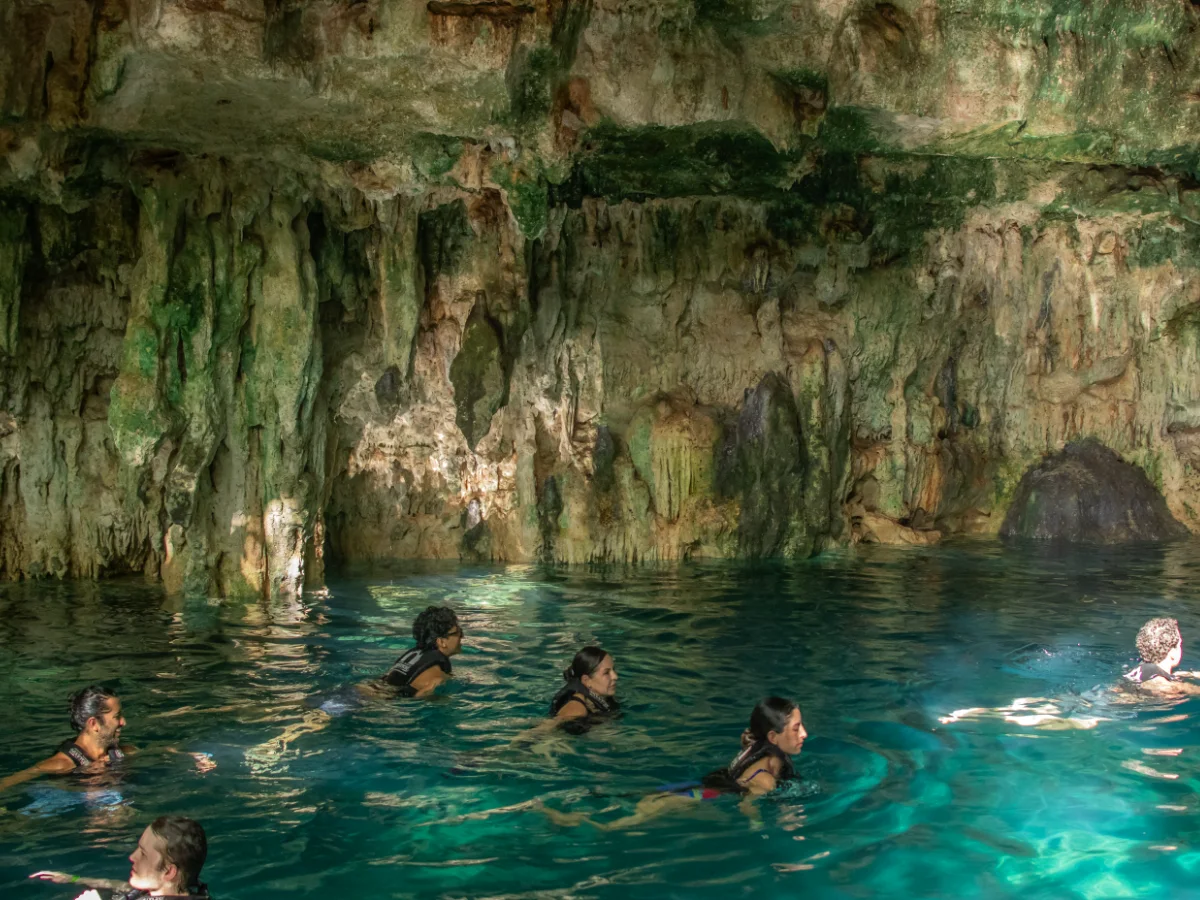
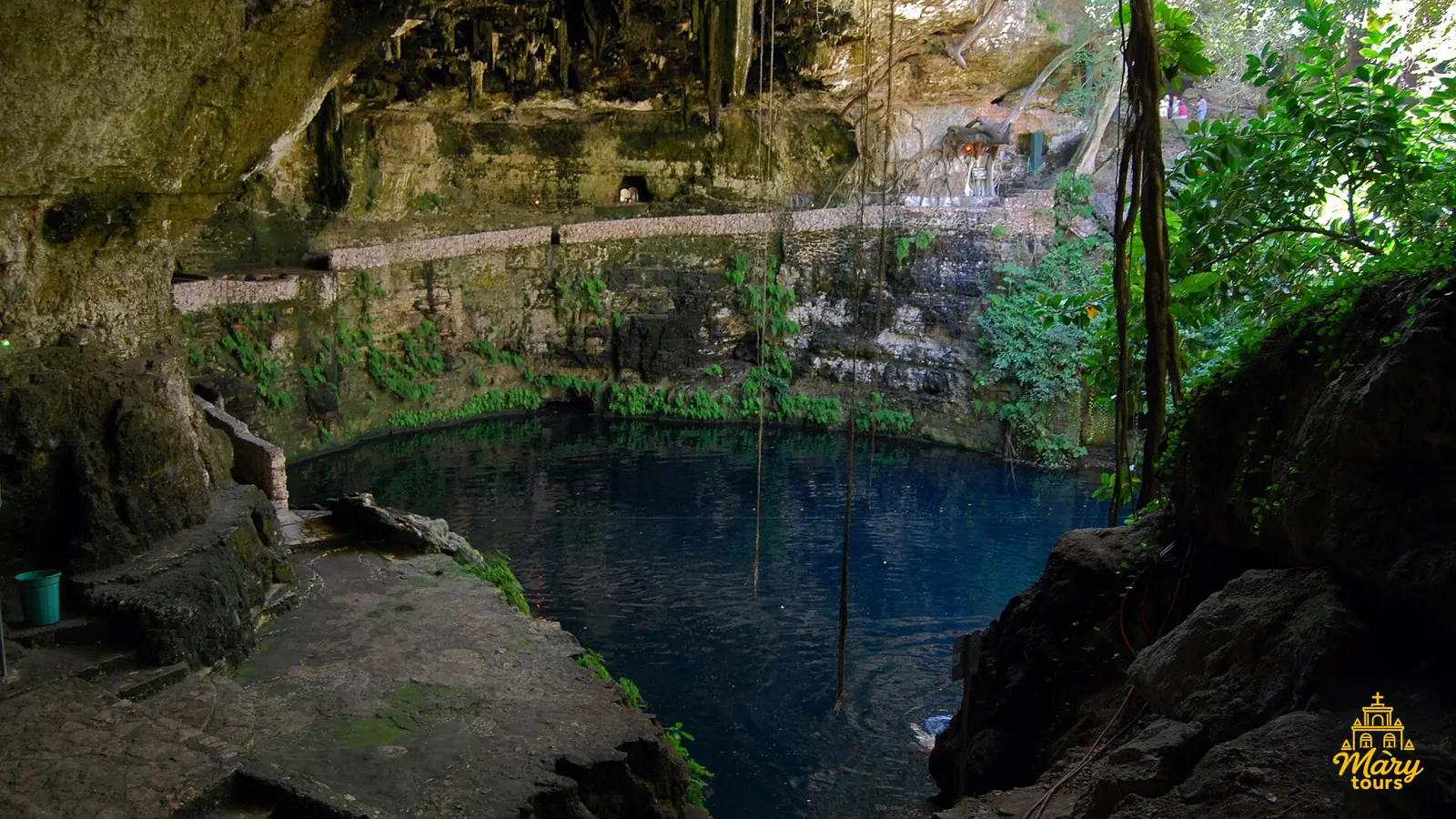
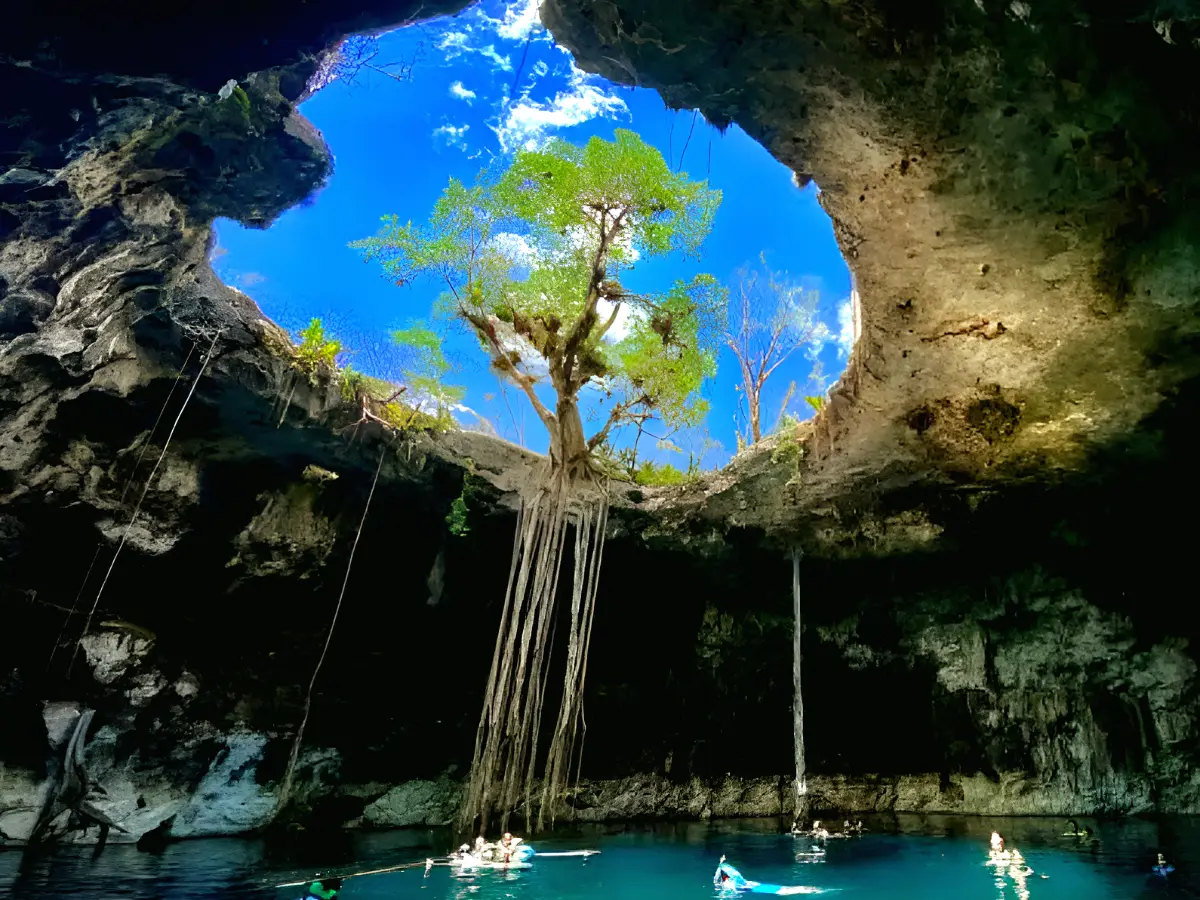
Not directly: it's buried. Its only visible surface trace is the Ring of Cenotes, the semicircle of sinkholes that formed along fractures in the crater's rim. Swimming in a Homún cenote is, in a sense, peering over the edge of the impact that changed the history of life.
The crater from Mérida
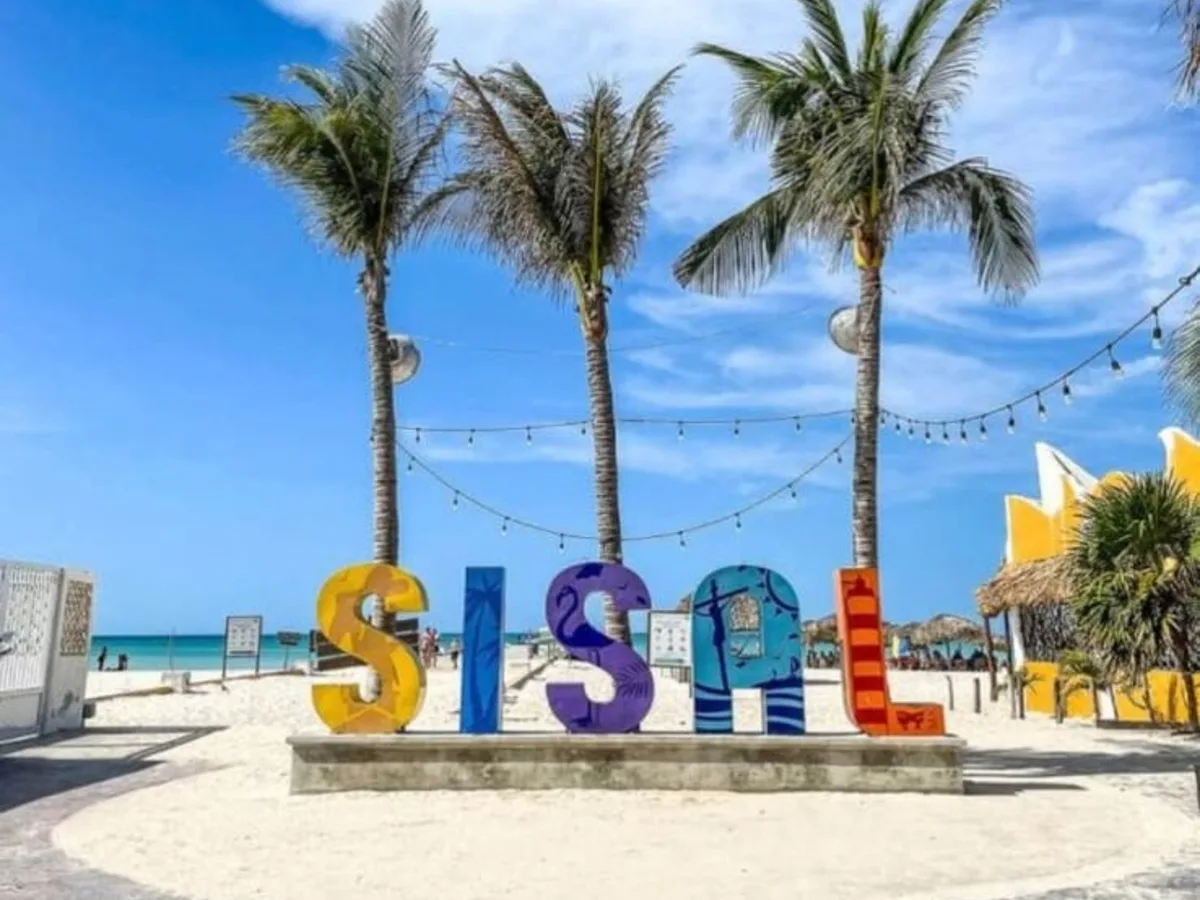
Mary Tours' Santa Bárbara cenotes trips to Homún explore the Ring of Cenotes, and the North Coast trip visits the coast near Progreso, close to the crater's center. The office is on Calle 61 in Mérida's historic center; prices and schedules are in the booking section.
| Details | |
|---|---|
| Age of impact | About 66 million years |
| Asteroid size | About 10 km |
| Crater diameter | 180–200 km |
| Depth (NASA) | About 900 m |
| Species lost | More than 70% |
| Visible trace | Ring of Cenotes |
Fun facts
- Pemex found impact rocks in 1952 without knowing what they were.
- The northern half of the crater lies under the sea.
- The Ring of Cenotes is the crater's visible trace.
Related tours
Cenotes · 7 h
The four cenotes of Santa Bárbara
Four different cenotes and a lunch made by hand
from $1,450 MXN per person
See itinerary
10:00 AM – 5:00 PM · daily
- 10:00 AM Departure from the office — An hour on the road to Homún, through the ring of cenotes.
- 11:00 AM Cascabel cenote — Closed, cave type. You descend inside and the water sits in half-light: the most striking of the four.
- 11:30 AM Chaksikín cenote — Semi-open. You go down between limestone walls painted with Maya-themed murals.
- 12:00 PM Xooch cenote — Semi-open, with a shaft of light that falls straight onto the water mid-morning.
- 12:30 PM Pool Cocom cenote — Open and surrounded by vegetation. You swim along a channel out to the wide part.
- 1:30 PM Regional lunch — Home cooking with hand-made tortillas. Plenty of time to eat without rushing.
- 4:00 PM Back to Mérida — An hour back, arriving around five.
Included: Transport, Certified guide, Entry to all four cenotes, Regional lunch
Not included: Drinks with lunch
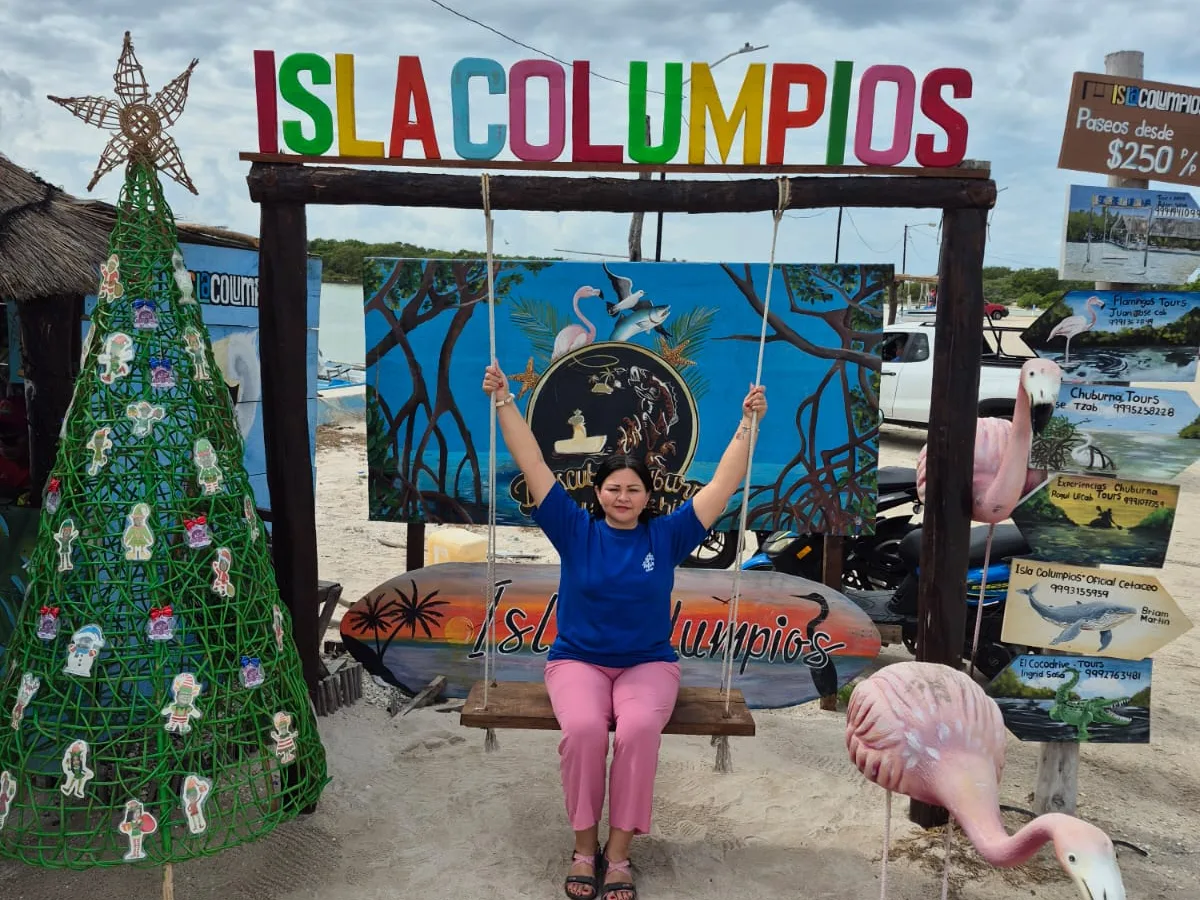
Beach · 8 h
North Coast and Isla Columpios
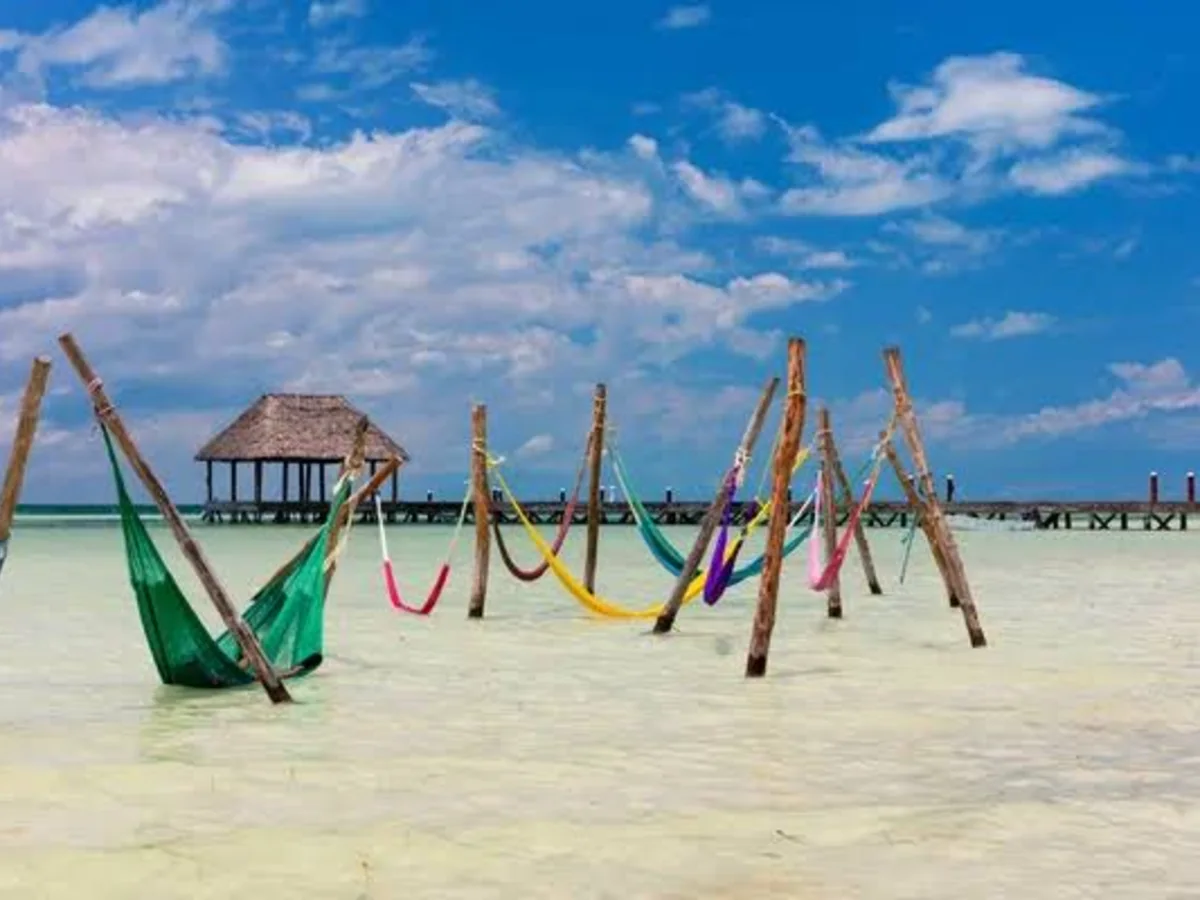
Wooden swings driven straight into the sea
from $1,250 MXN per person
See itinerary
10:00 AM – 6:00 PM · daily
- 10:00 AM Departure from the office — An hour and a quarter to the Chuburná harbour, where the boat leaves from.
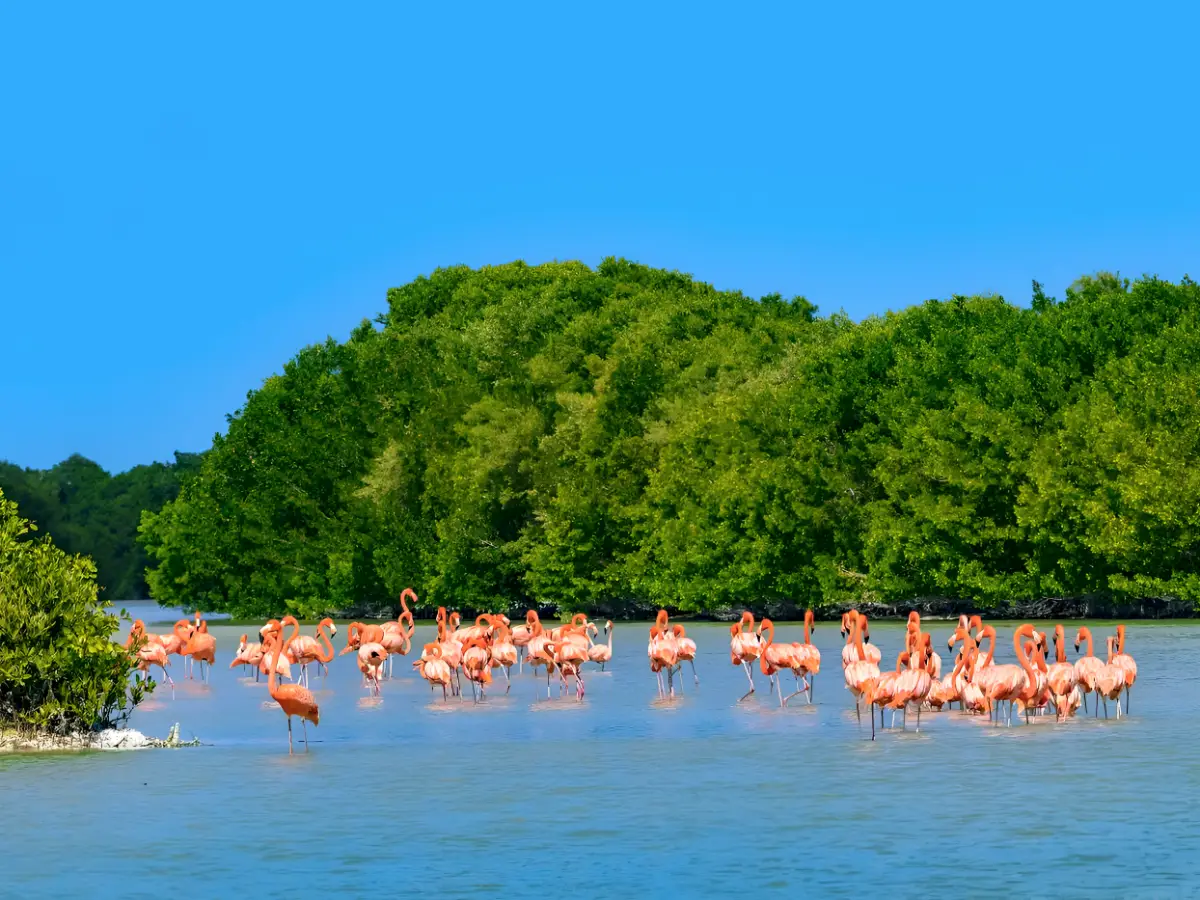
- 11:30 AM Isla Columpios — Turquoise water barely past your knees, swings and hammocks over the sea, and mangrove all around full of birds.
- 1:00 PM Chuburná dunes — White sand mounds shaped by the wind, with nobody around. Good for walking and for photos.
- 2:30 PM Puerto Progreso — Free afternoon: eat on the seafront, walk the pier or stay on the beach.
- 5:30 PM Back to Mérida — Half an hour back, arriving around six.
Included: Transport, Certified guide, Boat and Isla Columpios entry
Not included: Food, Drinks
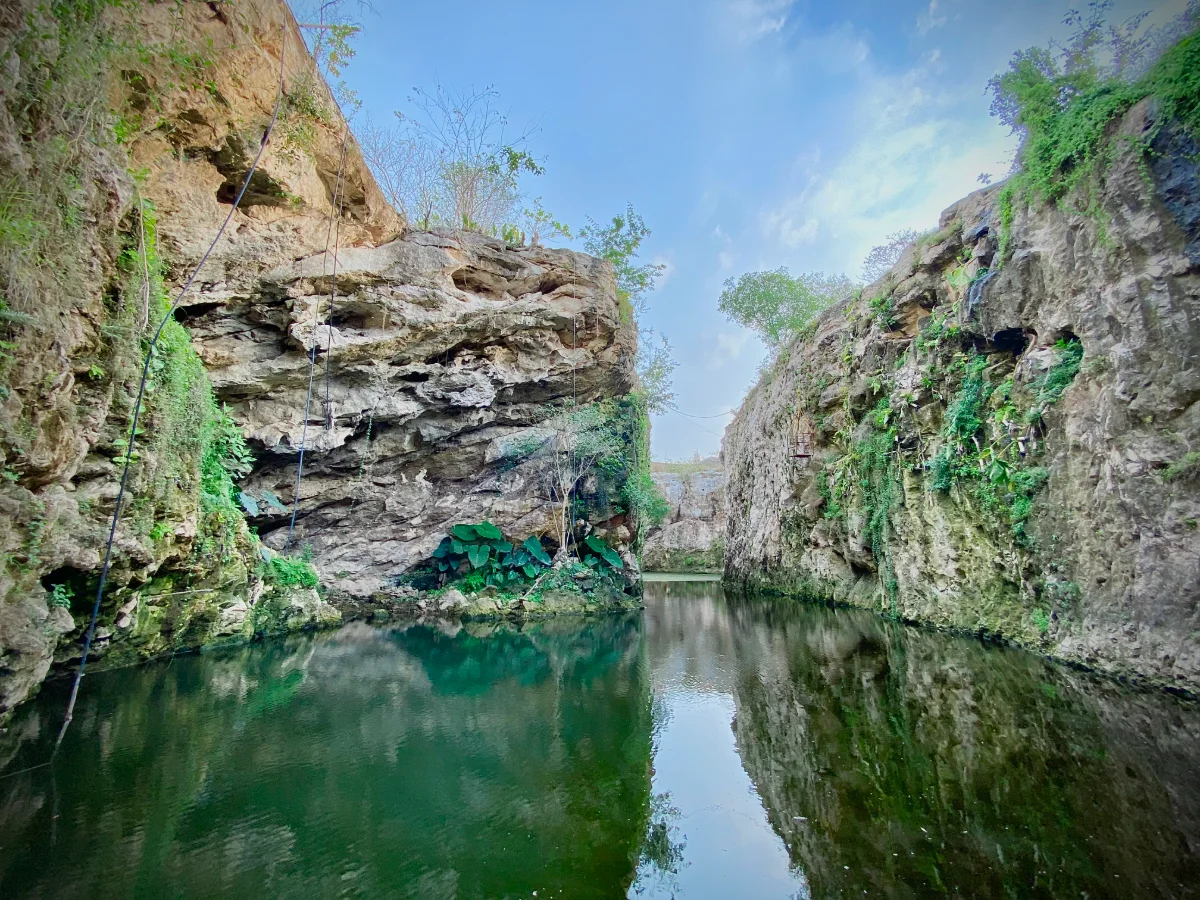
Cenotes · 9 h
Izamal and the Santa Bárbara cenotes
Izamal early, and the whole afternoon in four cenotes
from $1,550 MXN per person
See itinerary
8:00 AM – 6:00 PM · daily
- 8:00 AM Departure from the office — An hour on the road to Izamal.
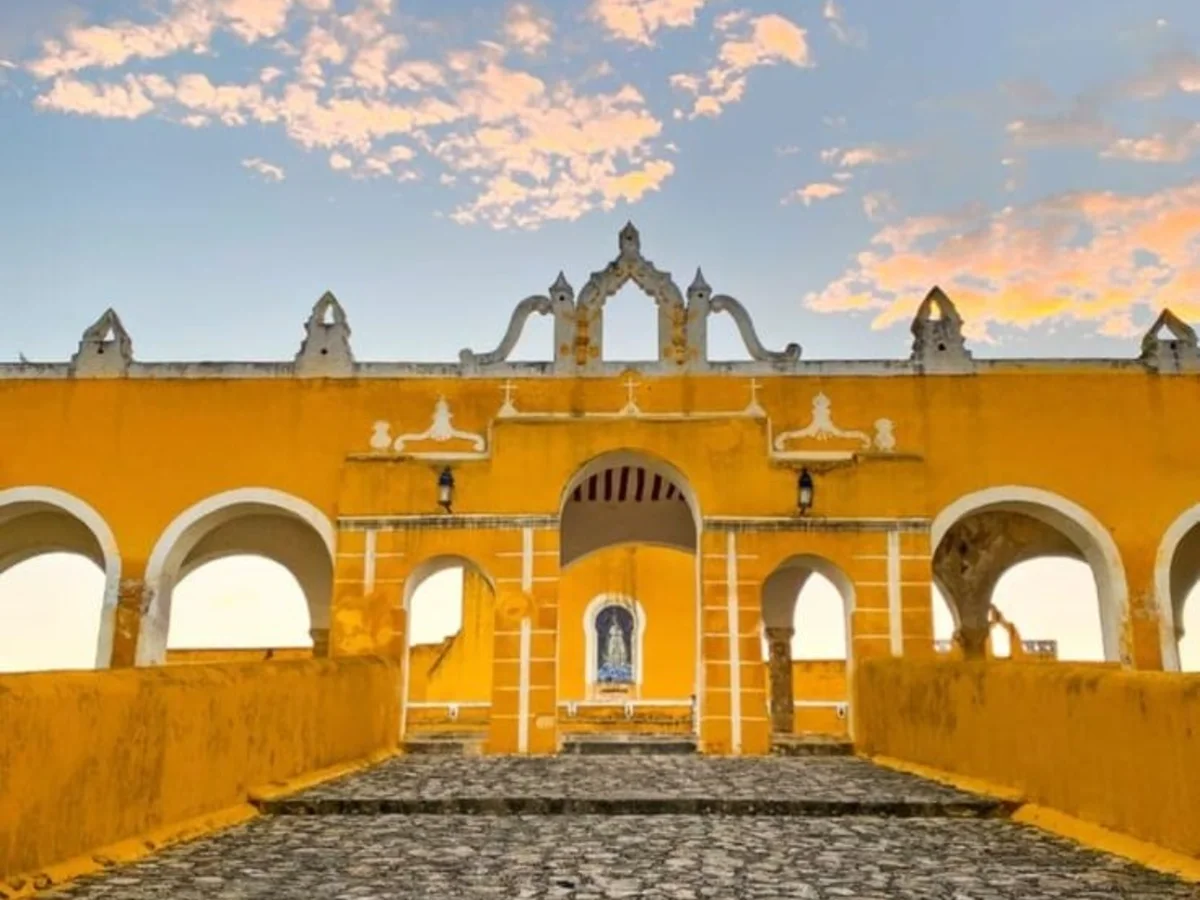
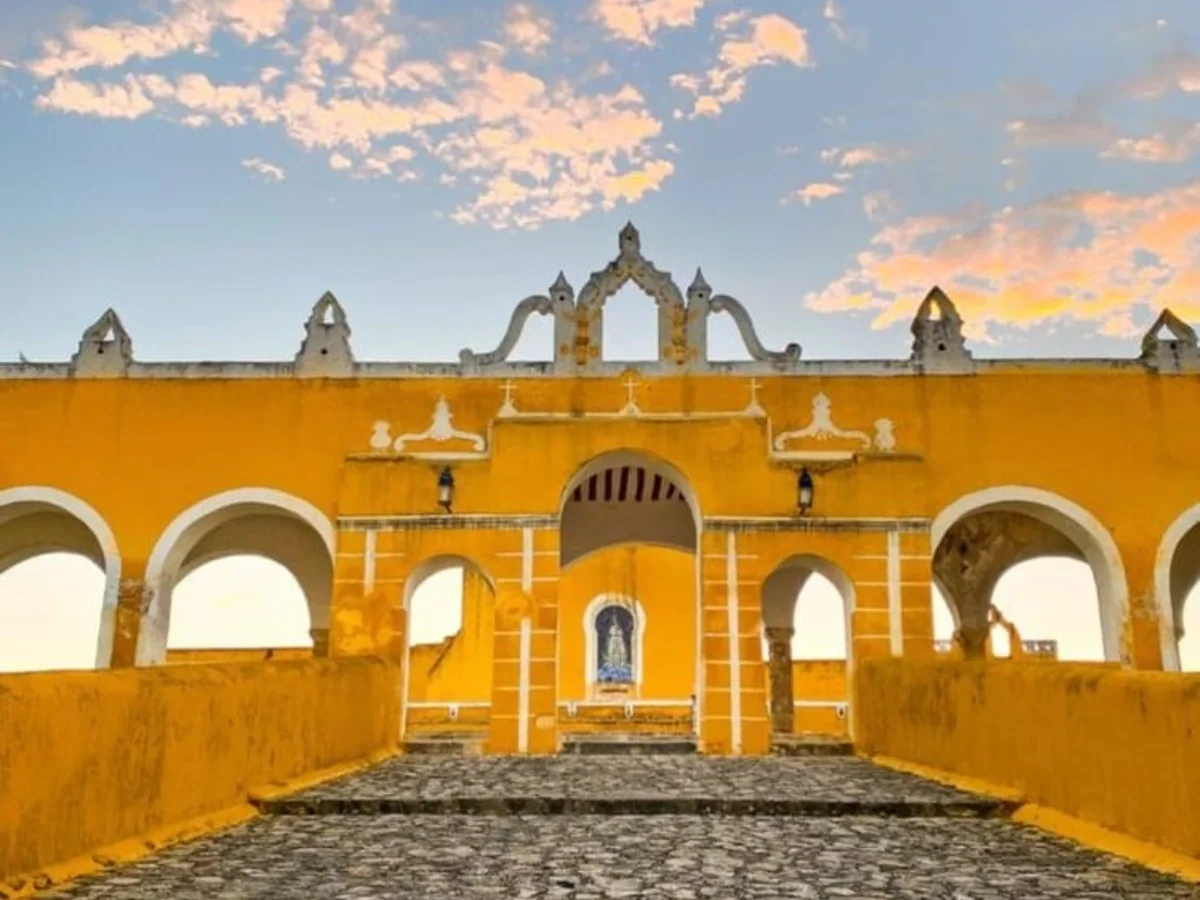
- 9:00 AM Izamal — The San Antonio de Padua convent, raised on a Maya platform, the Kinich Kakmó pyramid and the yellow streets.
- 10:30 AM On to Homún — An hour and a quarter through small towns to the cenote grounds.
- 12:00 PM Santa Bárbara cenotes — Five hours inside: Cascabel in a cavern, Chaksikín with its shaft of light, and Xooch and Pool Cocom in the open. You move between them by bike or cart, and lunch is served on site.
- 5:00 PM Back to Mérida — An hour back.
Included: Transport, General culture guide, Entrances, Lunch
Not included: Drinks
Frequently asked questions
Where did the asteroid that killed the dinosaurs hit?
In the northern Yucatán Peninsula, near Chicxulub.
When did it hit?
About 66 million years ago.
How big was it?
About 10 km across, according to UNAM.
Can you visit the crater?
It's buried; what you can visit is the Ring of Cenotes, which marks its edge.